This is all much ado about nothing. Nissan put of bunch of cells in a Leaf for one race. It's not like before this they didn't think they could, and just now figured out how to... add more batteries. The 2014 model will not have twice the range for the same price.
Nissan has a 24 kWh battery for a reason: they can sell the car, after incentives, for about the price of a Prius. Doubling the pack would probably add about 10 grand to the price. If Nissan thought that was where they wanted to position themselves in the market, they would have done so already.
Though, personally, a 48 kWh Leaf would be pretty awesome. I'd pay an extra 10 grand for that. It would be a nice middle ground between an 80-grand Tesla and the current Leaf.
If they would style it to look like a normal car, or offer a model that does, say like their Altima I would seriously give it consideration.
The Leaf offers the range necessary for my daily commute, 53 miles. It just doesn't do it in the looks department. Now a coupe would be a sweet ride, provided it doesn't look odd.
From my experience with 50-100 mile BMW 1e cars, I am pretty sure I'd require at least 200 miles to be comfortable with a car in the Bay Area unless I had a commute pattern with guaranteed charging both at home and at work (and went to the primary work site and remained there most of the day). The "big" Tesla seems like a much safer bet at 250-300 miles.
I guess a 48 KWh Leaf is about the same as the 60 KWh Tesla in range? (it might not be; cheaper/lamer vs. physically larger but more advanced might be a wash).
Weight, traction motor power, and hotel load draws/efficiencies are all going to play into an apples to apples comparison. Until someone can get their hands on a 48 KWh Leaf, rough estimates can be made but real world data could be much different.
Lease a leaf, buy a tesla seems like the best plan then. I suspect resale value of tesla smokes the leaf.
I've never bought a new car, but 110k on an awd S p85+ actually seems like a legitimate reason to borrow money at ?5%, assuming you drive a lot. Real depreciation is probably way less than on a similar electric car, and if it is just miles vs rough use or time, a battery/tire/brake swap should refurb bit pretty completely after 150-200k miles in 4-5y. If you get reimbursed at government rate for driving, ....
200 miles, with the heat on in the winter, would be an absolute minimum for me. I'm personally at least a decade away from owning an electric car though, as I never buy new cars and only time will tell what the used market for EVs will look like.
What every article like this and about any other EV fails to mention is how many Km can it do before needing to be charged, how much is needed to charge, etc. I'm sorry but that does not make me want to buy an EV not until I can get easily all the numbers to compare properly.
Which EVs are you looking to have compared? I have the data locally for the Nissan Leaf, all the Tesla versions, and the Chevy Volt. If you'd like this data shown side-by-side, I'm more than happy to provide it. Also, if you want a vehicle included I did not list, more than happy to provide that as well.
I am speaking generally, everytime I try to compare them to gas or diesel cars I don't have data for the EVs, if you could provide the data for the ones you have I would appreciate.
See this is why I still don't think pure EVs are the answer for the next few decades at least. Give people plug-in hybrids to assuage their range anxiety. Left to charge overnight at home a driver whose 90% of journeys are short will get the advantages of an EV and in those circumstances you go a bit further, it can be topped up with fuel instantly like a regular car - no "long charging" worries.
As battery technology slowly improves, the IC engine can become a less and less significant component until it's really just there for emergencies.
A pure EV will be better in every respect. Unless you replace the gasoline motor with a generator, having a gasoline engine still necessitates a lot of mechanical parts you can just drop if you have a pure EV. Transmission, exhaust, clutch, gas tank and a lot more. This increases both mechanical complexity (repairs) and cost.
Once battery tech gets sufficiently cheap, EVs will blow all the competition out of the water for personal vehicles. At most you'll get EVs with a gasoline-fueled genset for refueling off the grid. But it's more likely you'll just switch to a bigger battery pack for the duration of the few short trips which are incompatible with length and charging infrastructure.
I am certain that this will not be a problem. Given the average distance driven in one day, most people can charge overnight with good margin on a 220V outlet. Tesla's supercharging stations currently charge at 135kW DC, and this appears to be upgradable in the future.
Where I live, the Tesla model S outsells the Leaf by at least 20:1.
I know that the two cars are targeted at different market segments, and that the model S is far more expensive. But that still doesn't explain why the Leaf looks like a deformed catfish. Per unit, it doesn't take a significant amount of money to make something beautiful.
"I feel a thrill when looking at beautiful examples of automotive craftsmanship like a BMW M3 or an Audi S5 or an Acura NSX. But the electrics and hybrids produced by the big players are as exciting as cold oatmeal mixed with three-days-dead road kill. Think machines like the execrable crap-box Prius, Honda's truly awful Insight, Nissan's clock-stoppingly ugly Leaf, and Chevy's Volt, which has all the personality of a beige carpet sample square."
Cool! Aside from price, range is the critical limiting factor in Leaf buying decisions (to hear folks considering one). It doesn't have to get 300 miles to the charge to be a good commuter replacement, but given that environment conditions (e.g. winter, road speed) can decrease the current model's effective range to below fifty miles, even moderate commutes can start pushing your luck. A worst-case range of 100 miles should make it viable for all but the farthest commutes.
A Leaf typically gets low 70s to high 80s in range, but as soon as you need AC or heat for an extended duration, you've lost a lot of that range (some reports have put the range at only ~30 miles with hotel loads maxing out).
I'll be the first to admit I'm a huge Elon Musk fan (I also own several thousand shares of TSLA stock). Putting the fanboy in me aside, I think Tesla was correct in shooting for such large battery packs in their vehicle. It greatly diminishes the range anxiety EV owners might feel. The other factor you can't control for is that, in my opinion, if you own a Tesla its going to be much easier for you to charge at your workplace or your home. You're probably a high net worth individual who is going to have a much easier time having chargers installed at home or work. Most Leaf owners I'd imagine (NO DATA HERE, JUST MY ASSUMPTION) are city dwellers in condos or apartments where its going to be much more difficult to get charging infrastructure installed above a 15-20A/120V circuit.
The term hotel load refers to the equipment used to provide for the habitability and comforts of the passengers and crew of a vehicle (typically a ship or submarine), or more specificly the electrical load placed on power generation systems by this equipment.
Of course it's not like the bigger pack will be showing up in 2015 Leafs. I'm guessing the test version has no rear seats or trunk space. It also wasn't a test like "test this before it goes into production", the Leaf was modified for a race. A stock Leaf won't make an hour running flat out (electronically limited to 93mph). The bigger pack, as far as I can tell, was installed to make it more competitive.
While parked, yes. While driving, no. It would be extremely expensive to repave roads to support this.
EDIT: Yes, you could wire roads only when already performing needed repairs. Yes, you could run wires above roads for power. But why? All of these miles we have of infrastructure, it'll be faster to continue to drive down the cost of battery technology to the point where people will say, "Can you believe we even considered wiring roads?".
Within 5-10 years the cost of battery technology should have fallen to where the cost of the battery is marginal. The trick is to get the cost of the cells down, while reducing the need for so much manual labor to assemble the packs from cells. My hope is that Tesla comes up with a way to automate pack assembly or 3D prints the entire pack, cells and all (perhaps not "print", but laser sinter).
We've been working on better batteries for electric cars for a century, and they still are inadequate for most people's needs. I'm not as optimistic that there will be some big breakthrough; the amount of chemical energy in petroleum-based fuels is just SO much greater per unit of mass than any battery technology is capable of storing.
> Within 5-10 years the cost of battery technology should have fallen to where the cost of the battery is marginal.
The problem with batteries isn't so much the cost as their weight. There is a limit to the power density of current battery technology and nothing really in the pipeline to greatly improve on this.
So installing a higher-capacity battery also means having a heavier car, which in turn requires more power to keep it moving.
I'd love to have a gentleman's bet on this :) I bet you a beverage of your choice (I know we're not all craft beer aficionados) that within 10 years, the cost of batteries will have halved, and their capacity will have doubled.
I try to put my money where my mouth is; when Tesla went IPO, I bought several thousand shares of stock. I'm holding for the long term, as I think they're not just going to revolutionize mobility, but also battery technology.
Repaving a road just for this is probably not economical.
But roads need to be repaved regularly anyway and, depending on the used system, my guess would be that the cost for also installing charging equipment would be dwarfed by the overall cost of maintenance. The same applies to newly built roads.
You do know that "Technica" is Latin for technology, right? Ars was not the first English language publication to notice this. There are hundreds of others, including this one, "Clean Technica". (The truly non-lazy would have probably figured out the Latin word for clean and used that, but...)
Your argument is like complaining that The New York Times ripped off The Washington Post's "the" brand.
If I were to create a startup incubator called "C Combinator," that would be as massive a ripoff as "cleantechnica.com" is.
Most people (myself included) don't know Latin. The number of people that know Latin probably outnumbers the number of people that have heard of Haskell Curry, but both cases are the same in a crucial respect: some guy sees an interesting name/domain, and creates a ripoff site that rides off of the trail blazed by the originator. The fact that they didn't translate "clean" into Latin makes this conclusion inescapable for me.
Here's the damage that the ripoff does: "Hmm - cleantechnica.com? That's probably a 'clean'-tech site made by the Arstechnica guys. I love Ars, so I'll go there and check it out." Suppose that cleantechnica.com puts up misinformation, which people attribute to Arstechnica, which causes people to reduce their visits to both sites - that's not good. True, not everyone will make that mistake. Arstechnica was there first, and the ripoff site should have to bear the costs of clearing up the confusion they've created.


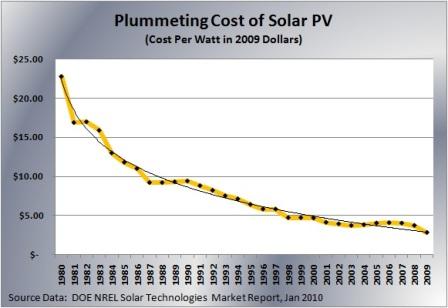
Nissan has a 24 kWh battery for a reason: they can sell the car, after incentives, for about the price of a Prius. Doubling the pack would probably add about 10 grand to the price. If Nissan thought that was where they wanted to position themselves in the market, they would have done so already.
Though, personally, a 48 kWh Leaf would be pretty awesome. I'd pay an extra 10 grand for that. It would be a nice middle ground between an 80-grand Tesla and the current Leaf.