> The [] keys are closer to the central row of your keyboard than the less comfortable ().
> You don't need to hold the shift key to type [] therefore you can code faster.
That's true only for a standard US-qwerty keyboard layout. My [] are located at altGr + (). These guys clearly haven't though i18n through. And if there are such blatant omissions on their front page, who knows what's lurking in the code ?
Even for US keyboards, the obviously better step is to replace "(" and ")" with "9" and "0" -- familiar key location but without the shift key. Plus you avoid using the pinky finger which is an ergonomic win.
Edit: note that there might be a small tradeoff in readability.
I've said it before: j and k are the obvious replacements if you want to ruthlessly Huffman-code your Lisp-typing experience. I, mean how often do you really see j or k inside the text of an atom? Not very often.
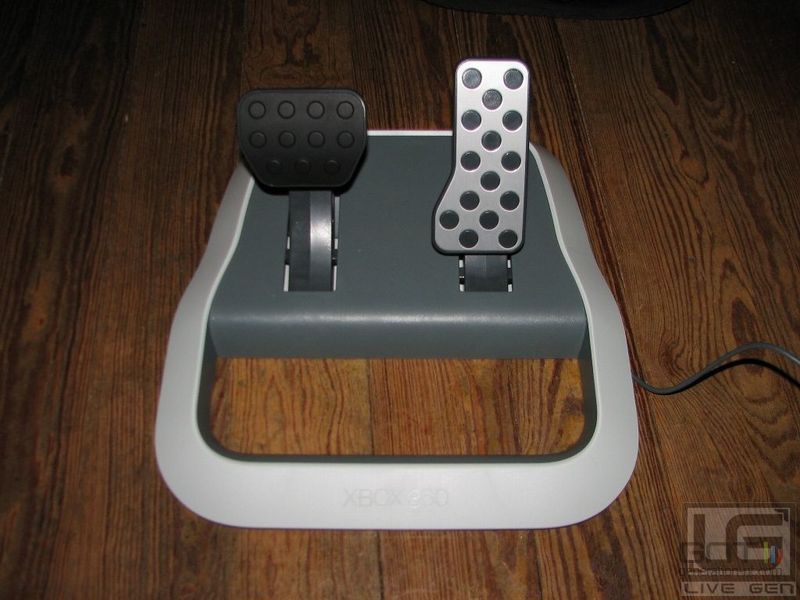
I know some lisp programmers who uses this[1] to code.
The left foot pedal open a parenthesis, the right one close all parenthesis.
I find that's quite clever, though, considering the use of theses two characters.
> And if there are such blatant omissions on their front page, who knows what's lurking in the code ?
There probably are bugs but not because they're unaware of every keyboard layout. It's far easier to accommodate different languages, currencies, number formats, etc than it is to accommodate every keyboard layout.
English and US keyboard layouts (or its close relatives), for better or worse, dominate the programming world.
I don't think the conclusion you've drawn, that there must be issues with the code because your local keyboard layout hasn't been thought of, is logical. That's like saying that because the language keywords and standard library aren't in your native language, there must be dragons lurking in the code.
Having said all this, Clochure does appear to be a nice little April 1st joke and should be flagged with prejudice!
The standard recommendation is to type Sholes 5-10 minutes a day to maintain your ability to hurt your wrists. I haven't bothered to do that and it's a good thing I leave my keycaps alone for the few times I run a VM that is stuck in US layout. I've lost the rolls and fingerings as I've gained them with Colemak.
It's really sad when I have to use someone else's computer, but then I remember that my emails were never longer than a tweet when I first started with Colemak.
I can use it, but I can't touchtype it, so I do feel a little stupid sometimes typing on qwerty and probably couldn't do it without at least glancing at my hands. Its worth it for me though because I spend so much more typing on my own colemak keyboard than I type on qwerty.
I got really excited for a second, and then I realized it was April 1st.
Clojure is a language I absolutely love, but have abandoned for practical reasons. (Debugging Clojure is an absolute nightmare, and the tooling doesn't quite agree with me. The JVM is the biggest hurdle in making Clojure useful for me: it causes slow startups times, a bloated environment, and makes it hard to deploy in our production environment.)
So my immediate though when I read "a better Clojure" was: somebody wrote an LLVM front-end for Clojure and turned it into a fast language compiled to native code.
The post is meant to be a joke, and isn't a bad one as such things go, but its fun to note that square brackets and Lisp go back quite a ways, and were a feature of M-expression syntax. [1]
It is also interesting to note the reasons why Mathematica's syntax, which shares some similarities to Lisp, uses square brackets instead of parenthesis, specifically to avoid ambiguity when using parenthesis to denote grouping terms. [2]
Map the end key to (, and the left arrow to ), and you're hitting both characters with your thumbs.
Then maybe map brackets to PageDown and the down arrow, and braces to PageUp and up arrow for an easy reach with the ring finger. Or those big delete/backspace keys in the middle could be useful.
No self-respecting vim user needs any of these keys.
I'd like to see a lisp that allows all the kinds of different brackets. ( 〖〗〘〙〚〛〈〉() [] <> and maybe more.) I think i can make the code easier to read. All we would need was a emacs script. When the cursor is on the closing bracket there could be a drop down menu. But aside from Haskell Language creators seem to be god dammed afraid of unicode in the language.
Racket allows for (), [] or {} in code and it seems that in practice [] is used to distinguish some syntactic forms that have nested parens from normal function calls such as the let and cond forms. So instead of
I know it's a joke, but why are languages so damn stuck on syntax. Why can't it be a one line change for person A to have () and person B to have [] (and person C have <>, or {}), and then have tools which automatically translate between them.
The same goes for every other syntax problem out there. Python and choosing between tabs, spaces, and smart tabs. The C family and choosing between where the damn braces go. Different keyword symbols (to support different languages!). Different symbol naming styles. All at the whim of personal preference.
We have the technology and (computer) science (more the mathematics really) to build such systems, why don't we!?
/rant
P.S. This is actually what I am working on... When I'm not busy... which is never.
    > why are languages so damn stuck on syntax.
    > Why can't it be a one line change for person A to
    > have () and person B to have [] (and person C have <>,
    > or {}), and then have tools which automatically
    > translate between them.
Aren't languages stuck on syntax because syntax is what's standard? It's the terms in which a language is defined and it's what we must agree upon before we can even start building our own abstractions or swappable gylphs for the parts we don't like.
Fortunately you can use technology to compile your personalized syntax to the standard syntax.
We already do that. In fact, entire communities are built around custom syntax layers.
I imagine someone would only map "()" to "[]" because "()" is either unfamiliar or harder to type.
The superior solution is to learn "()" so that it becomes familiar or map "[]" to "()" respectively.
In both solutions you have an end result that does not distance the source code in the editor from the source code you're pushing to your repository, and that's the kind of thing we seem to optimize for as developers.
Obviously I have no idea what you actually had in mind, this is just what came to mind when I read that bit.
Why not use some other delimiter than parentheses?
We tried various possibilities. Square and curly brackets lose because they are less directional than parens (left and right differ in fewer pixels); < and > lose because they don't wrap around enough to enclose expressions longer than tokens.
One thing to add is that [] is much closer to the right pinky finger, which immensely boost the typing speed comparing to ().
Now that's what I call a true re-thinking in code productivity.
If we go another step further we might consider using ;
;+ 1;- 3 2;;
I am liking it already.
Finally a language I can get behind. I was never able to get into closure, but couldn't put my finger on the reason why. If only more languages could redefine themselves to be more usable and admit they have been outdated for years.
After using TCL for several years and actually liking it, I have to admit the brackets look better. Plus lately I'm all about anti-rsi and shift parens is getting to be a major hassle.
(a constant gets pushed onto the stack. functions like "power" and "+" operate on the stack)
So this also works:
2 30 2 power +
Although I don't really use it anymore, my calculator (an HP scientific calculator) also uses reverse polish notation, so you can keep intermediate values on the stack, and do complex calculations without using parentheses at all. This is also good for keeping people from asking to borrow your calculator in math class. :)
What is the syntax that you posted? It looks just like RPN in reverse. Ok, that was a stupid question. I just figured out that is just "polish notation." It must keep a stack of operations that don't have their operands yet.


> You don't need to hold the shift key to type [] therefore you can code faster.
That's true only for a standard US-qwerty keyboard layout. My [] are located at altGr + (). These guys clearly haven't though i18n through. And if there are such blatant omissions on their front page, who knows what's lurking in the code ?