So the good news is Hawaii isn't the "sudden explosion and everyone dies" kind of volcano. It's the oozy kind. You just have to not stand still and let the lava take you.
That's not to say it's risk free or that some people -- maybe even lots of people -- won't be homeless when the lava finishes flowing, but this isn't a high casualty sort of disaster.
Well, Mauna Loa has a fast moving lava in much larger quantities than the nearby Kilauea, so the scenario might be grim there as well. Large areas can be flooded within hours, especially on the south-west.
Thanks. I sent my friend a message because I’m not sure where abouts in Hawaii he lives. Hopefully he replies soon. But happy to hear it’s not high casualty disaster. Obviously no casualty is better tho.
It is probably going to be a no casualty event -- according to the USGS, only one person has died due to an eruption in Hawaii this century. Radios and cars make evacuations a lot easier.
I'm not even sure we'd expect casualties from the evacuation -- if 100,000 people (twice the population of Hilo) drove entirely around the Big Island (300 miles), you'd only be at around 30 million passenger-miles, well short of the statistical 1 death per 100 million passenger-miles.
FYI: despite popular misconception, "casualty" doesn't imply death. A casualty of war, for example, might actually refer to someone who is wounded/maimed/etc. but still survives.
If a house is consumed by lava and the occupant becomes displaced/homeless, it could reasonably be argued that it didn't result in zero casualties. Same goes for other things that might be more commonly understood as "collateral damage".


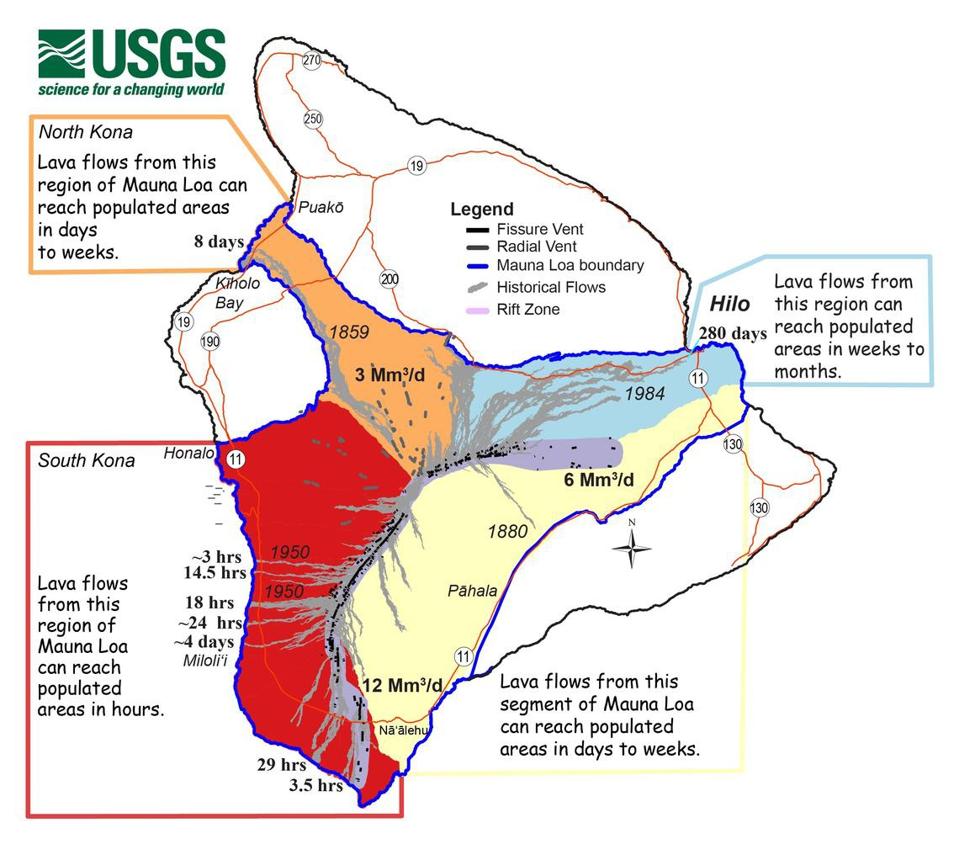
That's not to say it's risk free or that some people -- maybe even lots of people -- won't be homeless when the lava finishes flowing, but this isn't a high casualty sort of disaster.