It can be rather misleading to to talk about renewable energy generation versus total energy usage.
Most uses of fossil fuels are very inefficient. For instance, when you step on the accelerator in your car, only around 30% of the energy in the fuel you use actually is being used to propel you forward. The majority of the energy is wasted as heat. In a power plant that's more like 70% being captured and going towards the goal (electricity generation).
Another large quantity of energy-usage is heating, and electrical heat-pumps can be around 3-5x more energy efficient at heating an enclosed space than combustion or resistive heating.
So while things like heating an transportation use a very large amount of energy, conquering them with renewables actually won't require that Europe installs 10x or whatever more wind and solar, since electrification also brings significant new efficiencies.
______
If you want to compare renewables against the amount of fossil fuels being burnt, then it'd be a lot more representative if you calculate the amount of wind energy impacting a wind turbine blade, or the amount of energy in solar radiation incident on a solar panel. That's an easy way to inflate the renewable numbers by ~5x or whatever
I mostly agree. Certainly transportation is an obvious one. But of course there are still some losses; when you include all the losses in the system and cold weather you can easily get ~80% for EVs vs. ~30% for ICE cars. Heat pumps can be very efficient, but 5x more efficient than combustion/resistive heating (which is near 100%...) is not common in practice. 3x, sure, plenty of installations that get that or better in mild climates.
That said, those are two pretty large items. If we reached 90% electrification on both it would be a pretty big win: Road transport represents ~26% of global energy use and all heating/cooling (industry, building, agriculture) represents ~50%.
Resistive heating is indeed almost 100% efficient, but combustion is only about 90% efficient and that's using modern technology to scrape almost everything we can, which has a cost in terms of the product upfront cost and maintenance. The reason it's not much higher is that we must vent the exhaust gases. If you were OK with the burned gas vapours in your home you could get close to 100%, but they're poisonous and so they must be vented to the atmosphere where they only cause global warming. Venting those gases means losing heat, so that's inefficient.
For the EVs in particular, because motion <=> electrical energy is almost the same either direction (a dynamo and an electric motor are almost identical) we get regenerative braking in most applications. This isn't anywhere close to 100% effective, and of course we net losses from resistance which gets much worse as speed increases - but it's not nothing.
The big win is that global warming problem. Electrifying consumption means fungibility. In my lifetime the UK went from mostly coal electricity, to no coal at all. But few cared because to the end users it's the same electricity regardless of how it was made, and most people probably didn't even notice. So if you move consumption to electricity then the generation problem is de-coupled and can be addressed separately.
Depends, industrial heat is a rather large category. The vast majority of industrial heat in e.g. food production or textiles needs modest temperatures that can easily be handled with heat pumps.
For the rest, there are many ways to heat electrically. Including resistive, plasma, arc, induction, etc. Mostly, gas based heating is convenient because it is rather simple technology that is easy to use and we know how to do it at scale. But there is a lot of wasted heat in industry. Mostly that just blows out the chimneys or is radiated to the universe.
Cooling is as big of a problem as heating is in industry. Cooling is the process of expending more energy in order to get rid of the already wasted energy you can't use. Very little of that energy is recovered. Though some places run e.g. district heating on this type of energy.
There are examples of steel producers that are using electric heat now. Still a bit niche. But it works. A lot of this stuff is inertia. Building and designing new factories from scratch is expensive and disruptive. Gas isn't expensive/wasteful enough to consider that for a lot of existing industries. However, new companies would be well advised to see if they can undercut the competition by going electric. Especially in places where gas now has to be imported in LNG form at great cost.
Unless you live somewhere that (air, e.g. in an EV) heat pumps can't function at high efficiency. Tonight and tomorrow night will be -20F/-28C. Always good to have a backup plan, no matter what your primary heat source is.
My Vaillant air to water heat pump is "effective" down to -28C, and has a resistive heater element as a backup in case the COP value flatlines (as in if COP is 1, it doesn't matter).
My cheap air to air heat pump in the summerhouse (Panasonic HZ25ZKE) is effective down to -25C and has a COP of 2.22 there. Even at -25C it still delivers twice as much heat energy as the electricity consumed.
While we very rarely have temperatures below -20C in Denmark, i have yet to experience a "drop" in performance from it. Granted, it becomes a lot noisier in very low temperatures, but it "does the job".
I'll add that this being an older house (1970s) we have "other issues" that causes heat loss, so we usually run the log burner for supplementary heat during those few days of -20C. The heat pump can keep the house warm, but you can feel the cold "pushing in" from walls and windows (dual pane).
Sadly the heat pump has also kinda voided all attempts to renovate for saving energy. Our yearly heat cost (heating and warm water) is around €750, and adding insulation would cost around €3500, for a potential saving of around 10-20%, so a total of 20-30 years to earn itself back again.
Almost no one lives in a location where heat pumps are never (or even usually) inappropriate. Yes, it might get to -20 F, but how often does that happen over a winter, never mind over a year?
My area doesn't get that cold, but the insulation is so good that last year we accidentally turned the heat off for a week without noticing despite it snowing outside; our "backup" was our own body heat plus the waste heat from our normal electricity consumption (which also isn't high).
I've seen a demo house in Canada that had a bucket standing in the middle of a room with -20 outside. The bucket had been there all winter and it never froze, a single, huge candle warmed the house. It was most impressive. I never did figure out how enough oxygen made it in to keep that candle burning!
But it really made me realize that even though I'm used to brick houses and stone everywhere that that is a terrible thing efficiency wise. A properly insulated wooden house can indeed be heated almost by body heat and waste heat alone. The big loss is windows so triple insulated and properly mounted windows are a must for such a setup.
Modern air-to-air heatpumps heat at over 100% efficiency even at those temperatures, they are very widely deplyoed in the Nordics for heating. And even where it is sometimes that cold, most of the year it is warmer than that. Still yes, you should have another source of heat just in case.
While I'm sure that it suits some people to connect "Electricity got more expensive" with "The primary generation sources changed" as a primitive post hoc ergo propter hoc argument that doesn't really work out.
> Something like 50% of marine fuel usage is shipping fossil fuels around the world
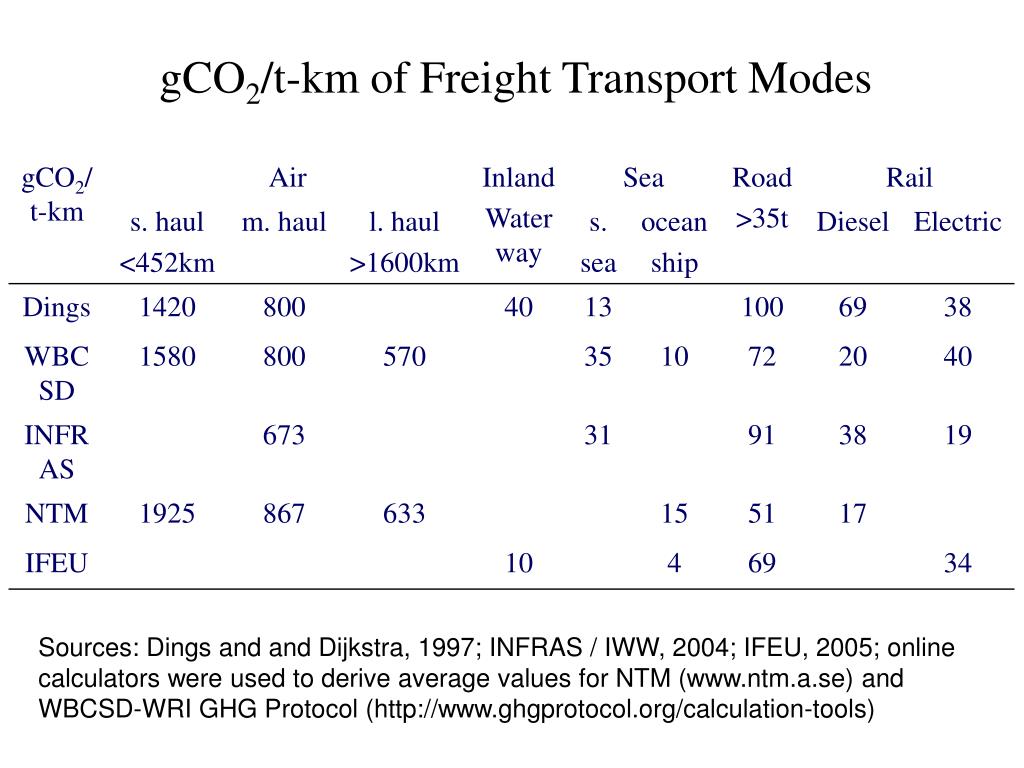
Note that marine shipping is extraordinarily fuel efficient (from a gCO2/(t*km) basis), so I doubt that it adds a lot on a per ton of fuel basis. We just ship a lot of fossil fuels.
This [1] graph looks to be in the right ballpark from what i remember in school 15 years ago, i didn't verify it in depth but +- an order of magnitude better than the next best method is roughly right
Even though petroleum product shipping accounts for almost 40% of shipping, the surprising efficiency of ocean transport still means that it's not that big an energy cost; a single-digit percentage of the energy content of the shipped oil/gasoline.
But even that is still worth saving - it's a few percent more benefit for electrification.
Marine transport is stupidly efficient and probably won’t influence those numbers much. For the same reasons it’s absolutely okay to eat avocados from overseas. I believe the processing of oil to gas is quite energy intense tho.
in cold weather an ice is not close to 30%, that's an achievable warm weather figure when everything's working efficiently. Many ice journeys are so short in cold weather that efficiency never peaks above 10%
Well, EVs also lose a lot of efficiency in cold weather as well. You'll also note that the 70% figure I gave for power plants is more or less a best case scenario for modern, well designed plants. A lot of currently existing power plants do much worse than 70%
True, system thermal efficiency for the UK's CCGT generation is about 50%. Obviously that's with a varying throttle (the UK goes from say 5GW of CCGT to 25GW of CCGT in an hour if the wind drops just as everybody wakes up) and you'd do better than 50% if you were baseload running 24/7 at peak performance - but that's not a realistic place for CCGT to be when nuclear fuel is basically free and the two new big sources (solar and wind) aren't even running on actual fuel anyway.
Exactly. It is in general (much) more efficient to burn natural gas in a power plant and use the electricity for heatpumps compared to simply burning gas at home for heating.
Yeah, in combined cycle plants you burn the natural gas first in a gas turbine first, use the waste heat from that to boil water and run steam turbine. Then condense the steam using your district heating circuit.
You can say this is 100% efficient as you make some electricity and the rest does house heating.
The thing is that your home's heatpump has an efficiency of 300%-500%. So even if your power plant and power delivery only has say 50% gas-to-electricity-at-home, you are still looking at 150%-250% gas-to-heat-your-house efficiency.
> Most uses of fossil fuels are very inefficient. For instance, when you step on the accelerator in your car, only around 30% of the energy in the fuel you use actually is being used to propel you forward. The majority of the energy is wasted as heat. In a power plant that's more like 70% being captured and going towards the goal (electricity generation).
Yes, but there are also future inefficient uses of renewables. E.g. when making iron, you heat the ore (iron oxides) with coke (refined sulfurless coal). The coke will provide extra heat and act as a reduction agent, separating the oxygen atoms from the iron oxides. Now you can do the same thing with hydrogen as the reduction agent to avoid producing CO2 and to avoid using fossil fuels. However, creating renewable hydrogen is atm only 30% efficient, storing and transporting it has losses. Even with possible improvements, that hydrogen will be a very inefficient and costly use of electricity, and at least half of it will always be wasted.
So in terms of total energy usage, making those kinds of industrial processes use hydrogen, we will have to at least double our electricity output. And a lot of that doubling will be wasted because of the inefficiency of electrolysis, as opposed to directly using coal or natural gas.
The interesting bit about using H2 in industrial processes is that, while inefficient, it's also the school book example of variable loads. Solar and wind produces power extremely cheap but intermittent, so in a grid the push down prices when they produce the most. Variable loads can, at least in theory, be run when prices are the cheapest.
Uh, can you provide any scientific papers that H2 can be used for Iron smelting?
CO2 is very stable, even at high temperatures. Its hard to strip O2 from it (except photosintesis). Now, H2 itself is very violatile gas. When burn, it creates water. Water is not stable high temperatures. It become vapor and when temperature rise it can even break bond between H2 and O.
No, not at all. Coke or hydrogen always only provide additional heat, they are never the main source of heat. The main heat source can either be coal or an electric arc furnace. The coke or hydrogen are just necessary for the chemical reaction, and providing some heat is a side-effect.
Sorry, in face of OP’s tone I allowed myself some sarcasm. Obviously there needs to be additional energy. You’d have some equilibrium with those reactions and OP didn’t make any argument why that can’t be controlled in favor of reducing Fe2O3.
It’s also borderline unbelievable OP never heard of hydrogen in future steelmaking, if they are at all invested in the topic. You’d need a special kind of ignorance to think people are hugely throwing money at this, when the basic chemistry is infeasible.
Well, actually, thermolysis for water occurs at 2200°C. Thermolysis of CO₂ starts at 1400°C, of CO at 3700°C. The melting point of iron is around 1500°C, similarly its oxides.
So water as a product is actually more stable than CO₂, and doesn't undergo thermolysis at the relevant temperatures for smelting iron. Whereas when going the CO₂ route, there is the risk of producing relevant amounts of CO, which is not as desirable and less efficient because it only absorbs half the oxygen.
Cost is a big question, but it will for sure be more expensive to use hydrogen. Back of the envelop calculation (250$/t coal price, need 1/3t of H_2 for the same effect, so H₂ may cost up to 750$/t, need 40kWh/kg for H₂ electrolysis at 100% efficiency) gives a breakeven electricity price of 1.875ct/kWh. While this happens from time to time due to overproduction, those prices will even out as soon as there is a market for that excess electricity through batteries, storage and electrolysis. Which means that cost-wise, the H₂ route will never be more effective than coal. To make it viable, coal use needs to be made more expensive through taxes and tariffs.


Most uses of fossil fuels are very inefficient. For instance, when you step on the accelerator in your car, only around 30% of the energy in the fuel you use actually is being used to propel you forward. The majority of the energy is wasted as heat. In a power plant that's more like 70% being captured and going towards the goal (electricity generation).
Another large quantity of energy-usage is heating, and electrical heat-pumps can be around 3-5x more energy efficient at heating an enclosed space than combustion or resistive heating.
So while things like heating an transportation use a very large amount of energy, conquering them with renewables actually won't require that Europe installs 10x or whatever more wind and solar, since electrification also brings significant new efficiencies.
______
If you want to compare renewables against the amount of fossil fuels being burnt, then it'd be a lot more representative if you calculate the amount of wind energy impacting a wind turbine blade, or the amount of energy in solar radiation incident on a solar panel. That's an easy way to inflate the renewable numbers by ~5x or whatever