In most cases, an imperative example in a curly-bracket language (JavaScript as one example) has the same number of parens and curly brackets as a Lisp has in parens. They're just in different places.
And, the non-Lisp languages tend to have more rat droppings => , ; . etc.
f is a function which takes two arguments, adds them, and returns the result.
For me much of the appeal of the syntax comes from using it with a editor integrated REPL, or when writing macros, or when generating linter configuration from a domain model etc.
However I agree with you on some level. Lisp code can easily be written in a way that’s hard to read. Specifically because of nesting expression way more often than is comfortable for me to read. I much rather prefer let bindings and threading so most of the code reads from left to right.


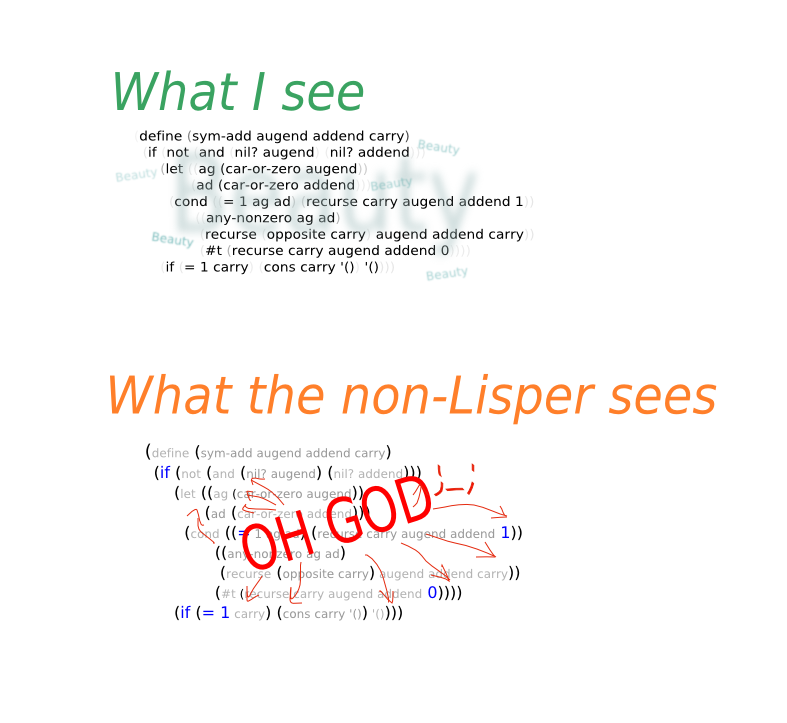
Every now and then I try to check out a Lisp project and this is my reaction the moment I see the code: https://giphy.com/gifs/seinfeld-bye-jerry-106PwpLIIXJnXi