Even if in plain view, it can be very illegal [0].
Never assume that your own "common-sense" expectation of how the law or taxes works is the way it actually works. You are almost always guaranteed to be wrong [1]. In this case, your error could have seriously bad consequences,and your ignorance would be no excuse
>> "(a) Whenever, in the interests of national defense, the President defines certain vital military and naval installations or equipment as requiring protection against the general dissemination of information relative thereto, it shall be unlawful to make any photograph, sketch, picture, drawing, map, or graphical representation of such vital military and naval installations or equipment without first obtaining permission of the commanding officer of the military or naval post, camp, or station, or naval vessels, military and naval aircraft, and any separate military or naval command concerned, or higher authority, and promptly submitting the product obtained to such commanding officer or higher authority for censorship or such other action as he may deem necessary.
(b) Whoever violates this section shall be fined under this title or imprisoned not more than one year, or both."
[1] Married to a top attny, the first thing said about almost any question is "go read the actual contract or the actual code" before even bothering to start reasoning about the thing. Even an attny's inital assumptions are very often wrong. We'd (at least should) be saying the same thing about any software system.
The flip side is that the rights and freedoms we take for granted in the US are fundamentally upheld by the people believing that we have them. The broad first pass in this case is referenced by the 1st amendment, which we generally take to mean living in an open society where we have the freedom to report on what we can observe. This thread being full of people chiming in to defend the general concept, regardless of whatever small-picture legal theory has motivated the government to do this, demonstrates this dynamic. Ultimately, the more people that naively say "These actions are plainly un-American", the better off we are.
You are saying that it is plainly un-American to have military secrets?
They go back to George Washington, before the founding of the country.
The rights and freedoms we have are not absolute. They are also tempered by responsibility to maintain, sometimes by force, the ability to have those freedoms.
Of course, all of us would like to live without the need for police or military. But the fact of the actual (not ideal) world is that there are always bullies and authoritarians who are happy to take what they want and rule how they like, not by assent or fairness, but by deceit, force, and violence. Anyone who wants to live a self-determining life or live in a democracy must be better armed than the bullies and expansionist autocracies, or they will soon be ruled by them.
Military and technological secrets are a key part of maintaining an advantage over expansionist autocracies, and are at least as American than Apple Pie.
So, NO, people claiming that we should not have a military or secret technologies are not making us better off — they are literally helping undermine the only force that keeps us from being ruled by the likes of Putin or Xi. Ask any Ukrainian, Lithuanian, Estonian, Latvian, or Taiwanese. They did not enjoy the privilege of growing up well-enough protected to be ignorant of the threat. Consider that before posting that ignorance.
You do realize there is a huge distinction between having military secrets, and persecuting private citizens who report on things that are openly discoverable, right?
This tension has also been there the whole time. Leaking classified information is a crime, while propagating information that has leaked into the public domain is not. For good reason - those with deliberate access to classified information have been entrusted to keep it secret, whereas the public and the press have not.
As far as military advantage, we are made stronger by the military needing to stay ahead of the investigations of an open society. Because if private citizens can discover things from mere curiosity then foreign spy agencies most certainly can. If you care about military strength, attempts by the military to maintain superiority by lazily asserting control over civil society should concern you very much.
Seeing and disseminating info are two vastly different things.
Seeing something, vs taking a photograph, vs publishing a set of photographs are very different things.
Assembling a set of information, making a drawing, documenting in a more digestible form, analysis, those are all actions more related to leaking classified information than publishing info someone else found.
That distinction is what the laws are about. Plus, the legal conventions surrounding prior restraint are strong, but not absolute.
So, if you're talking about publishing a picture of the front of the Pentagon building, which thousands walk/drive by every day, fine. Using dozens of visitors to compile an architectural drawing of the interior locations of guarded rooms and publishing that? Not so much.
Inhibiting the compilation and free exchange of information is absolutely an inhibitor to adversaries. Even if they could technically see any of it publicly, it becomes insurmountable to see all of it publicly, or enough to compile an accurate picture.
That is why information is highly compartmentalized and distributed only on a need-to-know basis. I'm literally now working on components to a Navy machine that I can only guess what are the other parts and how they fit together. My parts aren't classified, but fall under CUI, Confidential Unclassified Info".
There's a very good reason that. E.g., even though you and I could walk to the door of every data center and power substation in the country, these things are kept obscure. Every data center I've seen is extremely nondescript. If you start assembling the exact location and configuration of every such installation, you'll soon and rightly see some friendly guys with FBI badges.
No professional pretends that this is an absolute protection, anymore than any professional pretends that an uncrackable safe can be built.
Of course a foreign spy agency could discover anything a curious citizen might. But they can't discover everything that every curious citizen might.
The point is to increase the workload and uncertainty for the adversaries.
Permitting open information compilation and publication at all times would dramatically reduce that workload, especially with the internet. So, look and be curious all you want. Just don't start compiling and publishing it.
And in this case, using drones to look "over the fence" into a USAF secret testing grounds should indeed get you targeted for investigation real quick, just as it would any foreign adversary's agent doing the same thing.
And no, it is not an argument that "stay[ing] ahead of the investigations of an open society" 'makes us stronger'. That is no more of an argument that curious hackers digitally wandering around some org's network will make them stronger. Yes, it is the responsibility of both to keep themselves secure, including employing white-hat hackers and such, but that doesn't mean that randos should be tolerated.
If you click the Notes tab it's right there. Executive Order 10104
Ex. Ord. No. 10104. Defining Certain Vital Military and Naval Installations and Equipment as Requiring Protection Against the General Dissemination of Information Relative Thereto
Ex. Ord. No. 10104, Feb. 1, 1950, 15 F.R. 597, provided: WHEREAS section 795 of title 18 of the United States Code provides: [Omitted.] AND WHEREAS section 797 of title 18 of the United States Code provides: [Omitted.] NOW, THEREFORE, by virtue of the authority vested in me by the foregoing statutory provisions, and in the interests of national defense, I hereby define the following as vital military and naval installations or equipment requiring protection against the general dissemination of information relative thereto: 1. All military, naval, or air-force installations and equipment which are now classified, designated, or marked under the authority or at the direction of the President, the Secretary of Defense, the Secretary of the Army, the Secretary of the Navy, or the Secretary of the Air Force as “top secret”, “secret”, “confidential”, or “restricted”, and all military, naval, or air-force installations and equipment which may hereafter be so classified, designated, or marked with the approval or at the direction of the President, and located within: (a) Any military, naval, or air-force reservation, post, arsenal, proving ground, range, mine field, camp, base, airfield, fort, yard, station, district, or area. (b) Any defensive sea area heretofore established by Executive order and not subsequently discontinued by Executive order, and any defensive sea area hereafter established under authority of section 2152 of title 18 of the United States Code. (c) Any airspace reservation heretofore or hereafter established under authority of section 4 of the Air Commerce Act of 1926 (44 Stat. 570; 49 U.S.C. 174) except the airspace reservation established by Executive Order No. 10092 of December 17, 1949.
Considering that this is pretty standard around all military installations, and that it took me about 10sec. to search "area 51 entry gate photos" and find a huge red "NO PHOTOGRAPHY" sign [0], and even one showing a citation of "18 USC 795" [1] among a brace of oth1er WARNING! signs, I'd characterize your attitude as, at best, damn foolish.
Yes, there is are very large amounts of things that the US Mil does in secret to maintain it's edge in the ability to fight off expansionist autocracies and be the arsenal of democracy. This is a very good thing, as without it, we'd be ruled already by the likes of Putin, Xi, or Un. People with a clue do NOT want access to TS+ info outside their role. But fools rush in ...
What's the case law on this? Has this been ruled constitutional? Looks like it was created in the run-up to WWII, and has only been modified to change the fine.
I'll refrain from expressing my opinion on what a load of horseshit the mere existence of this law is.
Ironically, the only reason you can so loudly make such a claim about the law is that the US military is sufficiently powerful over several generations to keep expansionist authoritarian governments at bay, even merely by supplying friends with our technology.
Maintaining the edge over expansionist authoritarian govts is essential to maintain democracy.
Maintaining that edge will necessarily involve controlling significant amounts of information.
The only horseshit I smell around here is an ignorant opinion loudly stated. But go right ahead and take some pics and publish them. Be sure to report back on the results.


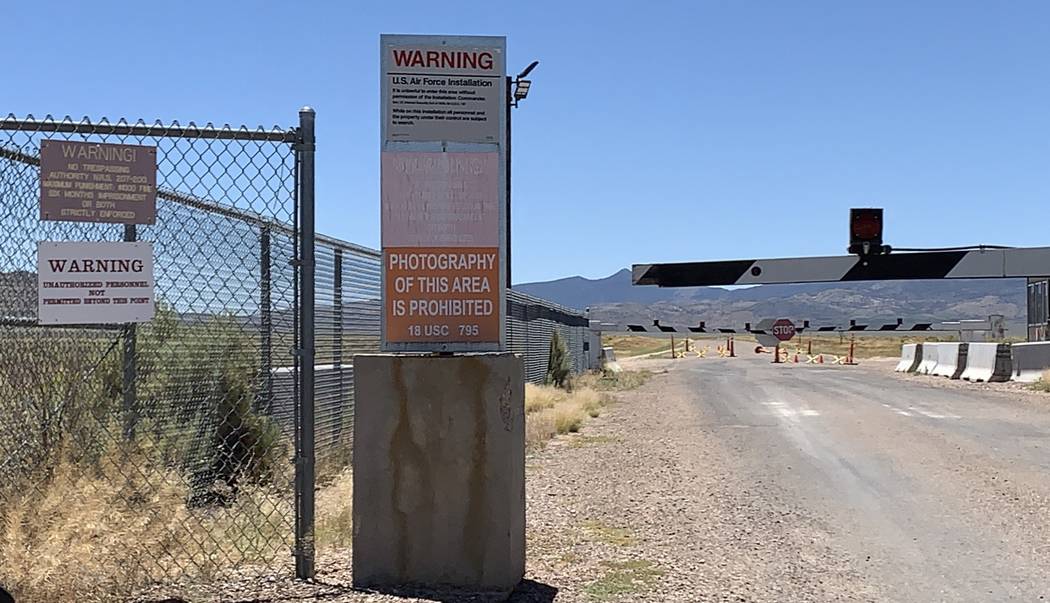
Even if in plain view, it can be very illegal [0].
Never assume that your own "common-sense" expectation of how the law or taxes works is the way it actually works. You are almost always guaranteed to be wrong [1]. In this case, your error could have seriously bad consequences,and your ignorance would be no excuse
>> "(a) Whenever, in the interests of national defense, the President defines certain vital military and naval installations or equipment as requiring protection against the general dissemination of information relative thereto, it shall be unlawful to make any photograph, sketch, picture, drawing, map, or graphical representation of such vital military and naval installations or equipment without first obtaining permission of the commanding officer of the military or naval post, camp, or station, or naval vessels, military and naval aircraft, and any separate military or naval command concerned, or higher authority, and promptly submitting the product obtained to such commanding officer or higher authority for censorship or such other action as he may deem necessary.
(b) Whoever violates this section shall be fined under this title or imprisoned not more than one year, or both."
[0] https://www.law.cornell.edu/uscode/text/18/795
[1] Married to a top attny, the first thing said about almost any question is "go read the actual contract or the actual code" before even bothering to start reasoning about the thing. Even an attny's inital assumptions are very often wrong. We'd (at least should) be saying the same thing about any software system.