My argument for minimum wage has always been a philosophical one - human life and human labor has intrinsic value and any company's bill of materials ought to include labor. The 'market price' of a human life is, say, rent and food and medical bills (grossly oversimplified but the philosophical point is the same). Anything less than that is an undersell, equivalent to selling a food for less than the cost of farming it, or selling a device for less than the manufacturing cost. I.e. nonsense in the general case. Companies have been allowed to undercut worker's value for centuries under the threat of homelessness and starvation. That's not a free market. That's robbery.
Companies are the only entities we allow to just take, setting their own prices, without quarrel, because laborers don't have bargaining power when selling their labor. Hell, the interview process should be proof enough of that. Oppositionally, I believe in human dignity - I think a worker should be able to bargain. Frankly, since us regular people can't just go up to the store and say "well, I don't wanna pay full price for this item, so I'll just pay less for it - what're you gonna do about it anyway?" (we'd get arrested) I don't think a company should be able to either. When you frame it in terms of an open market, the current labor situation sounds obviously and patently absurd.
If I hire someone for $25 to mow my lawn, should that be fine if they get it done in 1 hour, but I have to pay them $50 if they are slow and it takes two hours?
I fundamentally disagree with your premise. Your rhetoric mimics that of a socialist. I'll tear apart your philosophical rhetoric one part at a time.
> human life and human labor has intrinsic value and any company's bill of materials ought to include labor.
Human life has intrinsic value, it could be argued from a moral standpoint, but human labor does not. What matters is what that labor is used for. I could have you spend all day making mud pies. That does not mean your labor is worth anything. The only thing that can determine the true value of your labor is what someone else is willing to pay for i.e. the market.
> Companies have been allowed to undercut worker's value for centuries under the threat of homelessness and starvation.
More people than ever before have been lifted out of homelessness and serfdom because of the free market. Companies working under a free market is a pretty new and novel idea.
> Companies are the only entities we allow to just take, setting their own prices, without quarrel
This is wrong on several takes. First and foremost, you're implying that workers in general should have the ability to unilaterally determine the value of their own labor a market. This is in direct conflict with the realities of the free market i.e. spending all day making mud pies. You can moan and groan all you want, but yes, if all your work requires is the basic use of your prefrontal cortex, your labor is less valuable than if you were a doctor. That's not the fault of the employer.
> Oppositionally, I believe in human dignity - I think a worker should be able to bargain.
They DO have the ability to bargain. Their ability to walk away is one of their most powerful things they can do. If you truly believe you're getting a raw deal and that your labor is worth more than whatever compensation company X is offering, then you should simply walk away and apply for company Y. In a free market, the role of the buyers and sellers are inverted because it is the companies that are the buyers; specifically they buy the commodities that are your labor.
And this is not even touching on the basic principles of supply and demand in context to minimum wage. The fact of the matter is, a minimum wage does not lift people out of poverty - it removes rungs from the bottom half of the ladder. Precious rungs to low skilled employees that use them to climb up out of poverty. Companies will not just eat the cost - they do not want to go out of business. They make a cost-benefit analysis and compensate for this minimum wage by firing their low-performing staff to make the remaining higher-performer workers work overtime. Now it's harder for new people with little job experience to find employment. Congratulations - you've just hurt the very people you've intended to protect. And this isn't even touching on the impact of dead weight loss caused by minimum wage.
You need to study the basic concepts of microeconomics before formulating your philosophical principles, because as of right now, I can tell you that they are a little insane.
> Human life has intrinsic value[..], but human labor does not.
I wonder if you'd agree with the statement if one would replace "human labour" with "the human's time". Therefore the labour itself can be meaningless (though I bet that for building mud houses, they can be pretty useful[1]), but the time the person spends on it has intrinsic value and should be rewarded accordingly.
I can't speak for how raising minimal wage in the US would help the 13% of poor people, but I am pretty sure that:
> Precious rungs to low skilled employees that use them to climb up out of poverty.
is thoroughly disproved by the current state of the income divide in the country. There are plenty of people under the poverty threshold that are unable to climb out and that's mostly due to the discrepancy between their possible income and their day to day expenses. Raising the minimal wage seems like the facile solution to close that gap. You can of course continue to argue the microeconomics angle, but I haven't heard of any solution proposed by the people that have a handle on it that could be an option. Have you? Could you tell us about it?
I wouldn't agree with your version of the statement. A person's time is indeed intrinsically valuable -- to that person. Market value is how much their time is worth to other people; that depends on what they're doing with their time and under what circumstances. I think proposals for high minimum wages are trying to solve a real problem, but they're barking up the wrong tree.
The problem is that many types of labor don't generate enough market value to earn a living. The one thing markets are really good for is establishing price signals that reflect how much one thing is valued relative to another thing. (This, however, does require a healthy, competitive market which often does not exist. For example: in "company towns", individual employers have so much market power that they don't have to pay wages that reflect the theoretical economic value of labor. When an industry is dominated by a few large players, collusion happens. Etc.)
When pay is low because the labor just isn't that valuable, artificially propping up wage prices will cause substantial distortions and side effects downstream. After all, those wage prices get bundled into a lot of other pricing signals in the economy, all of which are interacting in a complex system. A far, far better approach is to simply supplement those workers' pay directly from the government, to bring them up to an appropriate income level. This isn't free of side effects either, but I would argue they are greatly reduced.
> A person's time is indeed intrinsically valuable -- to that person.
That would explicitly make it extrinsically valuable, not intrinsically. The value is assigned subjectively from outside rather than an inherent property of the time itself.
But then all value is really extrinsic, assigned by people to goods and not a property of the goods themselves. "Intrinsic value" does not exist.
> For example: in "company towns", individual employers have so much market power that they don't have to pay wages that reflect the theoretical economic value of labor.
They are paying wages which "reflect the theoretical economic value of labor". In particular, they are paying wages which exceed the perceived value (opportunity cost) of the labor to the employees. Even in a company town one is not compelled to work for the dominant employer—one can leave, or attempt to become self-sufficient, or start a competing company. There just isn't much demand-side competition for labor in that environment, so more of the surplus value accrues to the buyer rather than the sellers. Those who sympathize more with the employees would prefer the opposite, but that's just favoring one side over the other in negotiations. There's no sense attacking the employer here. If you want to improve the lives of those living in the company town, give them better options: more productive employment, for example, and loans to cover the cost of relocation.
> A far, far better approach is to simply supplement those workers' pay directly from the government, to bring them up to an appropriate income level.
Because paying people to remain in unproductive jobs always turns out so well… If a job can't pay "an appropriate income level" (i.e. an income level the employee—not some third party—considers worthwhile, and which covers their actual living expenses) without subsidies then it isn't worth doing. The existence of that job is a net loss to society. Not to mention that this is effectively a subsidy for cheapskate employers, who no longer need to pay market wages since someone else (mostly the middle class) is committed to making up the difference.
> The fact of the matter is, a minimum wage does not lift people out of poverty - it removes rungs from the bottom half of the ladder.
The “fact of the matter” is that despite decades of study, economists have come up with countless studies indicating both that minimum wages help and harm people in poverty. There is no definitive study one way or the other.
The economist I'm quoting is Milton Friedman. Who are your economists, I wonder? Some liberal who wants to use the force of government to impose their will on small businesses so they can act virtuous to get votes?
Let's try an analogy - you dole out the whatever thousands of dollars it takes to buy a robot from whatever engineering company you fancy, including all the parts, labor, rare earth metals, venture capital interests, and whatever else went in to making it, you buy the whole damn thing off the shelf.
If you then go and make it make mud pies, that's your problem. Furthermore, if the robot doesn't perform as adequately as you want, that's also your problem. You already paid for the thing. You can't just go complain to boston dynamics and say "actually, I've personally decided this robot is worth less than I paid for it, so I'm going to take back half my money and keep the robot". That's not how it works in the market of things, but in the market of labor, it is, because workers are under threat of homelessness and starvation. Companies get the labor they can't afford anyway.
What I'm saying is that fundamentally, a human livelihood has an upfront cost and that's the cost it takes to keep a human alive. I'm not talking about what work you as a hypothetical manager end up making this hypothetical person do, or how good at it they hypothetically are, I'm talking about living human beings as they are, baseline, whether or not you consider their labor valuable or potentially valuable.
The rest of your argument hinges on this misunderstanding, willful or otherwise. You've torn apart nothing but your own strawmen. Pragmatically, I'm not even sure minimum wage is the right choice to rectify this indignity, other options range from nothing to UBI to free housing programs to guaranteed jobs to communism. I'm not commenting on which one is best, I'm commenting on the moral framework from which these ideas come from.
Employees are inherently a service contract, without the upfront cost. You are renting the robot I your analogy.
Humans do have upfront costs too, but those are on individuals to pay. Generally the manufacturers of those parents (parents). It is not the responsibility of an employer or others to reimburse for those costs. Humans also have maintenance costs and personal desires, but those are not the responsibility of the employer either. The only responsibility is to pay an agreed upon price.
People are entitled to nothing from others beyond being free from direct harm.
I think what's being missed here is the function of a minimum wage is preventing workers from selling their labor below cost, just as we might attempt to prevent companies from selling products below cost under certain circumstances.
Why not let them sell below cost if that is all the labor is worth?
I understand that we want people not to starve, but surely paying them their labor value is better than them not working at all.
If the main issue is the difference between what their labor is worth and the necessities to survive, why is it the employer who should subsidize them?
The reason we prevent companies from selling below cost is because it is an unfair advantage to those companies-a very different concern than workers below cost.
This is beside the fact that the threshold for 'below cost' is not an economic reality, but an entirely arbitrary and unrelated moral position.
Why is the employer not the one who should subsidize it?
Why should the employer only profit from underpaid labor?
Is it because they "create jobs"? But no, most jobs exist whether someone is running a workplace or not.
Also you seem to have the idea that working a job is somehow inherently good. Some of them just are not and are a waste that are actively preventing people from working on what is necessary.
Example, a store clerk paid more than a teacher despite shortage of teachers. Garbage disposal specialists being notoriously underpaid because we feel like it.
Research being underfunded compared to development compared to management.
Finding a place that's paid actual labor value is almost impossible in fact, as if the system based on maximizing profit is not optimizing for that but for lowest possible salary...
You can compute a rough estimate of a labor value by an input-output model. Note that more things being produced is an actual negative value if they're not needed or sold.
Suppose having a line manager makes an employee 5% more efficient than not, but the gain falls the more employees each manager has to manage, even potentially becoming negative in some cases. Yet, "market forces" which is other managers set themselves a high salary.
>Why is the employer not the one who should subsidize it? Why should the employer only profit from underpaid labor?
I dont think the work is underpaid. If the price is low due to supply and demand, it is not underpaid, it is just low value labor. If we want people to have more money than their labor is worth, then the people who want them to have money should give it to them, or help them increase the value of their labor.
>Also you seem to have the idea that working a job is somehow inherently good.
Not at all. I think that self sufficiency and people taking care of themselves is good. Working and making money is good in that it reduces the need for others to subsidize and pay for their lives.
>Some of them just are not and are a waste that are actively preventing people from working on what is necessary.
I think this is a inaccurate and paternalistic view. low paid jobs are not a barrier. People can and do find better jobs. Destroying a job does not create a better job.
>Examples
Nobody in the examples underpaid. These are just examples of labor that has low value (supply and demand). If garbage specialists are underpaid, it isn't because "we feel like it", it is because it is low skill and anyone can do it. If teachers are underpaid, it is because we don't want to pay more for higher quality teachers.
You seem to be coming at things from a Marxist theory of labor value, which isn't workable.
>Why is the employer not the one who should subsidize it?
Because it's a government policy. If the government wants everyone to earn $25 an hour, the government should pay for it by providing a universal basic income, rather than forcing a third party to pay for it. This would also ensure that people that can't do work worth $25/hour can still survive.
The government should also be the one paying for universal healthcare, rather than (again) foisting the responsibility onto employers and forcing people to choose between being exploited in a job and losing health care for their family.
> People are entitled to nothing from others beyond being free from direct harm.
You state this as though it is an absolute fact. In reality, it's completely arbitrary, vague and reflects only your personal values. What is direct harm? Why am I entitled to not being caused it? Why am I not entitled to being free from indirect harm? If I poke at you, not directly, but using a stick, is that indirect harm? Is not paying you the agreed upon price dorect harm? Why is there a responsibility to honor agreements, but nothing else?
Even given a generous interpretation of "direct harm" it doesn't reflect society as it is: in reality, people cooperate, compete, create hierarchies, cause and accept harm, lead and are led and assign and divide responsibilities amongst themselves according to a wide range of value systems...so I guess yours is just some kind of prescriptive wishful thinking? Sort of like the libertarian version of the ten commandments?
"Human life has intrinsic value, it could be argued from a moral standpoint, but human labor does not. What matters is what that labor is used for. I could have you spend all day making mud pies. That does not mean your labor is worth anything. The only thing that can determine the true value of your labor is what someone else is willing to pay for i.e. the market."
That's the basic failure of a capitalist. They want to shift the risk onto the worker without sharing the reward.
A human hour is worth precisely that - an hour. What is done with the hour is at the risk of those buying the hour, not those selling it.
It's for the capitalists to obtain the productivity. That is, after all, where their share of the pie comes from. If they can't do that, then it is the capitalist that starves, not the worker.
"They DO have the ability to bargain. Their ability to walk away is one of their most powerful things they can do"
Except that the power asymmetry stops that from working. Workers have to get work to eat, businesses only need to hire if there is a chance to profit. The time horizons are mismatched.
Therefore with the system we have, where there are systemically fewer jobs than people who want them, the bargaining power is with capital, not labour.
To fix it requires a default job, and a wide based tax to support that. That way if capitalists fail to hire everybody they pay anyway.
We don't have a free market though. We have a market captured by oligarchic monopoly. Also you come off as a jerk. Maybe fix your tone and style so you don't come across as pedantic?
> I fundamentally disagree with your premise. Your rhetoric mimics that of a socialist. I'll tear apart your philosophical rhetoric one part at a time.
I fundamentally disagree with your premise. Your rhetoric mimics that of a libertarian. I'll tear apart your philosophical rhetoric one part at a time.
> The only thing that can determine the true value of your labor is what someone else is willing to pay for i.e. the market.
Right, because capital is always virtuous and would never use its market power to suppress wages...
> You can moan and groan all you want, but yes, if all your work requires is the basic use of your prefrontal cortex, your labor is less valuable than if you were a doctor.
You are conflating value and price. Society would collapse much faster if the low paid servant class collectively stopped working than the high paid knowledge workers (hence we had to make them "essential" and coerce them into working during the pandemic). At least the servant class actually does work of material value. Many if not most knowledge workers are producing little actual value and it is notoriously difficult to determine who actually is producing the value and that isn't even getting into externalities that aren't correctly priced by the market. Do you really think that most companies correctly pay people in proportion to the actual value of their work? That certainly has not been my experience.
> They DO have the ability to bargain. Their ability to walk away is one of their most powerful things they can do.
Not everyone is a well paid computer programmer. Not everyone has the ability to miss a single paycheck and not suffer potentially dire consequences. Employers exploit this power differential all the time. There is a reason why the labor movement emerged and why capital has done all they can to hollow it out over the last 50 years. (Of course organized labor has its own problems. Sadly the world isn't black and white).
> Precious rungs to low skilled employees that use them to climb up out of poverty.
Citation needed. We have long been enamored with the Horatio Alger myth in American life but there are very, very few people bootstrap their way up to the middle class, let alone upper class, starting from poverty and a minimum wage job (there are many middle class people who work low wage jobs for pocket money and experience when they are teenagers or college age but that doesn't count).
> You need to study the basic concepts of microeconomics before formulating your philosophical principles, because as of right now, I can tell you that they are a little insane.
Economics is a branch of philosophy. It is neither the beginning nor end of knowledge. Just because someone's philosophical arguments are not rooted in economic theory does not mean they are wrong. Economists are terrible at making concrete predictions compared to those who practice almost any other field that calls itself a science. Even when they are right, they tend to be so only in a qualitative way (e.g. they might correctly predict inflation goes up or down in certain scenarios but are unlikely to get even a digit correct). The entire field of economics could use a healthy dose of humility.
So many commenters here are taking it for granted that an increased minimum wage invariably leads to increased unemployment and inflation. It looks like empirical data doesn't really bear that out.
>It appears that if negative effects on employment are present, they are too small to be statistically detectable. Such effects would be too modest to have meaningful consequences in the dynamically changing labor markets of the United States.
>wage-price elasticities are notably lower than reported in previous work: we find prices grow by 0.36 percent for every 10 percent increase in the minimum wage.
>A $10 minimum—According to the CBO's projections, the $10 minimum wage would raise earnings for up to 3.5 million workers and "have virtually no effect on employment." Nor would it have an appreciable impact on the number of people in poverty.
>A $12 minimum—The $12 minimum wage would benefit up to 11 million workers while reducing overall employment by an estimated 300,000 jobs. The number of people whose annual incomes fell below the poverty threshold in 2025 would be reduced by 400,000.
>A $15 minimum—Finally, the $15 minimum wage would benefit up to 27 million workers but cost an estimated 1.3 million jobs. At the same time, a similar number of people (1.3 million) would see their annual incomes rise above the poverty threshold.
The quality of the "standard" minimum wage studies is pretty bad, and it should worry people that there has effectively been no upper bound found on the effects of minimum wage. If someone claims they found an infinite money glitch hack of the economy, it probably deserves some scrutiny (Dube did propose an upper limit of 60% the median wage, but it was very informal).
> obviously it will cause some severe disruption but one lesson of the last couple of years is we can adapt to labor changes.
If the adaptation is more young workers move back in with their parents and more women leave the workforce, then yeah I guess? At this point you are being pretty tacit that the tradeoff between higher wages is lower labor force participation.
We already have a minimum wage of 0. Every person who has no job because of minimum wages gets the true minimum wage of zero. (note transfer payments are not a wage, I'm not saying they have zero access to money)
There are instances in which people pay to work --- "finders' fees", "placement", various assessments to supply tools, (mandatory) uniforms, station rental, etc. Involuntary servitude still exists, even in advanced countries, though it is illegal, usually as "white slavery", mostly immigrant sex workers.
Any job between 0 and minimum wage becomes either a 1099 job or a black market job. When people say $25 minimum wage, they really mean make sure anyone paid less is on the black market and has no protections.
You don’t have to look hard to recognize that people who push for an increase in the minimum wage are actually pushing for raising the minimum wage to “infinity” (in their mind) - i.e. communism.
People don't get that they are subsidizing low wages through food stamps, affordable housing initiatives and a plethora of other social safety programs. Every dollar you put into these programs is a dollar saved by large corporations who pay poverty wages to full time workers. Increasing the minimum wage is the easiest way to end these corporate handouts.
Why do they need to go away? If you earn below $X, you get food stamps and subsidized rent. Increasing the minimum wage means more people earn above $X, so the dependence on these programs decreases.
Social services still need to exist, but when you have Walmart holding sessions teaching their employees on how to make use of them, it is clear that the system isn't working as intended.
if the low wage earner currently uses subsidies like food stamps, and raising the minimum wage causes those subsidies to become out of reach, then the low wage earner would make a calculation and see if the lost subsidies are higher than the gained minimum wage.
If more subsidies are lost, they are worse off, and thus, would rather stop working and get the maximum subsidies instead.
If minimum wage raise is higher than the subsidies lost, the cost of subsidies is "saved" by the taxpayer. but the businesses paying those wages might not want to pay more, so they might decrease number of jobs as a response. Therefore, you'd end up with more unemployed as a side effect.
Subsidizing people who are out of work while all employees earn a livable wage is a categorically better outcome than having to subsidize everyone, employed or not, just because companies don't feel like paying a livable wage.
> If more subsidies are lost, they are worse off, and thus, would rather stop working and get the maximum subsidies instead.
This is an easily preventable issue that can be avoided by phasing out the subsidies instead of setting a hard cut-off.
The point is that the existence of welfare in the absence of a minimum living wage requirement is openly exploited by major, highly-profitable, corporations. Walmart and McDonalds are frequently cited, they're not the only instances.
I live in Paris. My take-home salary before taxes as a software engineer is slightly less than that, it's considered "high" salary as I pay 10% income tax on it.
I'm seriously looking to moving to the U.S. by the end of the year to found a company, and while $15/h is becoming a trend, I don't really think I'll accept to come back to France after 2 years even at double the rate I am being paid now. Not being picky, but software engineer salaries here are just ridiculous (even more so outside Paris) even compared to neighboring countries like the U.K. or Germany
It's not high for an engineer in France. I'm in the 20% bracket (alone, no kid to push me down a level) and i live on the coast (between Bayonne and La Rochelle basically, but i intend to move to portugal next winter, Bayonne is too cold), so i do not have a "I live in Paris bonus".
Your TJM (average daily rate for you english guys) should be at worst at 400€ if you just started (mine is 700 and i'm nota particulary qualified devops tbh). That's like 50€/hour before employer taxes (roughly 30%, so 15€). Your employer have other charges so i guess they can take 5€, it still leave you with 30€/hour which should be the standard for engineer i guess? That's roughly 4k/month-50k/year. A freelance can easely make his 80k in like ten month and take two month of vacation btw (for you not in France: we can't earn more than 80k/year in freelance, you have to start a LLC if you are above that). If you are a painter or i guess any freelance who do not only sell services, but also parts, it is 120k)
Not so long ago I learned that my contracting company's been billing my presence €800 day to my client (or €100-125/h), as I was looking for further explanations on a "you cost too much" remark that I've got. (for non-French people here, IT contracting companies are very secretive about their TJMs especially to their employees)
Thing is my take-home is nowhere close to that. And to negociate for a regular increase is almost a herculean task. I got one after long talks and it just got eaten up by inflation.
I think we all need a wake-up call here in France to stop being exploited. One thing for sure is that if I ever go back to do IT contracting in France it's to work as freelance or at least do a "portage salarial"
You don't need to fly across the Atlantic for that. If you make $50k~$55k gross in one of the 9 US states with no state income tax, your effective tax rate is less than 10%, considering the standard deduction, 10%, and 12% rates.
A cursory search suggests that France, like the US, has a progressive income tax system, so a highly paid worker in France would also have a high tax liability.
Whatever you do, don't get an umbrella. The weather is only gloomy if you don't feel the liquid sunshine flowing on your skin. I lived in a not-so-wet climate for a few years and it was miserable and the sky was incredibly antagonistic to my eyes and skin.
Go to Paris, I have 5 years of experience but not exactly outstanding and yet I get 1 or 2 offers every year without pushing too much.
10% income tax is on your take-home salary. From a different perspective my take-home salary after tax is less than half of what I cost my employer, i.e. if I'm paid €2,500 per month I actually cost my employer slightly more than €5,100 (and even that is ridiculous compared to what people pay in countries with similar income level)
10% figure doesn't include employer or employee social security contributions which make up most of the taxes. Total tax wedge (take-home vs total labour costs) in France is north of 46%.
This is probably wrong, btw. You are obligated to pay federal income taxes if you are here on a visa for over a certain number of days during the year... which sounds like might apply to you.[1]
I did speak to an immigration lawyer to check! It's something like if I stay beyond a certain date I'll have to pay but because it's short term it's only state taxes.
Fair enough. Last I saw it was around 128 days total in a calendar year, which perhaps doesn't apply to you (the way you initially stated "you work in the bay area" seemed to imply you were here mostly full time).
These things are worth staying current with an attorney every once in a while. I don't imagine it would be very fun to find out the wrong way.
> I don’t have to pay federal taxes and only pay state which is like 18%
This sounds a bit off. California state income tax tops out at 13.3%, and the vast majority of folks owe less. Even if you include SDI/VPDI, that's only an additional 1.1% in 2022.
The most common tax exemption for foreigners is an exemption from FICA taxes (Social Security + Medicare) [1], which commonly applies to certain folks with F/J/M/Q visas. But generally, they still owe both federal and state income taxes. In fact, as nonresident aliens, their effective federal income tax rate can be a bit higher due to not having the standard deduction and certain other tax benefits.
Another relatively common benefit is the various tax treaties [2]. This may provide some relief from federal income tax, depending on the country and the visa status, but not necessarily a total exemption.
Taking a 90% less salary (than the US) to lower your tax rate to 10% seems ill-advised. Salaries in Europe are horrendous for developers, they get screwed.
Ill-advised indeed. I'm paid €46k before taxes and social security (ie. very average income) with at take home of €27k after taxes. Most of my (frugal) living expenses for the year can be paid are on my first €16k. Which leaves me with approximately €10k for savings and leisure. If I were in the U.S. (Chicago), with a $104k before taxes and living expenses at $35k, I'm still left with $34k or €32k. A 3X increase in saving. YMMV. I went to university for 5 years but fortunately have no exorbitant student loan to pay back. And even if I did with full tuition I'd still be better off
By horrendous you mean we can actually afford owning a house sometimes, not living in a trailer, and do not risk going bankrupt when a big medical bill comes up.
Oh and get most of the typical middle and some upper class luxuries, instead of get a yacht or get nothing.
The big medical bill is a lie concocted by those with a political agenda.
Nobody ever pays the $100,000+ sticker prices of medical bills. Never. Doesn't happen. Firstly, if you have no insurance (very rare), you can negotiate very steep discounts with hospital and medical providers, as much as 90%+ off.
Secondly, tech companies give out either free or highly subsidized health plans, of which none would require you to pay $100,000 out of pocket.
Thirdly, out-of-pocket health expenses in the UK for example recently matched expenses in the US, so acting like Europe is a utopian health paradise seems exaggerated at best. Especially with 2 year long waiting lists for essential procedures like hip replacements.
I'm not even in the US and I earn much less and pay more taxes. I'm a Data Scientist/Software Developer and I can barely afford to live in the city I work in.
All minimum wage increases are regressive against the poor.
Let's say minimum wage is $1 and the family saved up $100 in a bank account. They have 100 units of labor saved up, which is a lot of purchasing power.
Now some brilliant economists move minimum wage to $100/hr. The family's saved labor is wiped; as the bank didn't automatically increase their savings to $100,000.
One - some 15-20% of Americans have a zero or negative net worth, which straightforwardly inverts the argument. Let's say minimum wage is $1 and the family owes $100 in credit card debt that they are not paying off. They must perform 100 hours of labor beyond their current production to pay off their debts. Now some brilliant economists move minimum wage to $100/hr. Their debts are wiped, as the banks didn't automatically increase their balance to $10,000.
Two - it's not regressive. It's a tax on everyone, proportional to how little labor you do. A defining characteristic of the poor, compared to the rich, is that the poor make their money from their labor and the rich make their money from their existing money ("savings" / "passive income" / "investment" / "401(k)" / etc.). Suppose, in your example, your brilliant economists move minimum wage to $100/hr. Immediately, one hour later, their bank account has twice as much money! Sure, they have suffered a temporary loss of purchasing power, but after 100 more hours of labor they've regained it. Meanwhile, some other family in the same economy has saved $1,000,000 in a bank account, representing some five hundred person-years of full-time work at $1/hr, perhaps inherited over the centuries, perhaps gained from business. Their savings are also rather wiped, leaving them with roughly 1% of what they previously had - but regaining it will take them another five hundred person-years of full-time work.
So it is certainly a tax, but it is very progressive. Really these are the same mathematical effect. The more money you have, the more it affects you; the less money you have, the less it affects you; and if you have negative money it even affects you positively.
Not only that, high minimum wage doesn't actually make a minimum wage job any more livable than low minimum wage. Bay Area low skill wages are over $20-25/h already, but rent prices have risen to match (or in the case of rent control, the quality of housing declined exponentially to 1930s unmaintained shitboxes). Same goes for NYC, Seattle, LA, etc.
No reason to expect rent to not increase accordingly if minimum wage goes up to $25/h.
Increase in minimum wage should improve the quality of life for those on minimum wage - I wouldn't expect many minimum wage earning families to have substantial savings but it's irrelevant, we shouldn't let the imperfect be the enemy of the good
Minimum wage was introduced in 1938 at $0.25 per hour[1], which would be about $5.06 per hour when adjusted for inflation[2].
Today, federal minimum wage is $7.25[3] and majority states have minimum wages far higher than this.
Adjusted for inflation, today's federal minimum wage is about 43% higher than it was in 1938.
According to Wikipedia, 29 states and 40+ cities have minimum wages exceeding federal levels, which results in almost 90% of all minimum wage workers earning more than federal minimums with an average of $11.80[1]. This is a 133% increase in minimum wage since 1938 on the average - and cost of living is certainly not even remotely similar across the country.
Originally, minimum wage was intended for low-skill/no-skill jobs, and expected folks would progress upward into skilled labor.
It's a problem that folks no longer are doing this... there should not be 58 year old's manning the cash register at the local gas station. They've had 58 years to develop some sort of marketable skill, yet they haven't? All they can do is scan barcodes and hand out receipts? That's a problem...
Fund community colleges, free 2 years or associate degrees, free 2 years of vocational/technical school... those are solutions, not temporary fixes like raising minimum wage every few years. Without a doubt, if we raised minimum wage to $25 today, we would be discussing $30 or more in a few years. We have the past 84 years of these exact debates to tell us that much at least.
Just giving folks more money absolutely increases cost of living. We're literally seeing it right now in real time. We handed out thousands of dollars to nearly everyone and we're now seeing inflation at levels not seen since the 80's. This is economics 101 type stuff.
Inflation and raising cost of living squeezes the very folks we're trying to help the most. High earners can afford to tighten their belt and eat out less often... but minimum wage earners living paycheck to paycheck can't cope with this sort of economy, and raising minimum wage just dooms them to experience it over and over and over again.
Less band-aids, and more cures are required here...
Not in any way that matters. Your contrived definition doesn't erase the fact that money is for buying things, not showing off how much labor you performed.
Increasing minimum wage doesn't trigger an automatic equivalent inflation.
I guess $15 an hour is old hat now that they're paying that at the burger joint down the street to high school kids as a result of market forces.
I wonder how many comments supporting the idea in this thread would still call it reasonable if the tweet said $50. Probably about the same number as people calling the "how high is too high" arguments fallacious.
I believe that Universal Job guarantee (via a Federal Program - which doesn’t enforce a minimum wage but gives an alternative and sets a defacto floor on the price of labor - akin to the one done post Depression or WWII) or UBI are better than minimum wage laws, but minimum wage seems to be more politically palatable.
Maybe. Even a job that doesn't generate saleable value can give someone experience, teach them technical and social skills that have real-world application.
why do you need to destroy the wealthy to help the poor? the world isn't a zero sum game.
Why not enable the poor to produce more wealth, by up-skilling and by making entrepreneurship easier and less risky? A poor person today is trapped in a job they cannot afford to leave for education/up-skilling. A poor person today cannot start a new business because they cannot afford the capital nor the risk.
If instead of a higher minimum wage, you could have a program where a poor person could apply for funds to either up-skill via some sort of education program at an institution, or a loan for a new business, they would probably do much better than raising the minimum wage.
but in this case, the value of janitorial services will increase, as there will be fewer and fewer people doing it. Thus, at some point, the balance would be reached where someone would choose janitorial work again.
The point of the grandparent post was saying that there should be a blanket raise in minimum wages. I'm saying that there shouldn't be, but that more lucrative opportunities are created instead such as up-skilling into higher paying work, or entrepreneurship (which entails taking a risk, so the state assumes a small amount of that risk for the low income earner to do it).
This naturally increases the competition, and then the true value of low-paid work will become apparent.
Try competing as a one man shop against a Walmart or a franchise...
You can sometimes eke out a living thanks to inefficiencies involved in the above, but usually it does not bear out.
Usually it is due to covering an inefficiency somewhere else.
Such inefficiencies are often transient.
Example: in a certain place workers do not have access to food, opening an opportunity for catering.
Suddenly a bigger investor comes in and opens a reasonably priced restaurant hiring 15 people and you're out a job, as are 30 other caterers for the area.
All because the investor could afford a piece of real estate and look for higher skilled workers.
Since your skill is in catering (deliveries) not primarily cooking or serving, you're done.
Since the unemployment benefits are insufficient, you're also ending up having to sell property potentially ending up on the street.
You cannot upskill really in a 40h/w job while also taking care of a family. You would have to be either taking a long paid sabbatical or a major cut in hours at least for the same pay.
It technically is, but only so when limiting constraints are reached. Arguably we're still far from reaching limits on most everything (depending on context), but there is in fact limited amount of resources available to us.
It technically isn't, as economic value is subjective and has no limiting constraints. We can't magically create more resources, but we can use the ones we have ever more efficiently.
We should have a $0 minimum wage, but the arguments for it are not nearly as straightforward or compact. But they are, I think, much more humanitarian than people trying to fiddle with where to cut-off work. I will try to put them as compactly as possible with a few counter-example questions.
What if a 16 year old wants to partly make money, partly learn the ropes of some job, and some place could use "some" help but not get meaningfully enough work to pay a kid [$X min wage]? Right now, these kids and businesses are out of luck. This would make them even more worse off.
What if a 60 year old is feeling lonely and wants to be a greeter or lecter or something helpful, and they need this meaning and sociability more than they need money, but it is not worth [$X min wage] for 99% of places to have such a job? Right now, these old folk and businesses are out of luck.
The sheer amount of work you exclude when you require all jobs to be [minmimum | livable | comfortable] is huge. Just enormous. Not everyone is trying to strike it out on their own. Some people want to help in small ways and are fine with commensurate pay. Why force these jobs out of existence? Are you sure doing so is solving the problem you want to solve, while creating no others?
Why do people think money is the only operative thing here, or the only one ever possible, for all possible jobs for all possible people? It suggests a lack of imagination that I find a little frightening.
I have written about this in a very circumspect way in a few places before, because I think people have trouble with the straightforward argument. One of them got popular here: https://news.ycombinator.com/item?id=27695181
I don't understand how those situations you mentioned should be given high priority given the number of people who are being paid poverty-level wages currently.
I'll grant there is a high count of counter-examples, but the number of potential employees that match those counter-examples feels quite low.
You are trying to build your arguments with particular cases. It's more fundamental than that in my opinion: Freedom, necessitates, that people are free to chose how much they sell their labor for.
Now if you care for fairness, you should look that people are paid fairly in proportion to how much wealth they have generated for the business. That's obviously something people like Sam Altman wouldn't want you to think: That means tech businesses would have to share their bounty with software developers (and other employees) relatively to how much they contributed. The bounty share should remain for the lifetime of the company.
Obviously, no one in the leadership of the tech industry will want to entertain that. They would rather focus on hospitality businesses and businesses they have no business in.
> Freedom, necessitates, that people are free to chose how much they sell their labor for.
Does it also necessitate which health and safety standards to follow? Or which anti-discrimination laws? What about a manager insisting that the employee thirty years younger than them submit sexually to them? After all, it’s categorically more free if employees are offered the choice in all of these matters, right? And “freedom, necessitates, that the people are free” to “agree” to these arrangements.
Except, of course, people who are faced with “do this or your children starve” are NOT free in any meaningful sense of the word.
I would be fine with a $0.00 minimum wage if, and only if, the employees are paid 100% off the value they create. Since this is impossible and would be gamed we must consider alternatives like minimum wages pegged to the real cost of living and forcing localities to address systemic issues in access to housing and other necessities.
Also value is quite interesting question once we move out of pure software. Let's take a smartphone. What is the split in value between the coder of OS or some feature and the person who puts it together? Clearly the later should have much more value as without their work out side licensing the first work have zero value or even negative in spend resources. So shouldn't they really be paid larger share of smartphone price than the software developer.
There were no minimum wages laws prior to the late 19th century. I was curious what people at the time thought, so I dug up [1]:
    This is the basis of the oft-repeated accusation [...] that it prevents an employer from preferentially selecting an old man, or a physical or moral invalid, when there is a vacancy to be filled. [...] If the old man is engaged instead of the man in the prime of life, because he can be hired at a lower rate, the man of irregular habits rather than the steady worker, because the former is prepared to take smaller wages, there is a clear loss all round.

    The fact that the employer's mind no longer able to seek profit by "nibbling" at wages is constantly intent on getting the best possible workmen [...]. The young workman, knowing that he cannot secure a preference for employment by offering to put up with worse conditions than the standard, seeks to commend himself by a good character, technical skill, and general intelligence.

    If the conditions of employment are unregulated, it will frequently "pay " an employer (though it does not pay the community for him to do so) not to select the best workman, but to give the preference to an incompetent or infirm man, a "boozer" or a person of bad character, provided that he can hire him at a sufficiently low wage, make him work excessive and irregular hours, or subject him to insanitary or dangerous conditions.
Some other arguments that were already tired by 1915:
In 1896 [...] provision was made for the enforcement in those trades of a Legal Minimum Wage. Naturally this was opposed by all the arguments with which we are familiar - that it was "against the laws of Political Economy",that it would cause the most hardly pressed businesses to shut down, that it would restrict employment, that it would drive away Capital, that it would be cruel to the aged worker and the poor widow, that it could not be carried out in practice, and so on and so forth.
And interesting context:
    In the five sweated trades to which the law was first applied sixteen years ago, wages have gone up from 12 to 35 per cent, the hours of labor have invariably been reduced, and the actual number of persons employed, far from falling, has in all cases, relatively to the total population, greatly increased.

   Still more convincing, however, are the continuous demands from the other trades, as they witnessed the actual results of the Legal Minimum Wage where it was in force, to be brought under the same law.
All the "moral character" stuff didn't age well, but I'm more disappointed that we're rehashing otherwise identical arguments more than a century later.
For all of you that are complaining that people will prefer to stop working to earn less but retains walfare and social services (which I don't think they will): why aren't you are doing the same?
Why left’s proposal is always universal? Just make your own city $25 min wage, unlimited abortion, free health care, free education. If you are doing good , everyone else will follow. No need to keep persuading others.
Instead of an invisible tax on low-skilled-labor intensive industries, we should advocate for UBI. It directly provides for folks, regardless of whether they can hold a job.
I remember, something...something, before this Quantitative Easing round that "Printing money" or "easing liquidity" wouldn't affect inflation. That was the basis of much of these Pandemic packages where the government pushed money to businesses and people.
Well, that turned out really wrong didn't it. Of course, the politicians blamed the pandemic logistics, the war, the ..., but anything but their strategy. I wonder who Altman is looking for to blame when an $25/hour minimum wage turns out disastrous for everyone involved. Of course, that would be anything but his genius idea.
There is one thing true (at least in the long-term) about economy: You can't bullshit your way around the economy by manipulating numbers. A $25/hour minimum wage doesn't build more homes, doesn't create a new metro line, doesn't improve shipping logistics, doesn't increase the literacy rate, doesn't build a hospital and doesn't teach a doctor.
Increased demand of things the current minimum wage workers can't afford? Thus increasing price of them and thus affecting inflation. On other hand most of that if not more due to chain effects would go to increasing GDP...
Minimum wage increases are going to be washed away by the immediate inflation generated by the massive jump in buying power on the demand side and by the inflation generated by the increase in supply costs caused by the increase in wages.
Not to mention many companies would probably move more of their operations to other countries and just sell their stuff online and not have to hire anyone here.
The counter-argument is this: you're outlawing willing market participants who wish to sell their labor for less than $25 per hour.
What if someone doesn't have a skill set or live in a prosperous enough market that supports that wage? Quite a bit of business will simply disappear if the labor is too expensive. That hole-in-the-wall diner in the Ozarks will simply close if they have to pay $25 an hour, and the waitress working there will simply be unemployed without another alternative.
If your business cannot pay a living wage, it should not exist (what a living wage in the Ozarks is is another discussion [1]). Fill the gaps with unemployment and other social safety nets.
I am not unsympathetic to business owners (having been one myself many years ago), but I am also not sympathetic for having the worker class suffer for the benefit of business and consumers, and living in poverty is abject suffering. Trillions of dollars of capital class/shareholder profits shows there is productivity to distribute more evenly.
> If your business cannot pay a living wage, it should not exist
Says who?
There are countless people on this site who run businesses that don't even pay themselves. Are they under moral obligation to shut down their own business?
The majority of minimum wage work is done as supplemental income to a household (teenagers or spouses or partner). There would be a large subset of people who would not qualify for social safety programs but who would not be better off without these positions.
The inputs of a business are labour, materials, and capital.
A wage pays the support, training, risk, and trust costs of labour.
And if that wage falls below those costs, then labour cannot be sustained.
Given numerous market and power asymmetries, it's often possible to impose lower-than-living wages by shifting risks and costs to labour.
A man must always live by his work, and his wages must at least be sufficient to maintain him. They must even upon most occasions be somewhat more, otherwise it would be impossible for him to bring up a family, and the race of such workmen could not last beyond the first generation.
Adam Smith actually writes on this extensively in Wealth of Nations, with insights that remain valid over 240 years later. Which answers your initial question.
I worked for 4 years as a merchandiser (to this day one of my favorite jobs). I made $14.25 an hour for driving around to stores and "facing" chips. I would basically clean up the chip aisle for the chip company so it looked nice and people would buy more chips.
It's hard to imagine that job makes any sense at $25 an hour.
This wasn't a case where I was being underpaid for my labor. There is only so much value a job like that is ever going to create, and at a certain point it doesn't make sense to employee people doing it anymore.
> at a certain point it doesn't make sense to employee people doing it anymore
I’m honestly convinced a growing slice of America sees employment as inherently oppressive and undignified, and so yes, believes you would have preferred unemployment to working.
>I’m honestly convinced a growing slice of America sees employment as inherently oppressive and undignified
The problem is that this slice mostly isn't the unemployed but people far from it.
This is yet another societal problem where people are telling other people what's good for them and would probably be solved if people put their money where their mouth is.
Was a part of that job being enjoyable coming from the fact that you weren't interacting with customers? Low pressure, hard to muck up, not dealing with disgruntled and abusive customers, etc.
My wife has talked about enjoying the merchandising aspect of her early jobs for a bakery and winery.
I actually like customer interaction, but it was the first job where I got to self direct. Drive around - listen to audiobooks or music. Clock out and take a nap when I felt like it.
Pretty flimsy argument. It appears that the voters and funded political speech have actually decided the opposite. There is no $25 minimum wage. If we accept your assertion that voters are the moral authority, that implies the current 7.5~ rate is fair.
It kinda depends on how you slice it. There are 60 million Americans in "low wage" families, of which more than half of the income comes from minimum wage jobs:
This is ridiculous. Businesses should pay what the wages are worth. If that's not enough for some ideal standard of living, government can use social programs and tax rebates to make up the difference. That's what taxation is for.
This fallacy is how we get where we are. We all already legally agree every person working deserves a minimum wage.
Even now they pretend it's just 'entry level jobs for schoolchildren without bills'. In reality it allows them to pay the bare minimum as now people who need to support themselves now directly compete with those who do not, artificially depressing the wages such that they almost never go over the bare minimum.
I'd also like to add they use this to their advantage ad nauseum. They use this to- while paying the bare minimum- demand workers do demeaning jobs, in demeaning uniforms, are generally disrespected by customers, can't get time off when they need it, supplying the bare minimum insurance, placing all the monetary onus on the employee. What we have does not work, we need to try something else.
How is somebody with no experience or education supposed to get a job when they cannot generate that much money for a company? Perhaps they can get lucky and find a company who will hire them, but many poor, young, and people with criminal records will be priced out of the market which will lead to generational poverty.
There is also an increasing number of lower paying jobs that are going away due to automation. Raising the minimum wage will speed up the adoption. This will make it even harder to get a job.
I fully agree that some companies and customers do not treat employees with dignity. This is not really relevant to the minimum wage.
I also fully agree what we have doesn't work. We need good paying jobs for people with minimal / no experience and education. I don't think just raising the minimum wage will fix things. At best raising the minimum wage is stop gap that will cause damage in the long term and create even more poverty.
Should a 17 year old who is still in high school while living with his parents be paid $25/hour for working at McDonald's? There is no reason he needs a "living wage" since his parents are already providing what he needs.
If that kid doesn't have a future beyond living with his parents, sure. But it's a pretty flimsy argument when you consider the future and his parents' living conditions. Personally, I'd like kids like that to be able to save up for college and retirement. But in the alarmingly common situation where that 17 year-old is helping a single parent get by, that $25/hour salary starts to make a lot of sense.
You are making a flimsy argument. If you want kids to be able to save up why not make it $100 an hour? That would make it more likely they could afford college and a good retirement.
The point of a teenager having a job is not to support his family, but to have some extra spending money and to gain experience. I don't think a person should make a career out of minimum wage jobs. They have them to gain experience or to fall back on in hard times.
> The point of a teenager having a job is not to support his family, but to have some extra spending money and to gain experience.
That was my privilege growing up in a middle class family, too. But a whole lot of my friends had jobs to support their families as soon as they were old enough to legally work.
I am talking about what teenage jobs should be, not what they are for many people. I think raising the minimum wage to $25 is going to make it harder for teenagers with no experience to get a job. Right now they can get $10 an hour, if the minimum wage is $25 they won't get the job and will get $0. Which is better for the poor family?
I am not being willfully ignorant. I know about the situation you are talking about. I was not talking about that situation. Thanks for replying I guess though.
>Should a 17 year old who is still in high school while living with his parents be paid $25/hour for working at McDonald's?
Yes.
>his parents are already providing what he needs
And what about people who aren't in this particular situation? What is the policy solution to filter out people who you feel don't deserve this level of compensation for their labor?
One potential solution: the government pays the workers a part of difference between what their wage and $25/h based on various criteria. If you live with your millionaire parents, the fraction is zero. If you are the only wage earner in a family of four, the fraction is 1.
The guiding principle should be that if the government/society thinks some people need assistance, then they should just provide it directly, rather than just force others to provide it for them.
"And what about people who aren't in this particular situation? What is the policy solution to filter out people who you feel don't deserve this level of compensation for their labor?"
They simply should try to get the skills for a higher paying job. And if they cannot (for whatever reasons, there are actually plenty of very legitimate reasons) - you can help them out with social welfare/charity money, especially if they have a family to feed. And then you can further help them, by providing free education with low barriers (that you can even do, while having little kids) etc. so one day they can stand on their own.
There are many things that can be done, before you have to negate the right of 2 free parties to make a contract under their own terms.
So my ideal policy would be the economy should be simply as policyfree as possible to sort itself out.
That doesn't mean, society cannot help those, who need help. It can and it should. But this is called charity and not economy, so why mix both up?
Why? The point of a living wage is to ensure a person can live on their wage. In this situation the person can live of their wage.
>And what about people who aren't in this particular situation?
If the best a person can do in life is a cashier at a fast food restaurant than they either have a problem (substance abuse or mental) and should get help or lack any motivation to grow. I don't think we need to make rules out of exceptions like that. The point of jobs like that aren't to stay at it for the rest of your life.
>What is the policy solution to filter out people who you feel don't deserve this level of compensation for their labor?
I don't believe somebody who can't get a simple order correct should get $25. Maybe if they got it right 99% of the time that would be one thing, but they aren't even close.
I don't know what you mean by policy solution? Somebody should get a better job if they want more pay.
I think this is a reasonable concern, so long as the base needs of our citizens are provided for. Everyone should have food, shelter, and healthcare. I believe we have the societal resources to achieve this within the US, but even if we didn't that should still be the goal.
Much of the debate around minimum wage centers on the idea that a person working full time should be able to have basic necessities. There's some nuance around what "full time" means or if it's even reasonable to expect people to have to exchange their limited lifetime for resources if we have alternatives, but the base of it comes down to "if people are already exchanging the accepted-normal-maximum of their free time a week for money, that money should be sufficient to provide base necessities."
Yes, there are businesses that can't afford to pay $25 to waiters and waitresses, but that doesn't invalidate the fact that those people deserve to be able to live. Right now in the absence of UBI or state healthcare about the only other 'lever' we have to pull on this problem is minimum wage.
I find it insane that someone is okay with decent population working what is considered normal time be it for example 40 hours a week and then not being able to afford basic reasonable needs.
I suppose they would be fine if they didn't freeze or starve to death most of the time. Or die from treatable diseases.
Well so that happened after WWII, tons of businesses went under, and their owners had to just get a job like everyone else. But the jobs were good, and he might get promoted a little quicker. The second thing is pulling immigration. Like US is no longer impeding immigration across the border, it is pulling it in.
Like DHS fills an airplane with Wahhabi Muslims masquerading as Mexicans to send them out of the...the Homeland, and the executive says no turn that plane around. So they can compete with that waitress for her job, and play with fireworks on the 4th of July.
And suprise, immigrants can learn to wait tables pretty quickly, but don't exactly own any land for a diner already and have much capital (like $30 in their pocket), so their benefit to the economy will be higher for the diner owner who enjoys their competition than the diner waitress you competes.
Problem is, every time anything is proposed towards increasing pressure on the giant corps that employ the vast majority of people, someone pulls this kind of what-about-sympathetic-small-business-owner argument. It’s an evocative image which effectively vetoes progress.
“Sell your labor at any price you want” perspective works great as an abstract concept. But we’ve already been here many times over and over and all sorts of labor/union movements had to push forward. Somehow waitresses and diners never stopped existing.
Right, but outlawing the ability of the laborer to sell his services at a market-clearing price doesn't fix that problem.
If the minimum wage becomes $25, for some workers, the result will be them making $25 per hour. For some other workers, the result will be structural unemployment.
If you suspend market reasoning and just virtual signal, you can just assign blame to the business owner. But virtue signaling itself and assigning blame doesn't actually fix the problem that in the alternate $25-an-hour-universe some subset of workers become structurally unemployed by the invisible hand of the market.
I think tax cuts exempting those on minimum wage would be a better approach since it would otherwise cause job losses, some businesses would not survive.
Right now in the US, the bottom limit on federal withholdings and filing a return is around 12k per year. If you make less than that, you don't pay income tax. That needs to be doubled at least.
A big chunk of lower tier earners get all or most of their withholdings back and pay 0 tax, of course after an interest free loan to the treasury. Some of them even get money back for having kids and things, effectively a negative income tax. Those thresholds should probably rise as well.
All in all I don't think most people should be paying an income tax at all.
If minimum wage is a problem for you, stop tracking time and move to fixed prices for labor based on piece work or milestones. The idea we all need to be working a factory 9-5 style job is Taylorism nonsense that is at least a century out of date. Hours don't matter. Output matters.
Nope, pretty sure it means everybody else will suddenly make the same… which will be worth a lot less when the price increases that are necessary to sustain this astronomical minimum wage kick in.
We spend 700 trillion on war every year.... Nobody says nothing.... Yet we argue over minimum wage? God bless america.. We should be ending hunger, we should be ending homelessness... But that's not the American way. "Land of the free.. Whoever told you that, is your enemy."
Don't we need to define what livable is first? Sharing a studio apartment in NY is livable but in a smaller town is inhumane. It seems weird that we don't have a minimum bar for what we define as livable.
I’m thinking if you get a $25 minimum wage, I’m asking if that’s enough to now buy a home? If not, then whatever gain you make in wage will get gobbled by your landlord.
Depressing to see so much vitriol in here for an idea to improve living standards for people who earn less. The argument that cost of living will somehow increase in linear proportional lockstep with minimum wage increases is nonsense.
Abolishing minimum wage opens the door for horrendous exploitation of people, the labour in the market are not perfect rational actors and businesses will exploit this where possible. A liveable baseline is really important.
We are mostly all commenting from the privilege of skilled labour and all the freedoms and benefits that come with that.
> Depressing to see so much vitriol in here for an idea to improve living standards for people who earn less.
It's depressing that you would frame the opposition in such a light. People are objecting to an idea that they think won't work, or actually be counterproductive.
It's really disingenuous to wrap a very flawed plan in the glowing virtue of its noble intent, and then dismiss any opposition as ignoble.
If the other "side" doesn't bother generating ideas to help with the situation, then it is a fair thing to deride the opposition. It's like the (bad) engineer that just points out problems without trying to come up with alternative solutions. I'm not saying you are that person, but it is aggravating to attempt to solve a problem only to have a contingent whose only goal seems to be preventing a solution. It seems like a certain amount of people honestly believe that have people live impoverished lives is simply a necessary feature of economic systems. "We can't have a minimum wage because it will just increase prices of everything and make the minimum wage moot. We can't give people free stuff because then they will be lazy and won't contribute." I reject that notion, and if you are in the group that believes such a thing I'm going to oppose you stringently, sorry.
> can't say an idea is bad without providing a solution ... engineers who do that are bad
People try to do impossible things all the time, and saving a lot of headache by pointing out ahead of time why they're impossible seems prudent even if you don't have a better alternative (no comment on whether increasing minimum wage actually can't have its intended effects -- I don't know enough to contribute positively to either side of that debate).
If somebody comes along and asks you to build an encryption system that only a million people in the government can break into then you don't need a better solution available to be allowed to tell them it's impossible. Similarly with nonsensical ideas like DRM, perpetual motion, .... Maybe it's worth your time to provide real solutions (picking on the DRM example, if the end user doesn't control the hardware and the content is interactive then the problem is solvable), but it's still beneficial to the other side to prove their idea can't work. Is the assumption of bad faith warranted?
It's better to focus on the goals than on the means. Instead of talking about minimum wages, we should talk about minimum guaranteed income. For example, if someone works in the long term 40+ hours/week in roles the society considers useful, they should enjoy a middle-class lifestyle. The required income might come from a combination of wages, welfare payments, and tax credits. If someone makes a useful full-time contribution to the society, they should be able to enjoy the benefits.
And in the other direction: If someone has a full-time job but does not enjoy middle-class lifestyle, their job should by definition not be considered useful. By extension, businesses depending on such jobs would not be useful. Such businesses should still be allowed to exist, but if new taxes/regulations make them impossible, the society would not lose anything useful. Again by definition.
(Invereting the senses it becomes a "kill chain" or success chain.)
0. Is there a problem?
1. What is the problem?
2. What is/are the root cause(s)?
3. What is/are the goal(s)?
4. How do we get there from here?
5. Who needs to be persuaded to help, or at least not obstruct, and how to communicate this?
6. Executing on project.
7. Assessment.
Many people jump straight to method (sama here: boost minimum wage) or goal, without doing a deep think of cause. In some cases, the cause step isn't all that critical --- if someone's drowing or your tyre's flat, you don't launch a nine-month blue-ribbon commission to determine cause, you fix the problem and get people out of harms' way.
If tyres keep going flat, or accidents occur, or houses burn down, or appliances electrocute people, etc., then you might want to spend some time on root cause, and address that.
In the case of homelessness, housing, wages, and inequality, my very strong suspicion is that some very widely-accepted and held models are grossly wrong. Quite possibly because there's a beneficial interest in prolonging the problem or objecting to effective remedies, though various forms of local-minimal fixity might also play a large role.
I think the root problem is not income. People don't inherently need pieces of paper with numbers and dead faces printed on them. Monetary income is simply the only way our primitive society has so far figured out how to provide for what people really need: Things like food, clothing, shelter, safety, autonomy, freedom, achieving their potential...basically everything up and down Maslow's hierarchy. You currently need monetary income to get these, but what if that wasn't so? How do we get to the point where everyone's life needs were simply met by default, and not dependent on their going off and working for these artificial money-points? We could, as a society, simply consider these needs to be rights, provide them to everyone, and skip the whole conversion to-and-from money. Let work and money be the "edge case" optional way for that motivated 1% of us to go out and get luxuries or privileges. It's not like we can't do this. We don't lack the technology, automation, mechanization... There is so much surplus economic value sloshing around that is simply captured and hoarded by the top 0.1%. We simply lack the political will to spread it around, and our existing winner-take-all power structures fiercely oppose anything like this utopia.
Everybody is entitled to and receives subsistence food--but if you want a tasty steak, go work for a few bucks to get it. We can do this! It is not beyond our capability! We have so much food it goes to waste, surely everyone can be fed if there was political will. Everyone is entitled to and receives a home--but if you want a nice lake house, go work for it. We can do this too! There's no shortage of homes. The existing power structures just don't want it, and the rest of us are powerless to change their minds.
So ... you haven't actually described what condition you're discussing, and if that's poverty, precarity, homelessness, inequality, ... One of the reasons I strongly suggest that as the first link on the chain.
That said ... I suspect we agree on at least some bases. People don't want income in much the same sense that people don't want backups. Users of technological systems want restores. People want the ability to satisfy their needs.
We live in a financialised society, in which for the majority of people, the means to the necessities of life (food, clothing, shelter --- you'll find these in Plato's Republic, in Mencius's writings, in Smith, in Marx, in Maslow) is through payment-based transactions. As opposed to self-sufficiency (at best rare in virtually all human history, far more likely nonexistant), tribal provision, socially-recognised entitlements, etc.
There are people for whom this simply does not work. The very young, the very old, the phyisically ill, the mentally ill, addicts. Also those oppressed or excluded from societies. The idea that the market serves all is ... curiously unsupported.
The "society of abundance" concept is one I'm familiar with. I have issues with that as well --- we have not entirely solved the problem of production, though I'd also argue that that problem is in many ways not what it's presented to be. There is necessary work which is unappealing and often pushed off to those least able to avoid it. And there's much that's unhealthy about even some of the best and most desired jobs (see this bit on burnout from two days ago: https://news.ycombinator.com/item?id=31248787 ... itself a frequent HN topic, with 1,322 submissions found: https://hn.algolia.com/?dateRange=all&page=0&prefix=false&qu...).
My view is that there's probably a multi-factor approach that will be required:
- Some form of income floor, established through a healthy union or labour movement, through a government employer of last resort, and/or a statutory minimum wage. These might be estabished nationwide, or within more regional markets. That last could be a national standard using localised price indices.
- Some major form of housing reform. The notion of a housing supplier of last resort occurred to me some time ago. There is the notion of a Georgian land value tax. Major reforms to evictions should also be part of this.
- Other areas of reform would include healthcare (still a mess within the US); mental health; reform to the police, courts, and penal systems; education; rights for workers, renters, women, underprivileged minorities, and others; and addressing systemic inequality. That's just scratching the surface.
- All of this in a context in which the political and media systems are extraordinarily dysfunctional. (How individual readers interpret this will be ... interesting.)
- And where there are a growing set of pressing global existential risks, most endogenous to humans --- we are our own greatest threat, rather than facing external threats, at present.
It's up to the society to decide, as long as the society accepts the consequences. If a job is useful, the society should ensure that people doing it get a fair share of the wealth. If a job is not useful, nothing of real value is lost if all businesses relying on such jobs fail.
There are countless formal and informal mechanisms societies use for building consensus on various topics. Even this discussion is one of them.
For example, people generally believe that hotels are useful. Because somebody must clean the rooms between the visits but it's not reasonable to expect the guests to do it, the society has decided that hotel housekeeping is a useful job. However, if we leave it to the market, housekeeping does not pay enough to support a good life. Because there is a permanent need for housekeeping, we as a society must make a choice. Either we choose that some hardworking people do not deserve a good life, or we try building mechanisms that aim to fix the deficiencies of the market. Universal basic income could be one of those mechanisms, but because they are means rather than goals, it's better to leave them to experts.
> For example, people generally believe that hotels are useful.
When traveling, but if it’s too expensive they don’t stay there
> Because somebody must clean the rooms between the visits but it's not reasonable to expect the guests to do it, the society has decided that hotel housekeeping is a useful job.
For the right price- I would not stay at a $1,000/night hotel
> However, if we leave it to the market, housekeeping does not pay enough to support a good life.
The market is us - we decide we are not going to pay $300 a night at the Motel 6.
> Either we choose that some hardworking people do not deserve a good life
Why don’t we let the hard-working people decide were they want to work hard at ?
> or we try building mechanisms that aim to fix the deficiencies of the market.
You can stay at the Motel 6 and tip the staff $100 a night and fix the market
I was talking about the general case. Hotels are useful, because the world would be worse if hotels would not exist at all.
If hotels exist, somebody must clean them. Even if any specific individual could choose to do something else, somebody must still do the job. The problem does not go away.
The market does not always reflect societal preferences accurately. It's a well-known game theoretic idea that when people make individually rational choices, the outcome may be worse for everyone than what could be achieved with better coordination.
Tipping individual workers is irrelevant here. While it may solve the problem for some people, it does not solve it for everyone at the same time.
> If hotels exist, somebody must clean them. Even if any specific individual could choose to do something else, somebody must still do the job. The problem does not go away.
That’s a problem for the hotel owner not society
If the cost of hiring staff is too much they can do it themselves
Just like you don’t hire cooks and maids for your house - depriving others of their $25 hourly wage + benefits, keeping the profits all for yourself
It's not a problem for hotel owners, because they can currently hire housekeeping staff at low wages. It could become a problem for the society, if we raise the minimum wage too high and then the market (people making individually rational choices) makes the situation worse for everyone.
The real problem is that we as a society have tied a person's value as a human being to their wealth and income. We have collectively decided that if someone has no wealth and no marketable skills, they do not deserve a good life, no matter how hard they try. Many people want to change this, for everyone at the same time.
It is usually euphemism for jobs that pay low, but is still critical for a lot of qualities you'd expect in a modern world (such as cleanliness). Or things like social workers, etc.
> We are mostly all commenting from the privilege of skilled labour and all the freedoms and benefits that come with that
I’m concerned more about the impact on small business owners who depend on cheap labor.
Surely we don’t want to have EVERYTHING be Walmart/Amazon/McDonalds…
A more suitable solution would be to address expenses we all face, like healthcare, that could benefit small business entrepreneurs as well as employees
Besides, it IS possible to elevate beyond minimum wage with time, effort, and politics.
> I’m concerned more about the impact on small business owners who depend on cheap labor.
I'd say rent is a bigger problem for businesses than labor costs. QE and low interest rates fueled a large push to hoard real-estate supply.
> A more suitable solution would be to address expenses we all face, like healthcare, that could benefit small business entrepreneurs as well as employees
We can do both. In fact, both probably work in tandem.
If a business can’t pay to have a dignified workforce the business has place in a civilized society.
If a business is so poorly run as to be incapable of paying a livable wage then its mere existence is testament to our decaying standards and the world would be better without it.
These barely solvent businesses feeding off desperation should be culled regularly not allowed to fester while directly contributing to incalculable suffering that radiates through the entire community.
I hear this often repeated, but it makes no sense to me. The inverse is that if a person's labor isn't worth minimum wage, you would rather have them unemployed.
Assuming you don't think that person should starve, then it becomes if their labor isn't worth minimum wage, you would rather provide for their entire cost of living, than have them work and subsidize the difference between the value of their labor and what is needed to survive.
In America companies pay staff between minimum wage and the minimum to attract adequate laborers. This holds true until you get to the exclusive country club golfing class of insufferable wealth where spending money to hire friends is a novelty, like feeding ducks bread at the pond.
Any profit that a company takes is an act of economic and social violence against the staff who only submits to such lopsided conditions because the state chooses more permanent forms of violence for transcending the carefully manipulated social hierarchy. So, yes, let the business being subsidized by taxes go under and let’s provide food clothes and shelter for the disaffected. That owner is a leech and should be imprisoned for fraudulently profiting off of arbitrage between labor costs and sale value at the taxpayer expense.
Slightly off topic, I strongly encourage you too get your feet wet by serving the generationally impoverished. Check back in with me after 1,000 hours of service and let e know how it went.
>Slightly off topic, I strongly encourage you too get your feet wet by serving the generationally impoverished. Check back in with me after 1,000 hours of service and let e know how it went.
If we are off topic, is this something you have done?
Everyone I have met with your views has talked big, but never lifted a finger or checkbook to help others.
They want change. But always by redistributing someone else's money, and someone else doing the work.
You’re talking to one of the people that could be a beneficiary if you were to volunteer, so I guess you could say I’ve been doing this my whole life. Certainly I should do more, we all should. Am I reading you correctly that you’ve never volunteered to help poor people? Could I then ask what you imagine the poor life to be?
Purely on the charity side, I've provided a poor family with a free house to live in for about 25 years and running.
I still think this is less helpful than the fact that I employ low wage workers. If the tax and regulatory environment continues to get worse, I will have to lay of these workers off and know first hand that their lives will be worse because there will not magically be a better job for them to go to.
And would you get properly paid for doing so? Currently teachers of this kind are one of the seriously underpaid professions for how hard and how much education and practice this job requires.
This approach also does not work for quite a chunk of people with physical or mental issues.
And for social exclusion - if your kid gets D's because they never got to lessons, isn't that better solved otherwise?
Why not just increase taxes to the point where everyone in the country gets $25 an hour from the government, if that’s the end goal? Why is it the employer’s job to enact a government policy?
Conflating 1: a person who is knowledgeable enough that raising minimum wage paid in fiat currency does nothing, and 2: not wanting to improve living standards for people who earn less, is quite the jump. Everyone arguing against it has good intentions.
In fact, the reason many people are arguing against a minimum wage increase is because they recognize that is is _always_ regressive against anyone that isn't a Politician trying to buy votes.
> a person who is knowledgeable enough that raising minimum wage paid in fiat currency does nothing
Are you being hyperbolic here or are you actually arguing that somehow minimum wages increase inflation to the point that they're a wash and thus literally "do nothing"? Normally I'd assume the former, but since you're replying to someone who's saying people are arguing the latter, I have to at least allow the possibility you're defending the idea.
Which would be silly. An increase in the minimum wage can't increase the money supply, and can't create global inflation on its own. And any effects like this could only really happen if the whole economy were under the minimum wage, which would imply much deeper problems that couldn't possibly be solved by raising it.
It's obviously a scale and a balancing act, because you can't be seriously arguing that any increase will force all unskilled labour into unemployment. So I suppose the argument is that some people think it's too low, some too high, and some just about right.
> you can't be seriously arguing that any increase will force all unskilled labour into unemployment
Why not? If Peter's labor is only worth $X but minimum wage is raised to $X+5, a company can reasonably be expected to fire Peter. Now Peter is out of a job. Should I just take it on your word and evaluate policy based on its purported intent and not on the consequences?
It cannot fire a guy or it'd have to quit business altogether as others would not be able to keep up.
We've seen this problem in multiple cases - most often companies do not have sufficient spare workers to handle even a health issue, much less someone quitting.
You're not evaluating it based on consequences but what you think would be potential consequences.
Instead, run an experiment and see what actually happens. Actually don't, since we already have data that what you describe is not happening.
No problems with job openings right now for low skilled labor just lots of companies that won’t pay market rate because it threatens their existing pool of below market rate workers
Market rate is the pay rate of the last person hired. Assuming all people are equal and for the most part for big business they are. Everyone hired before was hired at the previous market rate. Similar to how you might have bought Apple stock for 50$ but now it’s worth significantly more at market rate
For a sufficiently big company, or in an area of particular shortage of opportunities, you actually do - you're guaranteed someone will undercut themselves.
Further, if a job is sometimes done by people "on the side" who have low income requirements. (Jobs seen as student jobs come to mind.)
Labor is not an efficient market, so the "market rate" is already -- and always -- distorted to begin with. Especially when your economy is built around approximate "full employment."
Rent prices in the Bay Area, Seattle, LA, NYC, and other high minimum wage cities beg to differ. As a percentage of monthly minimum wage earnings I'd bet rent comes out as higher in high minimum wage cities than low wage cities.
Its been my tangential and perhaps unpopular observation that in high COL areas where there's a high minimum wage/high salaries - there's an increasing benefit to RV/apartment arbitrage.
Basically take benefits of the high minimum wage that was meant to address housing costs/RV camping but live in an RV/couch surf/double up a single family during the week anyways.
There are stories/Youtube videos of of techies living the RV life or multiple roommates to benefit from this arbitrage. To be honest if you are single maybe the tradeoffs aren't that bad.
The big arb is living with your parents. Bank high salaries and pay little or nothing in rent. Great way for coastal elites to effectively pass money to their kids
An x% increase in minimum wage is correlated with an <x% inflation [1].
This is also trivial to show as the cost of a good is rarely majority labor (even trucking is majority diesel) so if a $9 shipment is $1 profit, $4 gas, $2 labor, $2 depreciation a 10% increase in labor (to $2.2) only moves the overall cost to $9.2 is a 2% increase.
But even if a good was majority labor, a total cost of $9 with $8 labor becomes $9.8 which is still less than 10%. Obviously also goods produced by labor above the minimum wage (ex. plumbers) isn't affected by a change in the minimum wage.
Is the rent a function of minimum wage, or is it a function of land prices? Because it's homeowners, landlords, and firms who use real estate as an investment vehicle who are driving up the land prices and also setting rents. You and I can negotiate a higher wage based on cost of living, and then participate in that bubble. Somebody making minimum wage, not so much.
They’re both a function of general anti-market policies of their local government. The City government of San Francisco opposes free markets in both labor and housing. Therefore it has a gigantic housing shortage because developers are shackled from meeting demand. That same anti-market outlook also leads lawmakers to thinking workers are incapable of negotiating their own fair wages, and hence they set very high minimum wages.
Homeowners and landlords in Houston also use housing as an investment. However the cost is not nearly anywhere as high because the local government in Houston is much more friendly to free market policies towards property developers.
Now control for median wage (which is pretty much completely unaffected by a $5-10 spread of minimum wage but is drastically affected by high wage earners) and land use policies, see if the correlation holds.
I mean, the whole point of having an economy in the first place is so that people have food and shelter and other amenities. If it can’t do that for the population in the aggregate, it’s broken. Raising the minimum wage would cause some decrease in the amount of resources going to everyone else (comment if you want my mathematical reasoning, otherwise it’s an exercise for the reader). But I’m ok with that.
This is such a bizarre viewpoint. Can you show where its clearly defined that
> the whole point of having an economy in the first place is so that people have food and shelter and other amenities
Having a purpose is a trait of things which are created intentionally. Economies dont "have a purpose". They are emergent systems. It's like saying the purpose of an ant colony is to dig dirt. An ant colony doesn't have a purpose. No entity with an intentional will created it and it doesn't exist "for a reason", it's an emergent system that forms naturally.
The economy doesn't "have a point". It would exist even if no one wanted it to.
POLITICAL œconomy, considered as a branch of the science of a statesman or legislator, proposes two distinct objects: first, to provide a plentiful revenue or subsistence for the people, or more properly to enable them to provide such a revenue or subsistence for themselves; and secondly, to supply the state or commonwealth with a revenue sufficient for the public services. It proposes to enrich both the people and the sovereign.
The first object of political economy is to provide subsistence for the people.
-- Adam Smith, An Inquiry into the Nature and Causes of the Wealth of Nations
Political Economy as Smith defines it is the STUDY of economics. Political economy has a point. It is an intentional action taken by a person who want to understand economies.
The economies themselves don't "have a point". They are composed of individuals who do things which "have points" but the emergent system by definition does not "have a point"
That's a possible interpretation, but it is strongly at odds with numerous other statement Smith makes within both Wealth of Nations and A Theory of Moral Sentiments. It's likewise implausible as Smith gives this statement at the introduction to Book IV of the work. Clearly is is a statment of high and general importance to not merely the study but practice of political economy.
Smith's editor, here, Edwin Cannan, not only agrees but specifically calls out and further emphasises the passages.
The idea that the study would be concerned with equity but not the practice ... does not pass the sniff test.
So these threads usually have a kind of friedman-esque approach to this question: Minimum wage laws stop people earning at all if they're worth less than the minimum wage.
Maybe this is true for many small businesses, but what proportion of low wage employees in America are working for companies with whom their employees at such pay have basically no negotiating power?
It's all well and good making these often glib approaches to policy, but if we know anything about economics it's that prose does not beat evidence when it comes to seeing what actually works.
No no no, you see it's merely a winner take all where there are far fewer buyers willing to buy from the lower earning producers. Those who can't produce enough can engage in hunger games for a coveted minimum wage paying position, and the rest can work as 1099s and be 'liberated self-employed business owners' minus a hefty 15% cut from uberslave.com
You shouldn't have to work 3jobs just to get by. I don't care what you do, working 1 full time job should be enough. If that makes me a socialist, then yeah OK.... I used to think John Lennon's 'Imagine' was such a scary thing, funny how now at 40 I think it is anything but scary.. Oh and it doesn't matter what minimum wage is, they need to start a maximum cost, minimum wage just raises the cost of everything else.... It's all an illusion, we are owned, and they got us right where they want us... Lol but hey, let's keep fighting and arguing with each other. As if there is a difference between republicans and democrats..... "Gold jacket, Green jacket, who gives a shit?"
It already is. The federal one is a floor which applies to the whole country. A state can increase it for themselves, and a city can increase it even further.
What I'm saying is that that there shouldn't be a federal floor of $25 because the relative value of $25 differs depending on location. For example, a federally mandated minimum wage of $25 might preclude Puerto Rico from becoming a state because that doesn't make economic sense for them. I live in Indiana, and I would argue that a floor of $25 is too high here, too.
Is there a number below which you cannot survive anywhere in the county? That should be the federal floor. It could be $25 or something else, but that number does exist.
It's genuinely great Sam supports the idea of raising the minimum wage to a living wage. I fully support it, but he's going to need to run for office, or bank roll a PAC to get candidates into office who can actually pass the legislation. Platitudes are cheap, political activism is expensive AF.
Wrt equity, unless mandated, you're either at a company that gives it out because they have no choice (traditionally, startups or tech firms) if they want to be competitive, or employee owned companies where owners/management see the value in being employee owned [1].
Start funding candidates who will commit to raising minimum wages, it's that (not easy, but) straightforward.
It might be a popular opinion because I make more than this and have increased my earnings over the years from $2.90 per hour to what I earn today, BUT why does anyone think the MINIMUM wage should be this high? DO the same people expect to give me a similar wage increase to offset what will inevitably bring on higher costs and probable inflation?
I mean assuming minimum wage were $10 and we raise it to $25 arbitrarily, that's a 150% increase. At the BOTTOM. Now everyone who wasn't earning minimum wage has just had their earning power slashed. What about the employees that worked hard in school or through a series of jobs to get up to $25 per hour? Now they are making "minimum" wage at a potentially high-experience-necessary job? Does this mean that my and other people immediately and automatically deserve a 150% salary increase to keep the earning-power relative? So someone who was earning $100,000 now automatically deserves $250,000?
What about costs of goods and services? Do we automatically increase these by 150% too? Gas that is $4 now $10? Rents at $1000, now $2,500? How does that help the minimum wage earners? Sure they have a higher wage, but now costs (ie inflation) has just skyrocketed keeping them and their buying power exactly where it was previously. And if EVERYONE'S wages weren't increased those not on minimum wage (assuming their wages didn't get the 150% bump) just lost out bigly.
I am ALL FOR fair wages for work. But resetting and arbitrarily raising the minimum wage doesn't work for a sustainable long term solution. Instead, why not pressure companies to minimize profits thereby reducing costs so lower wage earners can afford the basics and hopefully some extra comforts.
Why not provide more financial education so lower income workers don't get caught in credit card/debt and paycheck loan traps that keep them poor. Let's put more tax dollars to work in low income neighborhoods and areas.
I feel there are so many other ways to lift people out of poverty traps, but arbitrarily raising the minimum wage only looks good on a piece of paper/paycheck. In the long run it just keeps people in the same position and hurts those higher up the ladder. And yes I know this last part sounds elitest, but that is not my intent. I am only saying that this hurts EVERYONE'S buying power in the long run.
The whole point of raising the minimum wage is to erode the gap between the poor and the rest of society.
Raising minimum wage while leaving other wages untouched accomplishes that.
I don’t think that when considering the lives of the poor and the middle class/wealthy, that we should prioritize the needs of the middle class and wealthy. It seems clear that the needs of the poor are much greater, the suffering much more intense, and that some sacrifices by the rest of society to address those needs and reduce that suffering are the right thing to do.
Now whether it’s possible to raise minimum wage without all other wages and inflation rising in response is a different question. I do wonder what the effect of a minimum wage that tracked inflation would be?
>The whole point of raising the minimum wage is to erode the gap between the poor and the rest of society.
If that was the goal, then increasing taxes on richer people and giving cash to poorer people would be what happens. Aka, universal basic income.
The actual goal is for a politician to be able to say they are helping poorer people, while minimizing the need for tax increases, which also probably aligns with many voters’ goals too (since many voters like to think they are not part of the poor who would be helped, but rather part of the rich who would have to make a sacrifice).
The same situation plays out for higher education (loans instead of simply paying for the schooling) and fossil fuel and plastics pollution (doing everything except increasing taxes fossil fuels).
I mean, I do think that is the genuine goal for most proponents of raising the minimum wage.
As far as I know, as a general trend, politicians pushing to raise the minimum wage tend to also push for raising taxes on the wealthy and greater investment in social programs, especially those targeting the poor.
On the flip side, politicians I'm aware of that push back against minimum wage increases tend to also be against any tax hikes on the wealthy, and as a bonus they generally work to erode funding for social safety nets.
I'm not aware of many politicians being for raising minimum wage but against increasing taxes on the rich, or at least that not being just a minority of those involved in the debate.
Either way my take on it is that we should just look to what seems to work empirically. For my money that's the Nordic countries, which have an effective (due to very strong unions) high minimum wage, along with high taxes and strong investment in social programs.
That said, maybe you're right and UBI accomplishes the majority of what we're going for more directly. I definitely think it will be a necessity soon either way.
> As far as I know, as a general trend, politicians pushing to raise the minimum wage tend to also push for raising taxes on the wealthy and greater investment in social programs, especially those targeting the poor.
>On the flip side, politicians I'm aware of that push back against minimum wage increases tend to also be against any tax hikes on the wealthy, and as a bonus they generally work to erode funding for social safety nets.
Yes, in the absence of a UBI, a minimum wage will have to do, and I do appreciate the politicians that can at least make that happen. I did not intend to crucify individual politicians per se, but rather the voting public’s priorities, which clearly make half measures with undesirable side effects such as minimum wage (and higher education loans and “recycling”, etc) the only politically palatable option.
Unfortunately, a lot of these require consensus on the federal level and are not possible on the state level, so the compromises are quite heavy.
> Raising minimum wage while leaving other wages untouched accomplishes that.
Not sure I see how that is going to get a lot of support. A number of years ago when the talk was $15/hr, a friend of mine was livid whenever talking about it. She just finished a nursing degree (while working full time) and was starting her first job as an RN around $15/hr. And now the support staff, who didnt need more than a HS education was going to make as much as, or more than, her and not have the student loan burden on top of it? Her and I disagree on most social issues, but I can see how that would not be popular enough to be adapted. It had nothing to do with wanting to keep others poor and everything to do with -feeling- like everything she worked so hard for (to improve her own situation) meant nothing. Of course, over the years as nursing pay increased so did the support staff or maybe the other way around. I dont presume to know the causing factors. I know that my friend isnt upset that the support staff is paid a living wage now, but I also know her pay ladder (and nursing in general) increased as well.
I mean, whether the goal is to keep other people down or just to retain the feeling of having worked hard to climb in the social hierarchy, the end result is the same, no?
I think it's kind of sad that this is such a common response, whether it be in this case or in the case of people who paid for college being upset that college may become free for the next generation.
Definitely one of humanity's flaws, we shouldn't so eagerly defend that others must suffer for us to feel exceptional, but I take your point that it's a part of our psychology nonetheless and probably a factor in why real change on reducing the divide between the rich and the poor is so rare to see.
Sure, if we want to philosophize about it, and I agree with it - but that's not going to help people get $25/hr. It needs a practical solution, forcing it when so many people will feel slighted wont help. What use would the hospital be if all the support staff got $25/hr and the medical staff walked out because the support staff is getting paid more than they are, but without the very real and legal responsibilities the medical staff have? This compounds on the other meta aspects of having worked hard to get there, student loans, etc. If I paid customer service agents more than the programmers working on a product, I soon would have a very stale product with really good customer support. And soon after, no product at all.
Its not that one side wants the other to suffer or stay poor/oppressed so they can feel exceptional. They dont want to feel their entire struggle and outsized contribution was for nothing. The other people dont factor in at all - they are trying to feed their family first (humans are gonna human). Why bother being a nurse and doing all that night school if they could just be support staff and get paid the same without the responsibility + extra loans? We are not even talking about the real rich vs poor here, so even thou the idea is to close the rich/poor gap - the solution of not raising adjacent workers pay to get it done, does nothing to solve it and only introduces obstacles to the real goal.
I think discussions like minimum wage end up talking past each other (as happened with my friend and I over many talks). It is desperate for a divergent solution. I dont have one that doesnt involve completely rebuilding every social/societal construct from it's foundation. Basically pointless and not something thats going to happen. But I am sure someone smarter than me can find a 3rd way without adding bugs/negative effects to other branches
> being upset that college may become free for the next generation
Some of us are less upset that it might become free and more upset that our tax dollars are being used to fund useless degrees for people who looked down on STEM their whole lives. I'm happy to support free STEM degrees from quality schools.
Wages trade value of work for currency (as a convenient abstraction from barter). If the work is not of mandated value, the employment evaporates as employers find other means of getting the work done.
Notice the proliferation of kiosk and app based ordering replacing live clerks, retail shift from brick-and-mortar to robot-augmented warehoused shipping, etc. Notice the flight of workers from expensive urban centers when "work from home" finally became a thing, moving to lower cost areas where higher minimum wages are less necessary (and thus supporting workforce leads to lower local cost of living).
Private employers are not in the business of supplying wages above their worth. If compelled, they will find whatever means possible to circumvent such compulsion.
Wage market pricing mechanisms are still important for a proper allocation of labor; however, at the ends the market rewards get distorted (aka you get more money the closer you sit to the money printer - software, finance and such are examples of that). What we want to fix is that distortion - and redistribute income that gets misallocated via the Cantillon effect for the good of the general public.
Raising the minimum wage will actually funnel more money to the top, just like inflation does. The truth is that when you cut people out of the market you will replace people with machines and concentrate wealth in the hands of the machine owners. Eventually, there won’t be enough buyers, and the system collapses or people will find other work and prices will be lower due to automation and the only change is zero drudgery with a neo-feudal nightmare of a society.
> The truth is that when you cut people out of the market you will replace people with machines and concentrate wealth in the hands of the machine owners.
Is it not economically rational to replace people with machines and concentrate wealth in the hands of the machine owners regardless of minimum wage policy?
Like, the Luddites didn't get mad during an increase in minimum wage - there was no minimum wage at the time, at all! It would be about a hundred years until England established one. They got mad during an increase in industrialization and mechanization. Marx didn't talk about ownership of the means of production, i.e., machines and who owns them, during an increase in minimum wage. This has been happening for centuries, and from a quick look around this very forum, there seems like no sign of automation slowing down or even settling at some baseline level of expense where $X/hour workers are worth paying but $Y/hour are not for any $X > 0.
There are only two long-term sustainable ways to solve this problem (and it is a problem!). One is to hope for, and work towards, technological improvements where each stage just brings more work to be done. There were more serious fears of computer programmers automating themselves out of a job a few decades ago than there were last year when GitHub Copilot was released, and that's certainly not because Copilot is unimpressive. We're just confident there's plenty more code to write and plenty more problems to solve. The other is to hope for and work towards a world where technological progress means we are post-scarcity and we can afford to pay people the same inflation-adjusted daily wages for increasingly small amounts of labor and eventually none at all.
Any plan that says that we need to maintain a low minimum wage for the sake of keeping workers employed is one that very soon will end up compromising that low value all the way to $0/hour.
> Is it not economically rational to replace people with machines and concentrate wealth in the hands of the machine owners regardless of minimum wage policy?
No. Automating a person's job away makes sense only if the cost to automate is equivalent to or less than the cost of a person, and also if the automaton does work of equal value or higher value. Otherwise, it is not worth it. There are also situations in which a automaton is never the correct answer. For example, a barista: the culture of a coffeehouse is such that a human is preferred. This is likewise true for a pub, and myriad other situations. The only way that these jobs get automated is if the economics of them becomes otherwise impossible.
But automation gets more efficient over time. Twenty years ago, an automaton that could drive you around city streets required a whole university research lab and barely worked. Today, it's very realistically possible. Twenty years from now, it's hard to imagine it being more expensive than a taxi driver. Twenty years ago, we had drip coffee makers and early Keurig machines. Today, we have latte art printers. Twenty years from now, vending machines that produce Instagram-worthy iced lattes with whipped cream and caramel drizzles will likely be commonplace.
If your minimum wage plan is taking automation into account, your plan would have to be to slowly lower minimum wage over time so that, as robots get more efficient, humans are always paid a little less than them. That would be a coherent policy - for a few years. But eventually that leaves you with a minimum wage under a penny. What's your plan then?
The data shows that you are not correct- Seattle has a 17$ per hour minimum wage and the sky did not fall. Things improved, mostly for the people at the very bottom. Business owners made a lot of threats but ultimately they did not move out of the city.
There is also a psychological phenomenon at play here: anytime one group of people is above another in some hierarchy, they must tell themselves a story to justify their position. It usually goes: they deserve to be under us, because they are lazy/violent/oversexed etc. But we also must be protected from them, as we are so outnumbered.
This is why you get perplexing attitudes that latinos are too lazy to work but also taking our jobs, or that white people are helpless victims but also simultaneously the master race.
Of course, change the actors and story remains the same- no matter who is on top and who is on bottom. Thus the attitude of the privileged towards the commoners is one of contempt, and the attitude of the commoners is one of resentment and resistance.
The story repeats in every society with a lot of inequality. Your own comment, for example, drips with contempt.
Edit: I don’t know you, so I do take you at your word. I’m glad you don’t have contempt for anyone.
That 4.25 however is actually higher than the federal minimum wage today, adjusted for inflation.
Also, if you’re ever watching news stories about young people, watch for the fear and contempt: the story with them is that they are crybabies who won’t leave their safe spaces (contempt, why they deserve to suffer) but also antifa super soldiers seeking to take over the country (fear, why we must police them). In actuality young people today are raising children in the middle of historic upheaval, plagues, unaffordable housing and stupidly expensive education. But yet they soldier on. They’re survivors.
And I want to be perfectly clear: I do not in any way have the thought that anyone making minimum wage is "lazy/violent/oversexed etc". I don't think we need to "be protected from" minimum wage earners. As I mentioned in my original post, even when minimum wage was $4.25, I earned substantially less at my first job. Even as minimum wage increased, I earned close to it for a long time. My family lived check to check at best when I grew up.
My bone of contention is with the lawmakers changing the min wage and not focusing on the greed of politicians and corporations: give taxes back to the poor communities/earners; reduce profits to allow for lower costs so low wage earners can afford to get themselves or their children out of poverty.
I did not mean to imply the "blame" lies with the workers. I know full well, many people earning minimum wage are already doing the best they can, even if these types of jobs are not meant to raise families on or be sole wage suppliers, sometimes that is the only option.
True, but this occured 3 months ago. 3 months is hardly the long term I was referring to. Also, isn't Seattle one of the more expensive cities to live in? If cost of living sites are to be believed, it is 50-70% higher cost of living than the average US city. Higher minimum wages are just going to make that worse as prices go up to offset the higher wages.
Higher prices are being driven by institutional investors using leverage and free money from the fed. That’s happening nationwide. It’s not being driven from below, in this particular case. Also, Seattle has had a minimum wage above 15 per hour since 2017.
Edit: 2017 for larger businesses, 2019 for mid size, 15 per hour universally as of 2021
This isn't a stellar example - there were several studies and counter studies in Seattle - you can end up cherry picking what you want.
Also, Seattle was right in the midst of a huge boom during the study. And anecdotally, Seattle has overall been a horrendous place in the last 10 years for livability (we ended up getting priced out and moving away). So the sky not falling might be subjective.
These are the types of ideas that the new DHS department of misinformation will be able to suppress. Stopping the spread of ill-conceived economic ideas by non-experts will help to keep society safe and stable.
You do realize that minimum wage has not kept up with inflation, and much less the cost of living?
> Increasing their pay of made up units (dollars) doesn't actually make them any richer, it just moves the scale and prices go with it.
This take is completely divorced from the reality of the current world economy. We currently have a situation in which value is being squeezed out of the working class, and into the pockets of ogliarchs. Increasing the minimum wage would compensate for the massive deficit between produced value and wages, to the benefit of the people actually doing the work.
> You do realize that minimum wage has not kept up with inflation, and much less the cost of living?
Inflation? It's far exceeded inflation actually. Minimum wage was introduced in 1938 at $0.25 per hour[1], which would be about $5.06 per hour when adjusted for inflation[2].
Which means, a federal minimum wage of $7.25 far exceeds inflation... by about 43%. Many (most?) states have a higher minimum wage than that even.
Cost of living had certainly increased since 1938, but it's not the same everywhere. The COL in San Francisco is no where near the same as Omaha. We cannot apply a universal federal minimum wage of the likes Sam A. is discussing in this post... it quite literally would drive up costs of goods and perpetuate a negative feedback loop.
We're seeing it right now in real time. We handed everyone thousands of dollars for "free", and inflation is now rising at levels not seen since the 80's... which mostly squeezes the very people you are trying to help by increasing minimum wage in the first place!


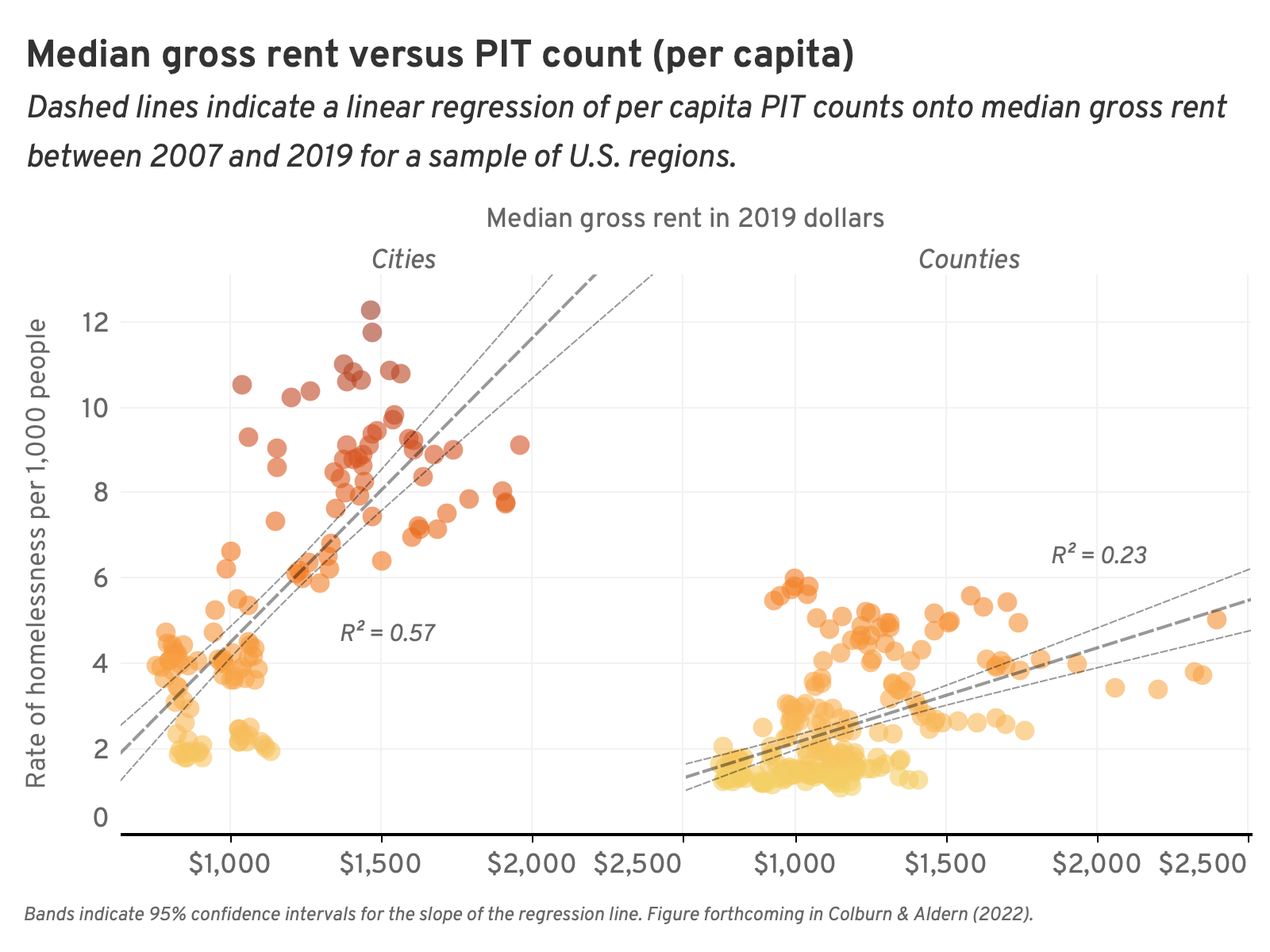
Companies are the only entities we allow to just take, setting their own prices, without quarrel, because laborers don't have bargaining power when selling their labor. Hell, the interview process should be proof enough of that. Oppositionally, I believe in human dignity - I think a worker should be able to bargain. Frankly, since us regular people can't just go up to the store and say "well, I don't wanna pay full price for this item, so I'll just pay less for it - what're you gonna do about it anyway?" (we'd get arrested) I don't think a company should be able to either. When you frame it in terms of an open market, the current labor situation sounds obviously and patently absurd.