Germany would have problems if not for French nuclear, and a great many, rather expensive, gas power plants. For exactly how much, just look at what has happened to the UK as they left the EU wide powersharing agreements.
Its also worth nothing that the rising power prices have largely prevented germany from moving away from using gas to for stoves and heating, which is a huge part of their total CO2, and pollution output.
> Germany would have problems if not for French nuclear
You could say that pretty much about any country in the European synchronous grid. Everyone needs everyone else.
> and a great many, rather expensive, gas power plants
The gas plants are actually quite cheap. It's the gas that's expensive.
> Its also worth nothing that the rising power prices have largely prevented germany from moving away from using gas to for stoves and heating
That statement makes no sense to me. Rising power prices are definitely connected to rising gas prices, which don't prevent people from moving away from using gas for stoves and heating but rather motivate them to do just that.
No not quite, burning fuel for heat locally will always be at least twice as effective as ideal conversion to power, followed by ideal conversion to heat, in practice its closer to three times. Therefore power prices need to fall substantially gas prices before the switch is worth it. That will never happen while producing power from gas or more expensive alternatives. In particular since the gas distribution infrastructure is in place and effectively subsidized/on a different budget.
But if they produced nuclear at the price they used to be able to in Germany, before regulations and investment insecurity drove up the price, buying gas just could not compete.
Sweden, notably getting half its power from nuclear, does not need anyone else. Same thing for france.
Heat pumps generally have a coefficient of performance (i.e., number of watts consumed vs. number of 'heat watts' moved) of ~4 with modern systems. So, compared to resistive electric heat (COP=1) it's roughly 4x as efficient. It gets worse in colder climates, (such as parts of Sweden...), but you should be doing better most of the time, as you aren't at super super cold temperatures all the time.
Much like insulation they help, and I would wager its cost effective in most places most of the time, in particular for individuals. But I am not sure how well it scales.
Compare building and installing 5 million heatpumps with building 2GW new nuclear power production ? The latter could include at least one city heated entirely by cooling water, but even ignoring that, using Finnish numbers for nuclear, and ballparking optimistically the heaters? They cost about the same, take about the same time to build and install... its unclear to me which would lower individual costs more, which would be better for the economy, or climate. I guess heatpumps win on individual costs, nuclear on the economy, and both being roughly equal on climate. The nuclear plant certainly wins on total maintenance resources/work, but the heatpumps on versatility of maintenance, i.e. you can just say fuck it with heat pump maintenance in a way you cant with nuclear. Nuclear wins on flexibility, while heatpumps win on rollout, giving its highest benefits very quickly, but taking as, if not far longer, to complete. There is often a benefit to mass production over individual small scale stuff though. If we could build at 1970ties + inflation prices though, the nuclear plant power would cost less than a tenth, and output more power than the total heating the corresponding 500k heat pumps provide.
Compare to how people buying and installing large supplemental home solar+lithium ion battery packs looks great, until you consider the cost and time to deploy a million such, and compare that to the cost and speed by which we could produce a large hydropower dam as energy storage. The latter wins by a landslide, or occasionally flood^^. Heatpumps are much better and cheaper, though, so its harder to tell.
Sweden is shutting down its nuclear all since a vote in the 1980s, although new nuclear is suddenly being seriously considered here it seems. It only took a major electricity price shock!
> No not quite, burning fuel for heat locally will always be at least twice as effective as ideal conversion to power
Except NOT having to heat is even more effective than burning fuel for heating locally. So the move away from gas heating to low-energy buildings is definitely stimulated by higher gas prices.
> Same thing for france.
I doubt that, since France seem to be actually using their interconnects. Can't comment on Sweden, though.
Actually, not currently. A combination of regulator-mandated nuclear plant stops, scheduled nuclear plant maintenance and fossil plant closures means that France currently relies on importing a lot currently.
Your statement is true generally, but France's situation currently contributes to high energy prices.
For cooking induction plates are much more efficient, transferring 90% of the energy as opposed to ~50% with gas stoves. Together with a gas plant efficiency of ~50%, they comes close in efficiency.
Gas stoves still come out on top price-wise, but part of that are asinine taxes, where gas is taxed less than electricity.
Thermodynamics says that it needs to dump heat somewhere, but maybe they can dump it into the atmosphere instead using hyperboloid cooling towers.
Those are huge though (at least "natural draft" ones are) and usually made of concrete, and making the concrete currently requires lots of carbon emissions.
Heat pumps change this a bit, doubling the efficiency (assuming its similar to Sweden), but it varies. So in the ideal case, its roughly the same, in practice slightly less, and with costs it gets complicated and dominated by subsidies and existing infrastructure.
Heat pumps require nearby reservoirs however, land essentially, which is available in suburbs, but can be quite a challenge in dense cities.
But the real problem is the cost of changing the infrastructure, remember its not just getting power instead of gas, its also switching out every heater from fluid based to power based. Switching stoves from gas to power, etc. Its not only a big investment, but a time consuming and inconvenient one.
Even if power prices dropped to half I would not expect this to be particularly fast, and worse still, historically Germany has subsidized directly(with rebates, taxbreaks, etc) and indirectly(nordstrom2... LNG harbors, etc) the gas prices whenever people complain, or just to prevent complaints.
I guess replacing gas in German households will require both electricity prices dropping to around one third or less, and substantial government support. Or a multi decade power price drop to say one tenth or less.
I'm guessing based on what I happened to know of heat pumps in practice in sweden, but I think it makes sense to assume this. The reason is that the temperature difference between sweden and Germany is probably less than 1%.
Temperature in sweden averages about 2 degrees C, and the temperature in germany about 3 degrees C, which can look like a 50% increase, but everything in thermodynamics works in Kelvin, not C. So the difference is between 275 and 276 degrees K, which is about 0.3% or almost nothing.
Its not enough to prove anything, just make it reasonably likely, which is then combined with the qualifier.
- why then, if we go by jhgb's source, is France missing 52 min of electricity per year while Germany is missing 12 min? Are they stabelizing the german grid at their own disadvantage?
- are nuclear power plants cheap? Isn't Hinkley Point C guranteed 10 ct/kwh + inflation. Wasn't it the new Finnish nuclear plant that cost 11 billion Euros? What do gas power plants cost, 20 billion?
> 'which have largely prevented germany from moving away from using gas to for stoves ...'
I would like a source for that. According to [1], 91% of german house holds are using electric kitchen stoves and 7% gas. For heating, they have a larger market share but gas kitchen stoves are not really widespread.
> Wasn't it the new Finnish nuclear plant that cost 11 billion Euros?
Olkiluoto unit 3 is a pretty extreme outlier in construction costs. The same amount of power generation capacity from CPR1000 plants (widely used in China today) would cost closer to 2.5 billion Euros, and construction times are about 5 years.
Yes, and so is the new Flamanville reactor. It's funny: out of the fifty or so commercial nuclear reactors that came online in the past decade, for some reason those still-under-construction debacles are the only ones most people have heard about.
Why is this always spread? Right now is a winter night (-6 celsius), this is the live electricity map for Europe: https://app.electricitymap.org/map
Right this second, Germany is EXPORTING to most of their neighbors. Are they charging the other batteries now or how am I supposed to follow your logic?
2. Sun and wind only produce a fraction of the time (40% [1] and 25% [2] respectively, and 7.5% (= 8.94/(63.2+56)) of installed capacity this very second [3])
3. Production capacity without sun and wind < peak demand
Germany's mix only work because of neighbouring countries. And their humongous amounts of still existing coal and gas.
Sure but carbon is carbon. If they are able to get that much more of their overall power output from renewable, that's carbon not going into the air.
The problem with the current generation of nuclear is that it's expensive to build, and a lot of the older reactors are, well, old. If it's possible to get the same emissions reduction by building out lots and lots of renewable, instead of spending that money on nuclear, that's understandable for a country that can't just print money.
There will eventually be some limit to that strategy (i.e. how do you meet supply at night) and we'll have to see how the next-gen energy storage and nuclear pan out.
People say this as if reactors get build once and then stay the same way. These reactors get upgraded all the time. Here's an example: Isar 1 was one of the oldest reactors in Germany. When a German reactor gets new fuel rods it has to be certified again according to current regulations. Isar 1 needed new fuel rods in 2011, so it got upgraded and certified again. After that new fuel rods were introduced into the reactor. A few month later as consequence of the Fukushima disaster it got "shut down"[1], because it was now "not safe". Which is obviously bullshit, cause the rules on reactor safety for German nuclear reactor didn't change due to Fukushima, opinions did and politicians needed to show that they do something.
[1] It didn't really get shut down in 2011. It got removed from the power grid. So, Isar 1 continued to produce power, which was then promptly discharged into the environment as heat. Only after the fuel rods were burned down it really got shut down.
>It didn't really get shut down in 2011. It got removed from the power grid. So, Isar 1 continued to produce power, which was then promptly discharged into the environment as heat.
You can't decide when the wind blow and when the sun shines. And you can't either decide when people turn on their washing machine. So it is obvious there is a problem
> And you can't either decide when people turn on their washing machine.
Not completely, but you can make electricity almost free at certain times of day to encourage shifting usage.
Although there is a natural limit to this, since people have to be home to do laundry!
(Also electric driers are the real culprit, they use an obscene amount of electricity! I am not sure if Germany is big on electric dryers or not though, that is something which is very culture dependent)
Power is far to abstract and far to cheap for people to make even the slightest adjustment to their habits. After all, lets say you knew that making your morning coffe between 07-08 cost 10 cents more than doing so an hour earlier or later, would you get up earlier, or go to work latter? And in 1 cent is more realistic.
So, like, you know, yeah. My dryer has a delay start function on it, if late night prices are 1/2 peak, then I'd save 75 cents a load. Let's say 3 days a week of laundry, $9 a month in savings.
Again, my dryer already does this, it isn't new tech, it is just nudging me to make use of the existing button that is already there!
US electricity prices are so low, eh, not really worth it for the state I live in.
Most people in Germany do not have an electric dryer.
Also, electricity prices are not the same everywhere. My parents for example pay only 20 ct/kwh (I have no idea how they got that contract, especially since they moved only last year. They have low overall usage though (2,000 kWh/a, with fixed cost being like 30% of the total bill)
Having a dryer is not the same as using it for all loads. Sometimes you need quick access to clothes. Work, spilling accident, not enough room for natural drying. In summer, if you can dry safely outside, that is a far better option.
I don't think this is true. My (Dutch) mom used to wash at night and in the weekend because of reduced tariffs. She is very energy conscious on general. Not everyone is oblivious to these things, especially less well off people.
This is a syllogism and masks a complete mismatch of both demand and risks of windless days. There is no insurmountable problem if you accept a market in electricity in Europe, demand management (which already exists in the market in air-conditioning, freezing and thermal mass industries) and overbuild of supply. Not to mention storage.
It's not just a syllogism, it's a really weak one. You actually can decide when people "turn on their washing machine". It's called controlled supply, it's existed since the 1950s. Mainly for water heating but in principle any function.
So the thing about the earth is that it's big. If you have a big enough grid, it will be sunny and windy over a fairly consistent portion of that area.
It does not work that way. Long distance extreme high voltage transfer loses about 5% per 1000km, with the transformers adding another 10%, under ideal circumstances. In practice its higher, and thats on land. Sea cables lose 100x per km around 50% per 100km, again under ideal circumstances. In practice double the losses per distance, and if using existing grids, double it again, because most places dont build top end voltage grids.
Looking at maps for power prices with large hydropower dams you can easily see how most countries grids dont transfer more than around 1000km, and often quite a bit shorter. In practice this is the point where it becomes more cost effective to build new powerplants, than bigger infrastructure for transfer.
We could build grids designed for this, but never across oceans, and we are talking about an absolutely gargantuan investment, and its generally not considered as a solution for the unreliability of solar and wind. Its also why no one ever suggests to use the big empty oceans for truly large scale wind or solar etc, its always places very close to land.
Its also worth pointing out that superconductors cannot solve this, even if price and the gargantuan cooling energy requirements are ignored. This is because while superconductors transfer power without loss, they can only do so up to a limited effect, as the power interferes with the superconducting ability after that, essentially breaking it.
> Long distance extreme high voltage transfer loses about 5% per 1000km.
That's an incredibly low amount. Taking Berlin as an example, even 5000km lets you reach plenty of hot, sunny desert areas where any losses will be easily offset by vastly increased solar efficiency. Or you could spread out your wind energy sources to get more consistent coverage.
In fact that's pretty much what Singapore is doing: building a solar farm 5000km away in Australia.
this was true with ac power cables, but isn't with hvdc ones. they don't have the same capacitance issues, and add such undersea cables are becoming more prevalent. a 1400km between Egypt and Greece is expected to be completed in 2023
The oceans kill it completely, remember two oceans of 100km reduce transfer by 0.75, and thats ignoring all the other problems with the grids on the way.
We don't have a planetary grid (yet, at least). If there's a high pressure system across Europe, the whole continent can have low wind. This usually comes with either very high temperatures (in summer) or very low temperatures (in winter) which further stresses the system.
What do you consider acceptable? https://en.wikipedia.org/wiki/High-voltage_direct_current#Ad... puts the loss for HVDC at 3.5% per 1000km. That would imply 4000km with 15% loss, which is pretty good considering that wind and solar are significantly more than 15% cheaper than nuclear.
Specifically, https://en.wikipedia.org/wiki/Cost_of_electricity_by_source#... puts the cost of wind/solar at roughly 1/3rd the cost of nuclear, so it's more (cost) efficient to spend as much on transmission as you do on generation and build a really well connected massive grid than to use nuclear.
We can transport it a fair bit further than that, but only under ideal circumstances that are rarely met, and its very rare the grid is built for it, its never been needed after all. For instance, regulatory issues usually mean that every country border crossed tends to have a transformer station, which makes minor changes at a 10% or so efficiency loss.
transmitting energy from other half of the earth (where is daylight when you are sleeping) is probably not best idea (not sure if even economically or technically possible). Also would be wise to turn off nuclear energy once you have this 'big enough grid'.
Is day and night really the problem here? Because I thought demand usually peaks at certain times of the day (e.g. early in the evening in California: https://www.pge.com/en_US/residential/rate-plans/rate-plan-o...), and actually bottoms out during the night. You would mostly use an interconnected grid (and storage) to compensate for this.
In most of the Europe the biggest use of energy for family will be heating except summer. In the future probably also charging electric car. This kind of power demand you need mostly at night when sleeping - during the day you are probsbly in the office.
Transmitting power also consumes energy - you cannot have a electric wire across pacific to transmit power from US to EU without transformers - electric power line is not a fiber optic that transmit just signal.
I also doubt we have enough rare earth minerals to make all those magnets for wind turbine and and electric car enough for whole planet. Remember also you have to decomission those windturbine after some years which is expensive
At least in The Netherlands we mostly use centralised (gas-powered) heating, so nuclear energy is a tangential factor. Also there seems to be room for improvement in insulation and centralised thermal storage (warmtenet in Dutch). Electric cars seem both like both a problem and an opportunity, because you could charge them while being at the office and partly use their batteries for powering your home at night (in case you don't need a full charge to get to work in the morning).
Regarding rare earths, we will need them regardless of using nuclear or renewables for electric cars, so that seems partly tangential. For wind turbines their reliance on rare earths seems troublesome. It's geopolitically ironic that we (Western Europeans) get our gas from Russia and our rare earths from China.
Electric cars are currently mostly charged at night (since that's when electricity is cheaper), but as solar becomes more prevalent, that will swap. Charging cars during the day is pretty easy, just require office parking lots to have chargers (and possibly subsidize).
You are right that you can't have an electric wire across the Pacific to get power from the US to the EU, but more because the EU doesn't border the Pacific. On a more serious note, Novia Scotia to Ireland is about 2600 miles, so it's on the edge of doable with HVDC, but it would be a massive project and slightly hard to justify.
I'm interested to know what rare earth metals make up so much of a wind turbine. According to https://www.nrel.gov/docs/fy17osti/66861.pdf (page 65), around 99% of a turbine is accounted for by steel, fiberglass, iron, copper, and aluminum.
Whats funny about this is, that the wind farm will not even be connected to Iceland itself! I guess they have such great geothermal resources that they don't really need more power.
Well, it is obvious, that the renewable production needs to be paired with some on-demand sources. Short term, gas is great for that, as gas power plants can be switched on and off quickly, long-term the necessary storage options are needed (some of that can be power2gas, which can be burnt in the gas power plants).
Still an unacceptable CO2 emission in my book. Natural gas is at 55,82 [kg CO2 / GJ], when coal is at 94,6 [kg CO2 / GJ]. [1]
So that's only 40% less pollution, and there are still huge quantities of coal that has yet to be replaced in Germany.
What's missing from your view is how you provide for baseload. Right now, what is baseload in Germany? It is coal: https://app.electricitymap.org/zone/DE
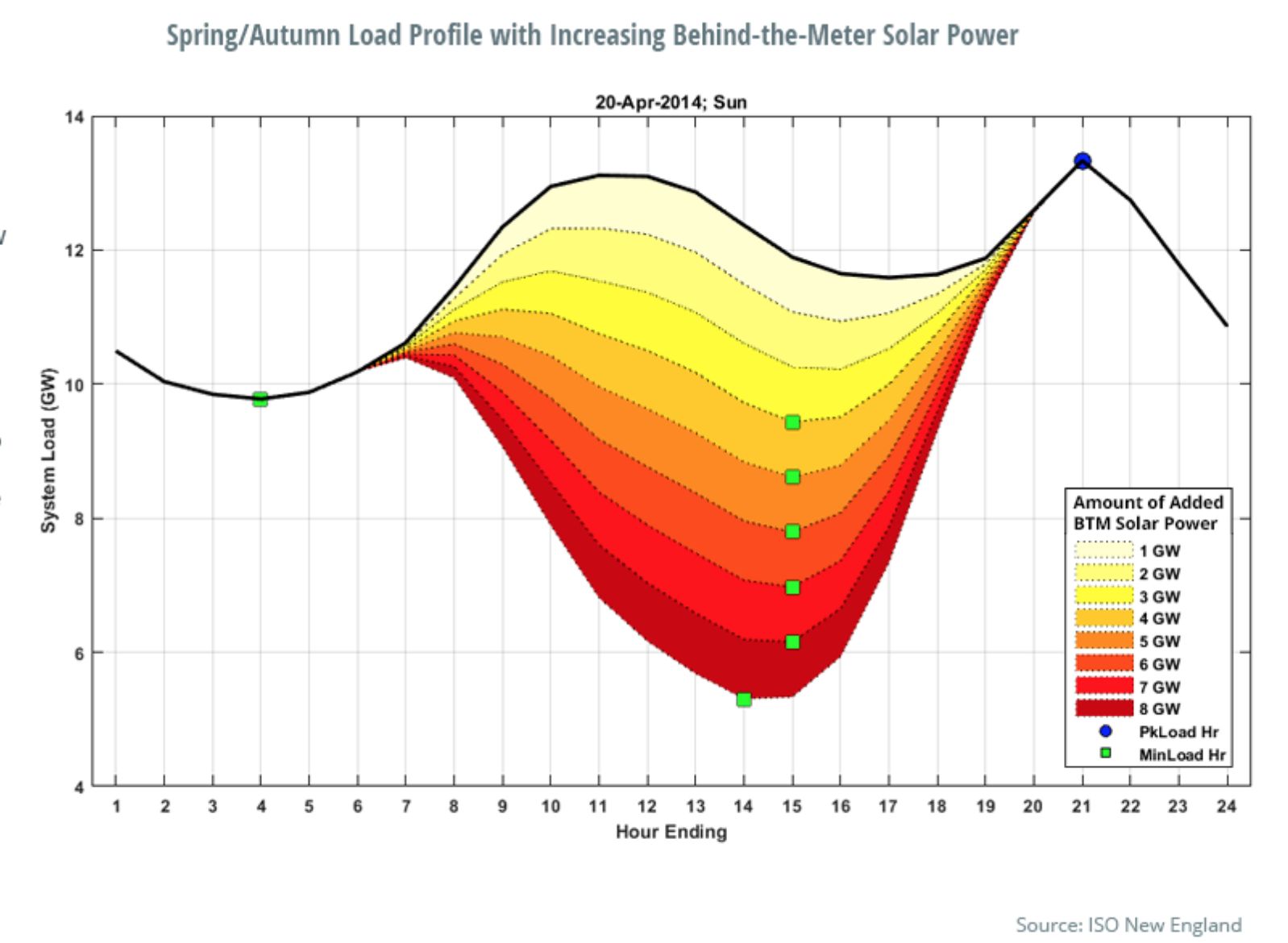
Going to chime in with my usual statement, "baseload" as a concept only applies if you have energy sources which are cheap to run but can't scale up and down quickly. That is no longer the case.
What you mean to say is "we need to provide power all the time".
Gas is better than coal in a strict sense, and a combo of gas and renewables will vastly reduce emissions, and in a way most people can deal with. Over time battery prices will fall and renewable install base will rise so that gas peaked eventually become unnecessary.


_-_renewable_energy.svg)