For example, how much of it there can be or where it comes from. Contrast with Neutrinos.
But you are correct, I don't know what I am talking about which is why my comments were phrased in the form of a question or literally with the words "I don't understand"
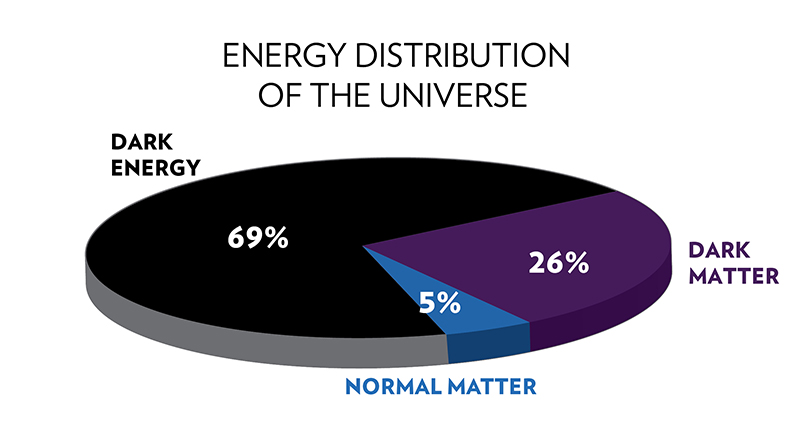
Is that a chart of how much we think there is (model fitting based on observations) or how much we think there should be based on how it is created?
With Neutrinos we know how they are created and have a very good upper limit on how much there should be and it's not nearly enough to explain the observed effects. Same for the CMBR.
I'm not saying there couldn't be much more Dark matter/energy than neutrinos or photons but it's a bit too convenient to introduce a variable that is allowed to take any value and match it to observations without an explanation of what it is (besides having mass) or how it is created.
I think they mean that the theory of dark matter has an infinity of parameters. For every point in space, one can (rather arbitrarily) assign a mass of dark matter to make the theory fit observations.
No, not really. We can observe it indirectly and have mapped out its structures. And intuitively, why do you find it implausible there is a massive particle that only interacts via gravitational force?