BF5 applies ray tracing extremely selectively: they only trace light for some glossy and specular surfaces. Most of what you see on screen is still rasterized traditinally in that game, meaning, using some 30 to 40 different hacky methods and approximations to make it look good.
Q2VKPT is different in that it does no traditional rasterization at all for the 3d graphics (only the HUD graphics are rasterized). The rest is path traced with multiple reflections even for the diffuse surfaces. Because of this purity in its approach it is quite unique.
QVKPT is from the guy who invented the postprocessing filter used to denoise the images in this implementation. The graphics would be way worse without that filter (there has to be a convar to disable it).
The denoise filter might as well be the main achievement of this project. Edit: note that if I understand correctly, the filter doesn't operate on single frames, but considers several previous frames in order to maintain temporal cohesion and to improve quality.
>the filter doesn't operate on single frames, but considers several previous frames in order to maintain temporal cohesion and to improve quality.
Do you happen to know how bad are the artifacts? I remember temporal antialiasing produced very good results with static scenes, but fell apart on dynamic ones.
I believe the point was that BF5+RTX is clearly much more realistic looking than this Quake2, even though it's more "truly" ray-traced. BF5 is extremely impressive, with certain locations being on the verge of photo-realism.


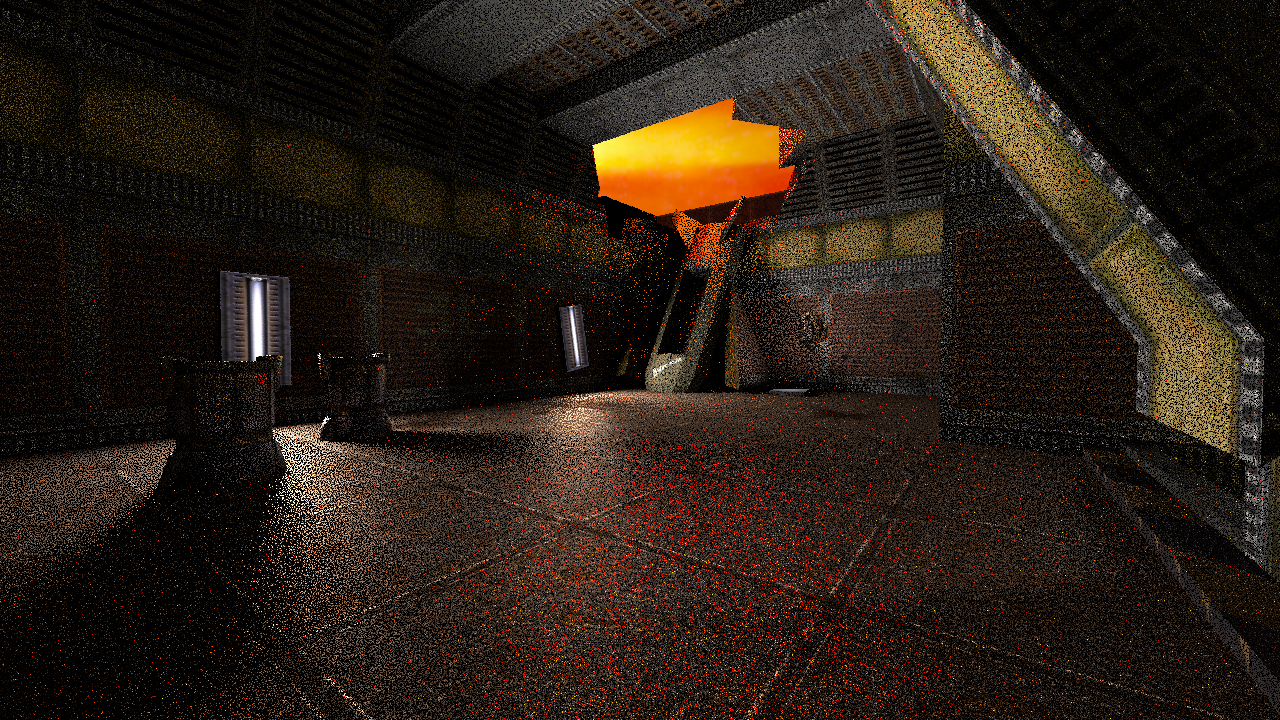
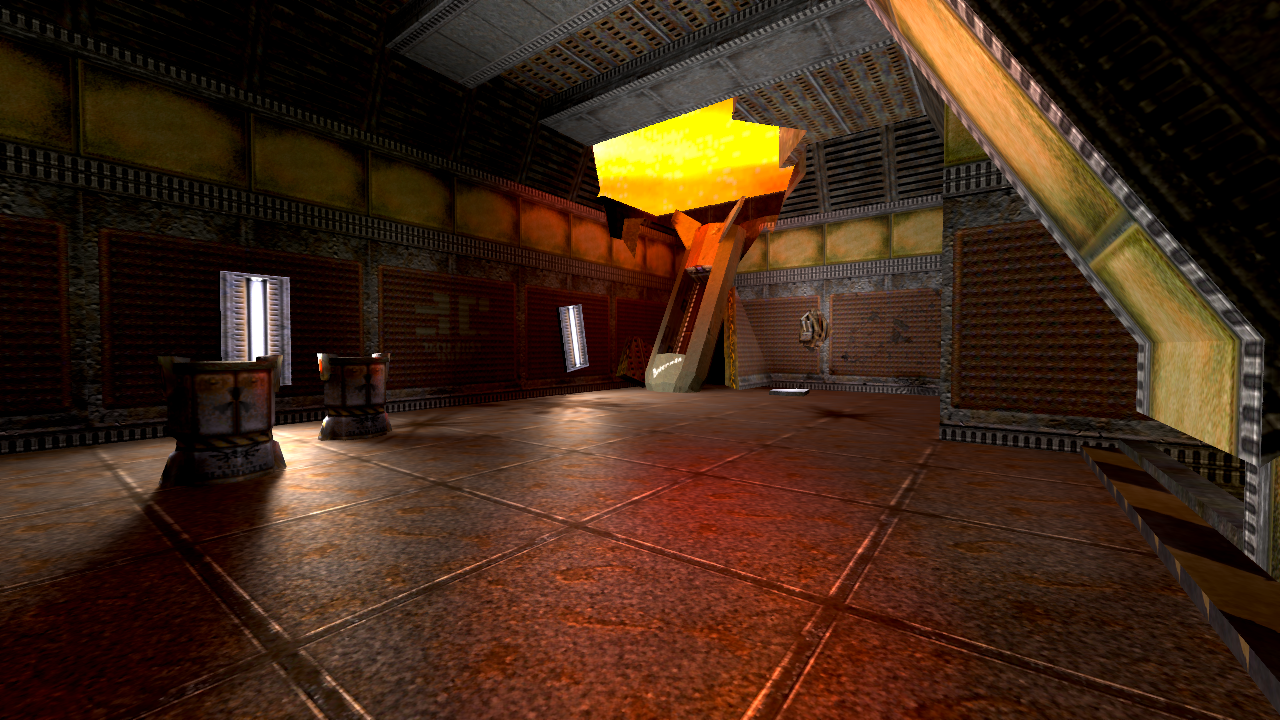
Q2VKPT is different in that it does no traditional rasterization at all for the 3d graphics (only the HUD graphics are rasterized). The rest is path traced with multiple reflections even for the diffuse surfaces. Because of this purity in its approach it is quite unique.
QVKPT is from the guy who invented the postprocessing filter used to denoise the images in this implementation. The graphics would be way worse without that filter (there has to be a convar to disable it).