When entering any questionable law enforcement situation (TSA, walking near a protest, traveling internationally) I always switch my phone to not use TouchID. Say what you will.
Agreed! We need something that collects data from multiple pages as you browse through and use your site. At the end it gives you a table of all your classes that didn't match anything (with line number references to your css file).
I tried to implement a system like this once, with the goal being to reduce the amount of equipment and clutter on the service counter, but ran into issues of trust. I learned very quickly that if you remove the cash from sight of the customer (even by turning around or having a cash register under the counter) you invite potential fraud from the cashier or the customer. The cashier is able to skim, or the customer to claim they gave a different amount if the money disappears, even briefly. I gave up on it and kept the standard "customer-facing register" setup.
Wait, you mean the millions, possibly billions spent already haven't done a thing? Shocking! And now you can pay (TSAPre) to bypass the security theater essentially proving that the whole thing is a massive sham. I'm all for security, but nobody can seem to define what that would actually look like, as opposed to what we have now.
I don't see how Pre exposes it as a sham. I'm no fan of the TSA and I think a lot of the stuff they do is useless at best, but giving people differing amounts of scrutiny based on their risk profile seems pretty smart to me. It's not as if you pay your money and automatically get through. They check you out first and make sure that you're a suitably low risk, and only let you bypass some of the checks if you actually qualify.
You don't just pay money and get a pass. There's a significant background check involved which, I suspect, does more to enhance security than some millimeter wave scanner in the security line.
> There's a significant background check involved which, I suspect, does more to enhance security than some millimeter wave scanner in the security line.
No, there isn't.
I walked into the interview booth on a whim one day, when my flight arrived early. They were booked solid, but someone had missed their time, so they slotted me in. My "extensive" background check was completed and KTN issued in less than 24 hours. They may run some sort of cursory criminal records check, but any such check is automated and too fast to be called "extensive."
Edit: I should add that I do not have (and have never had) any sort of security clearance, but people who do tell me that the process for the lowest level of "real" security clearance takes many months and costs many thousands of dollars.
The Nexus program in Canada, for example, involves among other things an extensive interview and background check by the opposing country (for example, as a Canadian, the US performs my check).
I flew a week ago from Oakland to Burbank. Prior to showing any boarding pass or ID to a TSA official, or identifying myself in any way, my colleague and I were waved into the TSAPre line. I've never signed up for TSAPre. Basically we walked in the door straight out of BART.
There is no way any background check was involved for this.
So significant that my mother who has flown a total of no more than 30,000 miles in her whole life (spread out over no fewer than eight airlines) has pre-check, gifted to her by one airline for no discernible reason. She was very pleased to get it of course, but the "significance" of the background check is highly questionable in my opinion.
Initially there were two large groups of people who got Pre. One group was people who were already enrolled in another trusted-traveller program like NEXUS or Global Entry (I have Pre courtesy of Global Entry, for example), presumably because they'd already been through background checks -- potentially more rigorous ones than Pre strictly required -- and thus were deemed a useful and trustworthy pilot group. The other group was people in the upper tiers of frequent-flier programs, who again were deemed useful and trustworthy (anybody who clears security as often as the top-tier FFs do is either trustworthy or a complete systemic failure of security).
After running that for a while, they started up another avenue into Pre, called "Managed Inclusion". This was advertised as a test of real-time capabilities to assess who does and who doesn't need more rigorous screening, but from a cynical perspective was really just a way to expose casual travelers to the fact that Pre exists and give them a taste of it. Managed Inclusion is why you see random Joe and Jane Traveler told to go to the Pre lane; it's not a consistent status/membership like the other trusted-traveller programs, it's just a thing that does or doesn't happen sometimes when they check in and get a boarding pass.
As an aside: Managed Inclusion has significantly reduced the usefulness of Pre, because people who end up in it have been conditioned to do the typical process (remove stuff from bags, take off shoes/belts/etc.), and don't get the fact that, when their boarding pass has the Pre logo, they don't have to do that. Which eats up more time as they get lectured by a TSA person, repack their stuff, put their shoes back on, and so on.
And now you can just enroll directly in Pre by paying the application fee and getting background checked (though why anyone would, when NEXUS or GE are more useful and come with Pre as a side effect, I don't know). So the frequent-flier-status enrollment is being wound down, Managed Inclusion keeps going as a way to expose the general public to the idea, and that's where we are today.
Which leads to my statement of "pay-to-play" unlike zzalpha's claim above.
Managed Inclusion is akin to Movie Preview in hotels back in the day...
I stand by my statement that Pre should be the norm not the exception. Make Global Entry the premium tier, that's fine but Pre needs to be the new norm.
But GE involves CBP going through employment/address history as well as every time your passport's been used and any issues you've ever had at a border (I know because I heard a guy at the next desk being grilled in his interview about a piece of fruit in his luggage when I was in my interview). And NEXUS involves having both the US and Canada run checks on you independently.
So in terms of rigor, NEXUS > Global Entry > Pre seems to be the way it goes.
The number of miles / times / airlines that have been flown has no relationship to the Pre Check. It is literally a background check, which your mother passed. Meaning she is lower risk than others who have not.
I get that it's a background check. That's very clear to me.
My mother didn't apply for it, nor did she pay for it. If it costs money to get, why would the airline give it to her? It's not because she's "high status" as she doesn't have an appreciable number of miles.
You are missing the point that her background is reevaluated for every single time she flies. Also, the Airline does not give it to her, the TSA does. It is used to filter extremely low risk individuals into the Pre system so they don't clog up the normal lines.
But it gets printed on the boarding pass right? So what's to stop a terrorist from forging the boarding pass with "pre-check" on it and going into the low-security line instead of the high security line?
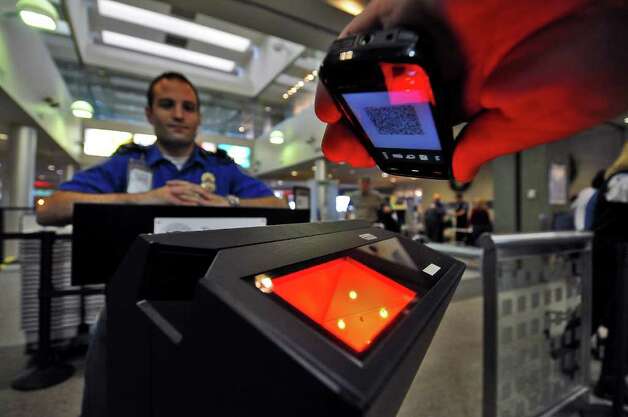
Before entering the security line the bar code on your boarding pass is scanned, decoded, and checked against the traveler database. If any of the information does not match, you will be detained. The circles or lines that a TSA agent will draw on your boarding pass are part of a system to help the agent remember to check each piece of information, part of which is verifying it against the scanner.
She only has it when she's flying on that airline, and as other commenters have mentioned, that program is being phased out, so she will soon need to subscribe to a TTP herself.
Why would the airline give her an $85 gift if she didn't have a lot of miles, and therefore a lot of "status" as the airlines call it? I see a lot of people in this thread suggesting that more miles equals more likelihood of the airline giving it to you.
The point is that if airlines (or the TSA) can afford to give it to people that don't spend tens or hundreds of thousands of dollars a year, perhaps the $85 "background check" isn't terribly thorough and therefore more of a joke than real security.
That sounds like something different (or maybe the airline lets random people into TSA Pre-check?). This is the service people are talking about: http://www.tsa.gov/tsa-precheck.
You pay $85, and the government basically does a background check on you. If you pass the background check, you are in TSA Pre-check.
> That sounds like something different (or maybe the airline lets random people into TSA Pre-check?).
It is not something different, but I think some airlines do automatically sign some of their clients up for pre-check, particularly if those clients have status. E.g., United Airline's pre-check information page discusses people who have opted-in through their frequent-flier program:
You're forgetting the cost of surrendering your (illusion of) civil liberties by voluntarily disclosing private information about yourself to the government.
I have Global Entry. The application form didn't ask for anything more than what a typical job or rental application would (basically, employment and address history going back a few years).
My Global Entry enrollment "interview" consisted of "Put your hand on the scanner. Now look at the camera. OK, you'll get your Known Traveler Number in an email later today, and a card you can keep with you in the mail in about a week."
The CBP people who do GE generally seem to be on a whole different level of efficiency and understanding-actual-security compared to the average TSA blueshirt at the airport.
If you have traveled internationally, you've already given up the vast majority of the information required by Global Entry. I've had to submit to medical examinations, interrogations, and forced fingerprinting to enter some countries. Most of that stuff is sent back to the US to verify your identity.
You can. Get a "Known Traveler Number" by paying for PreCheck. Due to changes in TSA policies, your frequent flyer-granted PreCheck is already a lower tier - you're not going to be getting the perks as often as you used to.
I find it interesting that my parent comment has been voted down to -1 (without reasons provided as to why) while the child comments seem to imply a lively discussion.
If you are going to down vote, at least say why (other than zzalpha's pointless assertion)
FWIW, if people are going to sign up for Pre/Gobal Entry/Nexus, it's the best bang for the buck to sign up for Nexus at $50 and included GE/Pre benefits. The only drawback is that you need to get to a Canadian border for the interview.
the millions, possibly billions spent already haven't done a thing?
That's not correct at all. The billions spent have done a lot: they've created an entire class of "cleared" people, and support industries for them. I'm not sure that creating a new aristocracy was the desired end point, but that's what we've gotten to. The "cleared" people Know Better Than Us, and Keep Us Safe, so We Give Them Special Privileges.
Without violating your confidentiality, can you share what version of ES you experienced these failures with? I have also experienced this first hand, but since 0.9x and 1.0x a TON of work has been done on both OOM (one of the leading causes of split brain scenarios) and split-brain from network partitioning. As I mentioned below, all of these issues are being addressed in an open and transparent way, and while there's still work to be done, a non-trivial amount of progress has already been made. I hope you can share at least some about your experiences.