i would focus on just taking notes on related topics, without much structure for a bit. try to link them together if they are on related ideas a bit. once you have a network of notes that feels a little less manageable (~100), i create a "map of content" where i link to all notes related to that concept, and in it i essentially tell a higher level story about how those notes relate to each other.
I also find it easier to read certain philosophers than others because they themselves seem to be empathetic in the way they write their thinking. Almost as if they know that they could be wrong about the conclusions they're coming to, and that the truths they uncover aren't necessarily absolutes but instead, at least to a certain degree, subjective and personal.
Reading phenomenology for instance doesn't get me feeling like the author is self-indulgent. I find it easier to empathize with the philosopher because the philosopher is trying to empathize with me.
Hey everyone! Thread author here. Happy to see so many people taking an interest in beautiful scientific communication!
If anyone has other examples of beautiful typography or graphing/figures throughout history, I'd love to see them! I've been replying to the original thread on twitter with some favorites:
https://twitter.com/iraphas13/status/1262489387767480322?s=2...
He also comes from the pre-ppt age of presenting with handwritten acetate transparencies - and still does afaik. Many of his slides have been captured for the infowebs.
Some of his original papers from the 1960s were not published at the time, but circulated as samizdat facsimiles of his handwritten notes, until later transcribed by professors or their students, then published in book collections:
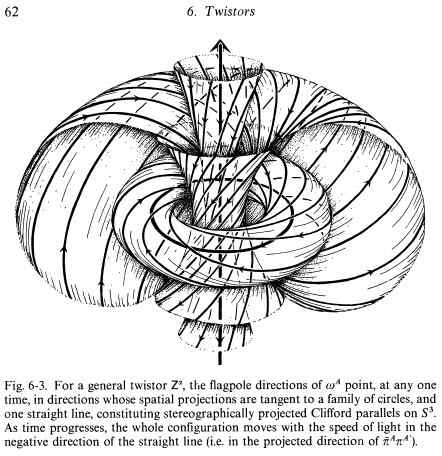
Penrose is famous for his visual imagination, which seems to ground many of his insights. Here is a paper where he invents a visual notation for tensors and operators:
The power of mass usage comes into play here. IIRC, when WhatsApp launched, I was one of the early adopters. As it grew (and it became hugely popular in Brazil, where I lived) they switched to the $1/year model. Current users were auto-enrolled in a "free-for-life" plan. My friends who didn't have WhatApp would still sign up because everyone else was using it and, besides "$1/year? it's almost nothing".
In Argentina many cellular plans include 30 days of WhatsApp for free on pay-as-you-go plans. Even if you lapse your payment for the 30 days you still have WhatsApp texting. Interestingly audio, photos, and video don't work.
There were always alternatives, just carried certain other costs. SMS was a major competitor, and as its prices have declined significantly internationally, the friction with using it would as well.
Being the first mover is not a infinitely defensible advantage. If another app comes along but doesn't carry the $1 a year fee, it wouldn't be hard to motivate people to switch.
I don't actually remember. I used to set all my settings to US/American ones because some apps were only in the US app store, so there's a good chance I was looking at the US$1 price. Not sure what my friends saw in the Brazilian app store.
I think it was R$1,99, that was not exactly US$1 (even considering the stronger Real in the period), however it was not exactly equivalent to US$1 either.
I received an email from a website I don't remember signing up for, and have no clue what they do. After a few attempts I am able to log in. I go through menu after menu looking for the "permanently delete all my data" button only to find an FAQ that says
"Q: How do I delete my account?"
"A: Please get in touch with our Customer Services team if you have any worries or concerns. If something at {website} has troubled you, we'll be happy to help sort it out."
To their credit, the support chat person was very efficient in complying with my request.
I was actually wondering what the data considers "immigration". This shows no African countries light up until around the 90s but that's somewhat incorrectly categorizing influx of people into the US as it ignores "forced immigration" (kidnapping for slavery).
This visualization starts in 1820, so it misses out on the time period when most slaves were brought into the country. The US banned the importation of slaves in 1808 and made it a capital offense in 1820. Some were smuggled in illegally after that, but not in the enormous quantities that they previously had been.
They are also smart enough to know that their opinions matter within the company, and they can affect positive change. This open letter is one mechanism for doing that.
You know, MDA had non-citizens working on American spy sats for quite some time... Just look at their linkedins. I don't think a man who graduated Peking university on a full time program, can become a Canadian/US citizen the next year, when he joined MDA.
Quite a lot of those guys are on work permits in Canada.