I'm absolutely loving KDE since I returned to desktop Linux after a long absence.
What really shocks me is how few of the big distros make KDE a default or "first class" DE choice. If I was a novice user coming from Windows, I'd much prefer KDE, which if you stick to the GUI is very navigable and similar in some ways.
> GNOME essentially gutted itself when it switched away from GNOME 2.
It gutted itself because quite frankly it was anemic at best. I was a heavy KDE 3 user back then and I vastly preferred it compared to gnome 2, but as a long time linux user I also recognize that ALL desktop linux solutions were pretty rough back them. This "gutting" was certainly painful and questionable but what we have today, KDE 6 (it also went trough painful changes in KDE 4) and GNOME 49 are leagues ahead of what we had back them and I honestly think it's important for both of these DE to remain distinct.
> And GNOME lives on as a sorry excuse for a bad copy of MacOS desktop looks without the feel.
It feels nothing like MacOS because it doesn't have 40 years of macintosh baggage in it, resulting in it being much more approachable for PC/windows users. I dare say GNOME earns it's distinction of being neither mac or windows, but it's own thing. It is very usable and approachable across beginners and advanced users, but lacks that depth you encounter in the competition.
> And GNOME lives on as a sorry excuse for a bad copy of MacOS desktop looks without the feel.
This is an inaccurate description. GNOME is a copy of (the worst parts of) Windows 8 and Mac OS, not just Mac OS.
But seriously, GNOME isn't that bad, and there are people who genuinely enjoy it over KDE. Choice is what makes the Linux ecosystem great.
However, I do agree that KDE is probably a saner default than GNOME, if the goal is to make the transition from Windows to Linux easier. GNOME is (probably) less buggy than KDE, simply due to having less features overall, but the UX is going to be completely alien and off-putting to most casual users.
If I look back at it, GNOME is likely responsible for me abandoning all of my attempts to transition to linux when I was younger. I had no idea KDE or alt desktop environments even existed back then and even now distros don't make it easy to discover/experiment with them. It's to the point I have some internal bias against trusting any distro that uses GNOME as the default.
I hope in the future KDE overtakes GNOME to become the "standard linux" experience.
As a long-time GNOME user, I support this sentiment entirely. What a disaster. It keeps getting worse too. Now you can barely even tell foreground from background windows thanks to this Adwaita bullshit. First they removed all the features, now they're removing all of the visual information.
Same, I've using GNOME for a long time and haven't switched yet out of laziness and being busy with other things, but the next time I have to upgrade my laptop I'm giving KDE a spin, I'm tired of GNOME replacing useful features with... nothing.
They deprecate something and replace it with an app that looks sleek because it has no buttons, and it has no buttons because it has none of the features that I use. And this has happened with the file browser, the image browser, the pdf browser, the text editor... I've lost count. GNOME is seriously worse to use now than it was 15 years ago. At this point I'm not sure what they have left to butcher, but every new version they seem to surprise me with something new they found to mess with.
It's not just worse. It's MUCH worse. I'm in the same boat. I want to change but I don't know what to and haven't had the energy to put into that yet. This desktop is dead though and they're just beating it's dead corpse at this point. I've tried KDE a few times and it was just too disorganized for me, so I might just do something simpler like awesome or one of those tiling things and add in what I want. I used to just use openbox. There must be something equally simple for Wayland.
Gnome isn't dead - it looks more consistent, and in my experience, is running smoothet and cleaner than it ever has (including gnome2 days). It's fine that it's not for you, but comments like this are insane, and not healthy. It's 2025, we don't need to I sult software we don't want to use - just don't use it.
(And, threatening to move back to something like openbox, because gnome is too simple and degraded, is extra hilarious)
What GNOME was is completely dead. All of that flexibility and all of those features are gone. This thing here is something else wearing it's dead corpse.
> consistent
Ah yes, very consistent with two entirely different sets of window borders (GTK3 and Adwaita).
By contrast, I find kde/plasma much more confusing for window borders. I see kvantum, dekorator, breeze forks, something called "klassy," etc. I appreciate gnome's ability to sometimes cut the legacy cord.
It’s far from dead. Take a look at the gnome circle apps as a demonstration of how many good applications are being written for gnome these days.
I believe a large part of this is due to the fact that to use QT you are still stuck with either C++ or Python, whereas there are a ton of gnome apps being written in JS and Rust now.
These are pretty small apps. "Binary" converts numbers between bases. Wonderful.
Meanwhile, more than a few large applications have switched away from GTK to Qt including Wireshark, Openshot, and now Audacity. How many large apps have switched the other way?
I finally took the plunge and upgraded from Ubuntu 22.04 to 24.04 on my work laptop. With that come all the gnome package updates and such.
I reboot, load up my session, and a little while after need to grab a couple files from a zip archive. I double-click it in Nautilus, nothing happens. I give it a couple more clicks before I suspect something broke, right click it, and see "Extract" as... the default cursor action...?
I go back up and see five fresh copies of the folder that was inside the zip. I delete them all, go back to the file itself, right click, open with > file-roller. I try and drag'n'drop the couple files I need: doesn't work, for some reason. Great, they've broken drag and drop, too.
> is drag and drop extraction from Nautilus (or other file managers) really that important?
Why, yes it is! It's even worse if you go and _break_ drag'n'drop support on X11! I'm not even using Wayland!
But, oh well, looks like file-roller is unmaintained and outside of core Gnome scope now. Nautilus' zip capabilities are enough, they say! Why would a user want to inspect the contents of a zip archive before wanting to extract it, or god forbid select specific files, after all? Definitely not worth keeping as a core OS/DE feature.
And the PR on file-roller that fixes this on wayland with... a custom fuse virtual filesystem?! has been untouched for the past 2 years, never to be merged.
MATE was forked around the time GNOME 3 was released and is still going. https://mate-desktop.org
Some people consider Cinnamon to be a GNOME 2 spiritual successor while still using a lot of GNOME 3 stuff under the hood. https://projects.linuxmint.com/cinnamon/
zfs on Linux has not been production ready for decades. People have lost data from it. There's no real reason to allow the default installer to do this.
If you understand the risks, you can do it yourself.
> zfs on Linux has not been production ready for decades. People have lost data from it.
I don't think that's true. Other than with ZFS-native encryption, which I grant has been less reliable, it's been rock solid for a very long time. And I've run >1PB of postgres databases on it professionally, so I feel fairly comfortable in that assertion.
> There's no real reason to allow the default installer to do this.
The default Ubuntu installer at least used to support ZFS, which is the point.
If you Google zfs Linux data loss, you can find many posts about this. Including one lengthy discussion on HN.
Also, you are not the typical user installing the OS from the default installer. I am not saying ZFS is bad, but not including it in the default installer is no big deal.
So funny thing. I was planning to agree and write something about how you can find data loss stories for literally any filesystem, but the relative frequency and nature of those stories is important to differentiate.
https://duckduckgo.com/?t=ffab&q=zfs+data+loss&ia=web - First result is someone claiming data loss after setting sync=disabled on a single disk over usb with slog+l2arc on the same disk, and scrub turns up 50k errors; i.e. they did everything they could to hold it wrong, and in the end their disk physically failed, which I really don't think is a ZFS problem. Second result is a stack overflow thread discussing why ZFS doesn't fail the usual ways. Third result is official docs. If I go down the rest of the first page of duckduckgo results, it's mostly discussions of how ZFS protects against data loss, with the one exception of https://forum.level1techs.com/t/solved-zfs-monthlong-changes... ... which looks bad until you realize the use didn't mount a filesystem, and once they found it they recovered their data just fine.
So no, based on random web searches I conclude that ZFS remains head and shoulders above every other option.
---
Edit: If I search for "zfs Linux data loss hacker news", I get https://news.ycombinator.com/item?id=22005181 which appears to contain zero stories of losing data on ZFS, although there's a bunch of stories about BTRFS doing so. Most of the remaining results are news stories about a single bug from 2023 and one story about ZFS's native encryption having problems (which I grant is a footgun).
I feel like the difference is that Kubuntu installer is specifically intended for users wanting the Desktop experience via KDE, whereas the Ubuntu installer can be used for multiple use-cases such as headless Servers or Desktops. Server admins might have reason to run zfs for root, but typically Desktop users are not really needing zfs when they have 1 or maybe 2 disks. There are other filesystems that provide some of the primary features without the overhead of zfs.
If one knows they want/need a zfs root on their Desktop, then they are likely capable of getting the KDE packages setup through the main Ubuntu installer without needing the Kubuntu installer.
As a desktop user I definitely have a lot of benefit of ZFS even with one drive. It's got bitrot check, copy on write (better crash protection than journals) and snapshots. All life savers especially on desktop. ZFS doesn't only shine on big arrays.
And yes you can do that but I don't use Ubuntu a lot and I hate gnome so obviously I tried setting it up through kubuntu when I wanted to give it a spin.
I'm not a fan of Ubuntu anyway due to systemd and snap but these days I'm on FreeBSD as daily driver and very happy with it. It was just when I was last deciding on an OS that I tried it. Also tried arch and manjaro and a few others but I didn't feel at home there either.
Personally I really like GNOME, and don't in any way consider it a "sorry excuse".
It's not perfect, of course, and it may not be to your liking, but that's just personal preference. I don't particularly care for KDE, but I don't go around spouting vitriol about it for no good reason.
Not surprising, when gnome it's already the default everywhere.
GNOME is polarizing with its feature minimalism and non-traditional desktop, and many people therefore are unhappy it's the default choice in all the big distros.
I respect all other DE's and window managers, I only hate Gnome.
And I only hate it for being the default option. I believe it hasn't gotten its position based on technical merit or user preference but because Ubuntu is pushing it at such, plus I also hate Ubuntu and the company behind it.
Like if people genuinely like Gnome, I don't understand it but that is fine, we are all different. I would just love to see more fair play.
Please. The only thing that's stayed constant through GNOME's history is that the developers have been rooting for other Linux projects to fail, like when System76 announced they were starting COSMIC (since completed and released) [0][1].
> It is very rare that people who use Gnome feel the need to shit on other DEs, but the opposite seems to be pretty common.
You know what they say. If you encounter one jerk, then you encountered one jerk. But if you meet 1000 jerks, and you think everyone who isn't your ally is a jerk, then maybe it's because you have a pattern of user-hostile and developer-hostile decisions which have given people reasons to dislike what you've done to their software ecosystem.
Also, parent comment wasn't "shitting on" GNOME. They were criticizing the design, the first time user experience, and the decisions of downstream projects on which software to center. You are kinda shitting on other users though, IMO, by reframing valid criticisms of GNOME in terms of personal attacks.
"Please. The only thing that's stayed constant through GNOME's history is that the developers have been rooting for other Linux projects to fail, like when System76 announced they were starting COSMIC (since completed and released) [0][1]."
Discussing in semi-private forums if other projects have enough resources to implement certain features is not rooting for other projects to fail. But good that you could dig up a quote from 3 years ago!
"You know what they say. If you encounter one jerk, then you encountered one jerk. But if you meet 1000 jerks, and you think everyone who isn't your ally is a jerk, then maybe it's because you have a pattern of user-hostile and developer-hostile decisions which have given people reasons to dislike what you've done to their software ecosystem."
That's a wild anecdote. I avoided KDE for YEARS because the guy that got me into desktop Linux told me it was terrible and I took his advice as a given. He and the folks he introduced me to all talked massive shit about KDE, and they used Gnome.
This was back around the time Gnome 3 came out.
Oh and when I switched to Plasma two years ago, a GNOME user I used to be friends with came out of the woodwork to tell me how shit KDE is
keep your anecdotal stereotypes to yourself bud. Maybe the real anecdote is that the people you know are unpleasant?
notably, I'm not in contact with the people I've told this story about, anymore.
To be fair, the transition to KDE 4 was super painful. It was basically the Python 3 moment for KDE but worse because they removed a lot of features and gave you a buggy mess instead.
Considering Gnome 3 released like three years after that it makes sense that he you would have discouraged you from using KDE.
It took KDE many years to recover from that. Of course using Gnome 3 instead is a bit extreme. Even broken KDE 4 was probably preferable to that. He should have recommended Xfce or something.
KDE these days is pretty amazing and for sure worth checking out. Though I sometimes still mourn the greatness that was KDE 3.5 even to this day and I am rocking Cinnamon these days.
"To be fair, the transition to KDE 4 was super painful. It was basically the Python 3 moment for KDE but worse because they removed a lot of features and gave you a buggy mess instead."
That is not an excuse to talk shit about a FOSS project. You can say that "you found it buggy and don't recommend using it, but try it out if you want to".
It’s the default because it’s much easier to provide a consistent desktop with gnome compared to KDE. Let’s face it, most quality Linux desktop apps use GTK. Even Firefox uses gtk.
So you can make KDE the default but you’re going to be forced to ship a smattering of gnome/gtk apps anyway with different ui/ux and looks.
On the other hand, you can easily ship a GNOME desktop without even shipping qt libraries at all.
> Let’s face it, most quality Linux desktop apps use GTK.
As I wrote above, more than a few large applications have switched away from GTK to Qt including Wireshark, Openshot, and now Audacity. How many large apps have switched the other way?
Then there are the "quality" apps that have always been on the Qt / KDE side of the fence: Kdenlive, FreeCAD, Krita, Scribus, qBittorrent, Qt Creator, Dolphin... And that's free software. It is a slam dunk for Qt on the commercial side.
> Let's face it, most quality Linux desktop apps use GTK.
My only dependents of GTK are Qalculate, Chromium and Firefox. I do not use the GTK version of Qalculate (but the Arch package includes it anyway) and I would never count modern web browsers as having a significant dependency on any UI toolkit. Am I missing out on a high quality Linux desktop experience?
1. Like yours, KDE is similar to Windows so it's less scary for new users.
2. KDE is similar to Windows so will confuse users when it doesn't run Windows software or doesn't quite behave in the same way. Macs don't look the same and people don't get scared or expect their Windows software to run on it.
I can see both arguments, and I've definitely seen internet complaints about both KDE and Gnome being either too similar or not similar enough and they are confused.
KDE looks different enough to windows in its default install though. And you can make it look like whatever you want, that's the best thing about it. Mine is heavily customised.
I like KDE a lot, and yes you can configure it to look and act just abut any way you like, but it's default definitely has a lot in common with Windows.
It's the other way round, at least some, if not all, of these screens were in KDE before they were released in Windows.
In general, KDE tends to be widely copied. Even macOS has borrowed a lot from KDE.
It has been over 10 years since I stopped being a KDE fanboy and became just a regular fan, but I remember that during my flame-war era, many features from KDE would often appear in Mac OS and Windows and their most popular applications (such as iTunes).
These days I don't care so much, I use KDE and I'm too old to switch.
In common yes but it's not windows, that's pretty obvious.
Especially that start menu with the tiles on windows is very different (and horrible because the default doesn't look like that screenshot, it's filled with ads, news and other crap)
Maybe I need to lower my expectations a bit but I feel like someone who is explicitly leaving windows for Linux by that point would understand it can’t run everything windows does right? In the same way basically everyone gets that a lot of software doesn’t operate on Mac and Windows.
> I feel like someone who is explicitly leaving windows for Linux by that point would understand it can’t run everything windows does right?
I get it, but it's unfortunately not true.
The amount of folks I've seen complain about their Windows pirate copy of Photoshop CS6 not working on Linux so they will go to Mac over the years has been quite silly.
They’re complaining but I think they at least knew that it wasn’t going to work out the box if at all, they just tried anyway. I work in film production so I’ve seen this exact scenario multiple times and you’re absolutely right, but they weren’t surprised IME. They just thought they could figure it out.
I usually tell them “if you have to use Adobe, then move on. If you don’t care that much, there are plenty of free/affordable programs with feature parity (or better) for Linux against CS6.” I mean it’s pretty old!
I migrated my non-technical mom from windows to Ubuntu in 2005 and my daily support questions on how to do this and that went to once a few weeks. Gnome 2 and Firefox was very simple. The OpenOffice stability was also great when Microsoft switched to ribbon.
Eventually I got her on a Mac and she hasn’t asked a question since. She keeps buying new ones ever since.
Many people (myself included) seem to get the impression that software that used to run on MS Windows before version 11 doesn’t enjoy the same level if backwards compatibility and forwards compatibility like it used to. People were half-joking that Linux/WINE now runs some older games better than Windows 11.
I can easily see a novice user coming from Windows accidentally getting into the edit mode of Plasma and being completely confused. I like KDE as an advanced user but I wouldn't install it on my grandma's laptop.
I agree that it would be great to have it as a first-class citizen in more distros, but I guess the maintenance burden is not negligible. I'm glad Fedora promoted it though.
The average Linux user is not your grandma and lets not overstate how easy it is to mess up your KDE config. Most of the config ui in KDE is delightful compared to other desktop environments, and most non-technical users would shy away from even trying to fiddle with technical stuff. And those that do fiddle and mess up are likely to have a technical person at hand to help them, because someone had to install Linux for them in the first place.
KDE is a much more sensible default for the highly technical person who is likely to install Linux themselves. There are other great options if you want something more locked down and noob proof. KDE really is the most relevant choice for default for most distros atm.
Playing devil's advocate, KDE settings are clear but there might be a possibility for a "Advanced Mode" button (with a first-time click warning) on the top-right of the "Quick Settings" screen that opens up when we launch the Settings. That can hide the "risky" stuff (e.g. "Window Management" etc). There might be value in adding a "Lock Panels" options to handle accidental modifications/removal etc.
I agree with the “Advanced Mode” button. That’d solve a great deal of the issues that KDE Settings suffers.
On the other hand I think it could use a fair deal of work on the clarity front. There are a number of settings that are confusing or ambiguous even for some technical users.
The problem with advanced modes is that it is easy for a chaos monkey to get into them, and at scale that will happen all the time.
A mitigation for advanced modes is to have a big bright red "get me the hell out of this to a normal state" button. Making it easy for a human to get back to the normal steady-state reduces the risk of an advanced mode and gently encourages exploration and experimentation, if it is always trivial to get back to what you're used to. This means that configuration changes can't ever be fully destructive though, which requires quite a bit of design and engineering.
I've had the opposite experience. I installed KDE on a new desktop I built for my mom, and outside of a handful of growing pains (mainly things Windoze had vendor locked), she's been happy as a lark with it. She hasn't gone very far off the beaten path and really doesn't have too much of a need to.
For novice users there's already other more opinionated environments anyway. I get KDE because it's powerful not because I want my grandma to use it.
In fact I don't understand why people are rooting for Linux on the desktop. I personally don't even want that to happen because it would quickly become so dumbed down and commercialised that it would become the same trash that is windows and mac. Because normal users just want to pay someone to take care of things for them and that someone will want to make ever more money. Meaning app stores, services, lock-in, advertising and such crap. So what you get is basically like ChromeOS. Easy mode for users, totally locked in to their warm and fuzzy walled garden, total corporate surveillance and completely evil to power users like you and me.
I'm very happy if the majority of consumers stays away because their wants and needs are completely opposite to ours. All the things that make Linux great will not apply to whatever they will use.
20 years ago, my late dad (then aged 69) had a desktop PC that couldn't run Windows anymore in his store business.
Problem solved: Installed the latest Slackware stable (with yours truly as root for essential maintenance) equipped with the latest KDE 3.x environment.
Had no complaints.
I second this. Once and once again I saw new distros being created, some with quite ambitious goals for the desktop, and then crippling themselves by choosing Gnome. I have nothing against it, but it seems to me clearly inferior in functionality and customizability.
What’s up with this constant insistence that the Linux desktop should be familiar to windows users? I feel like people are just as likely to be familiar with OSX at this point.
Also I’m not sure why sticking with a 30 year old mouse driven desktop metaphor is a hard requirement.
I’ve been trying it out coming from the Mac recently, mostly because I had to do stuff that didn’t play well with an arm processor.
It is surprisingly elegant and polished now. There’s a couple rough edges - the settings menu needing the apply button on every change like a form is weirdly ancient, and notifications are a bit noisy, but overall I could see myself ditching macOS for it.
Exactly my thoughts. Couldn't agree more really, there is so much to discuss on this short time that we have on earth but a lot of that energy is going into talking about AI and AI again it seems. I have nothing against the tech but c'mon I would argue that open source itself overall is more valuable than AI but that isn't an apples to orange comparison but still, I see far fewer discussions of open source as compared to AI.
Maybe Open source is just on mind a lot these recent days.
>I see far fewer discussions of open source as compared to AI.
Because the big discussions of open source were decades ago now. If you add up all the discussions of open source in the past I'd assume they'd out number the AI discussions now. Also, there is very little novel to discuss about open source. Now novel and 'important' are different things, but novel is what tends to write articles and get eyeballs.
I don't really know man half the population doesn't know what open source means or cares whereas a lot of people seemingly have lots of opinions about AI.
One can liberate people from big tech and the other ties them to it in sorts. And there are very very more conversations about the latter than the former.
The point of discussion is to bring change. There has been a real change in how usable Linux has been lets say compared to past but now its really about user adoption I suppose. I genuinely think that we might need to reopen that discussion window as a lot of people are getting interested in linux/homelabbing /realizing that they can degoogle and what not to really get privacy.
Those discussions brought a change into how open source software is written today (git) etc. but now we probably might need discussions about the awareness of these open source products to the general public if we truly want mass adoption I suppose.
The percentage of the population that is going to run things on their own is comparatively tiny. Mass adoption isn't going to happen because convenience and support is what most people want. Again, these things have been discussed for decades, and yet we keep seeing tighter and tighter centralization of data and services. In phones it's pretty much dead. You have apple (totally locked) and Google (on their way to totally locked).
Yet I still feel like things like grapheneos are really valid nowadays and there are definitely some de-facto low hanging fruits of open source where you still get the same-ish level of convenience and support and the only reason I can't think of the same thing happening is knowledge.
my country is literally filled with everyone owning whatsapp, when I ask people why not signal... they don't even know what signal is.
Everyone has always been doing chats on whatsapp and now there is this weird lock-in but all it takes is for masses to use signal and spread the word as an example for a small victory towards a path of good. I will try to do my part I suppose, we can all be pessimist but atleast I feel deep down that we can create a system of convenience and support for other open source projects too if we can donate to these projects too and have a reasonable assessment of that too.
Too many people think of open source as free and yes its free but I also think that its the responsibility of us as a whole as a society to fund open source if we want support otherwise we should stop thinking about it.
Regarding google locking down, what can I say except that I think that this decision should be fought against with as much scrutiny by the people advocating for freedom as possible.
There is a way to do things with adb but still, it is a shame that google went down this path and we should definitely fight against this too of sorts but I have hope in grapheneos + f-droid too tho. I definitely need to enlighten myself more if the google's thing is gonna cause an issue for things like grapheneos too as that would be a real deal breaker / cause even more severe issues as from what I know grapheneos is one of the safest os roms/ most privacy friendly android rom for mobile and gives a lot of security advantages that are definitely something to look at and admire.
> I don't really know man half the population doesn't know what open source means or cares whereas a lot of people seemingly have lots of opinions about AI.
I'm not the person you responded to, but I'm certain that way less than half the population knows about or considers open source, that's one of those living in a bubble illusions.
Ultimately those people aren't here and have no interest in being here.
I agree that those people aren't here and have no interest.
I would say that it is the issue of lack of knowledge if anything.
Yes, there is an infinite amount of knowledge available on the internet regarding open source and that's honestly where I learnt about stuff but its overwhelming at first and required something to kickstart the whole process/ be a catalyst of sorts.
Realizing using linux that privacy matters a lot and then realizing that I can just search open source alternative to X really helped me in the beggining/still sometimes does and there are a lot of low hanging fruits that can just be told for people to follow (like use signal instead of whatsapp) so there's definitely that.
I definitely am thinking about doing something about it tbh the more I think about it but I think that partially why people don't go around doing this is because of how AI seemingly sells and open source fundamentally doesn't sell
It's not knowledge, it's interest. You go looking because you care. But people don't even use desktops anymore. They could, but they don't, what's the point? I know devs who haven't even put together their own PCs in decades if they ever did at all.
I don't know how you shift that, but getting people interested would be the first step. They need to have a reason to want to learn.
There's an enormous amount to discuss about "open source," and it's neglected enough that the bro generation of programmers doesn't even understand it, or the difference between it and Free software, and what those differences materially mean to developers and the public at large.
The reason that HN is eaten up by LLMs is because it's eaten by any trendy topic that's in the mainstream news. HN used to be directed by an active and opinionated mind in pg, and it's been left to salaried, caretaking censors whose primary job is to make sure the site doesn't become an embarrassment. This mainly consists of artificially excluding discussions that may lead to energetic debate; debate that usually becomes swamped with low-quality comments by people speaking outside of their expertise, and can make the place look like a cesspool.
But energetic debate is where all of the energy is. The problem isn't those topics, the problem is that those topics also take a lot of energy to moderate the problems out of. We're experiencing an abandoned place, not a place driven by anything internal. It's an old barn that is kept clean just so it doesn't catch on fire.
We don't talk about FOSS because it isn't a general topic that is in the mainstream news, not because it isn't an important topic that is more vital to discuss than ever, in the face of monopoly, walled-gardens, verified signatures and centralization.
A positive editor like pg was aware of this, and treated the site as his personal playground. It partially revolved around what were essentially his journal entries. I only ever ended up on this site because he decided one day to have every front page article be about Erlang, of all things.
edit: and to add to the penultimate paragraph, an energetic discussion of FOSS that lead to productive projects and statements by people of influence would influence the mainstream. This place used to make stories, not just Digg them. The purpose of the site (other than to run something on Arc) seemed to me to be to juice new YC startups in a way that would leak into the general media. It doesn't even seem useful for YC any more.
You've really hit the nail on the head on how I feel. Especially with this line:
> This place used to make stories, not just Digg them.
I've started to dread most conversations about FOSS on this site because they just turn into the same tired old high-energy, low-quality conversation repeated over and over again. There's little incentive for anyone of influence or expertise to contribute because, well, all of these conversations end up the same way.
I guess I disagree on your view of the moderation of this site. While it's true that pg used to do a lot of guidance and tastemaking on HN, the scale of the site was small enough where he could. At this point the site is massive and only growing and this new userbase expects a Digg or Reddit like norm, not one that drives tastemaking. I think the site would require a fundamental rehaul to offer an individual or a group the tastemaking that pg could do when the site was a fraction of the size.
I also think, for better or for worse, that HN has "accepted" not being the tastemaker anymore and becoming another tech news aggregator. It's because the eyeballs of folks new to these issues doesn't really fall onto this site anymore. For a while that had been Twitter but now that Twitter is under Musk, it's lost that distinction and now tech discussions don't seem to have a good home.
Even if pg where here to do so, it wouldn't happen the way you think it would. Open source got ate by AWS and closed behind paid for services. We had those discussions in the past, we lost, the market spoke.
Moreso the internet evolved into something we don't like. In the early days it wasn't that hard to have an energetic conversation because you were having conversations with real people at their digression. Yes, there were some number of trolls you had to deal with, but over time they went from being the exception to being the rule. Any and every site you create now, the moment you collect a worthwhile market will be flooded with those attempting to market their wares to the point that actual conversation can no longer exist. The walled-gardens and verified signatures are a side effect of the infection that the internet has become.
The world you lived in aged and died and now a brave new world screams for your attention 24/7 without care for your health or sanity. The days where a large portion of people were into programming because they enjoyed it are long past. People need paychecks to support the ever spiraling costs of basic needs. Consolidation and monopolies aren't just a thing in websites and computer hardware, it's a thing everywhere with everything especially in the US. The power scaling laws of technology have come home to roost. The cyberpunk dystopia we were warned of is already here and the masses invited it with open arms.
The FOSS utopianist need to realize they lost, and it's human laziness and apathy that was the killing blow. If you can come to terms with that, maybe a rebirth of FOSS that targets our base instincts can arise.
Man this is really a great comment that I just read and I agree soo much about the maybe a rebirth of Foss that targets our base instincts can arise.
I think that a very solid (energetic) discussion can take place on that too and its just a pleasure that even now, to me, this is full of energy and maybe mimics a sense of spirit of that energy the parent comment was referring to.
I actually wanted to share that energy and I really read this comment and recorded myself a video of reading this whole text from start just to reach your post which I know isn't going to get anywhere but I just wanted this message to be beyond this thread. It definitely gave me some new insights and was a fun exercise in making me less shy around the camera. I want to create memes like burialgoods/anything to really spread this message in sorts and other messages too regarding open source. There is so much to be done :)
But I also want to do it in a hopeful way, we can come with terms on things, we should and try to advocate for the rebirth of Foss as you say.
It genuinely makes one feel a bit hopeless but I think that the approach of looking at the uncomfortable and then still wanting a rebirth/fighting for it is something worth looking for in our lifetimes.
> Moreso the internet evolved into something we don't like.
> If you can come to terms with that, maybe a rebirth of FOSS that targets our base instincts can arise.
> The cyberpunk dystopia we were warned of is already here and the masses invited it with open arms.
Mature conversations need to accept reality to move forward. I disagree with the implication in your comment that we are in uniquely lost times. I think FOSS was under much, much more threat in the Microsoft and proprietary software times than it is now. Remember when encryption was locked by the NSA? I just think the community on this site has locked itself into a local minimum of getting frustrated and sad over the state of things they don't like. Once any upvote-based site gets locked into one of these local minima it becomes really hard to escape as the incentive structure of voting continues to reward tapping into the same emotions.
>I disagree with the implication in your comment that we are in uniquely lost times.
It's not unique, but it the situation is much more dire.
>I think FOSS was under much, much more threat in the Microsoft and proprietary software times than it is now.
I disagree. FOSS's appeal is exactly in how it's there for everyone. no proprietary software can change that. And we've seen over the decades that throwing billions at the problem doesn't make something billions of times better.
Today? You share info and your content might be scraped into submission. You get bombarded by spam and bad faith actors to a point where moderation is now a forefront of how to approach a release, and not just a little thing to do a few minutes a day. Finding a commuity to share your project with is harder than ever as everyone is trying to push their own (often paid) idea out with much more vigor. And of course, less peopel can even afford to contribute to begin with.
These aren't just "vibes". It's genuinely more difficult to navigate this space these days. Unless you submit to some centralized serviceto take care of that for you.
>Mature conversations need to accept reality to move forward.
Mature conversations also realize there is no "single" reality. But a variety of perspectives, viewpoints, and opinions. Sure, some people are genuinely better off abandoning FOSS and sustaiing themselves on selling software. That doesn't necessarily justify everyone abandoning FOSS, though.
>maybe a rebirth of FOSS that targets our base instincts can arise.
doesn't soud like an environment worth rebirthing if we need to surrender to the very dark arts FOSS rejected. If something is free but still trying to stroke "base instinctincts", it's basically propoganda. When you're not winning dollars, you're winning mindshare.
I just wanted to make video games, man. And maybe help others make even better video games. I'm not trying to start a cult.
That is an insight that my age simply didn't bring.
I am not sure about the accuracy of it as I was there after the AI era and I have only seen the slow but steady creep of it.
> This place used to make stories, not just Digg them
This does give me goosebumps.
Honestly, I like this place because it has a lot of nice people and we are more alike and different and it's just that this seems to be the place I have decided to call a home to all of my ramblings/thoughts on essentially everything.
The only other social media that I operate is maybe discord and a very small dose of reddit.
it does seem to me that somewhere along the internet, we might have lost it, or atleast its hidden, waiting to be discovered.
I can't help but share things like julia evan's zines and how he inspired one day when I messaged him on mail about being worried about AI when he shared me somebody who had created a better UI for the man pages and so many other interesting pages which really reflected personality that I didn't know exist.
I don't really think that we can do over hackernews but there is certainly a possibility of atleast having niche discussions like erlang and discussing them could lead to more people exposure's to it... which can benefit them or the community!
I can maybe think of that we might need to use something like matrix to atleast create a public community with better moderation if that's the issue.
I think the HN mods are also trying their best but if we want opinions, the best way I right now could think of to fixing this as an issue might be to creating a hackernews but not for AI which I had actually suggested once but everybody just said to me to block posts about AI or to create a tracker which removes all AI references at most, the post is definitely lost in my comments but I definitely remember it.
I can understand where you are coming from and I think that this place isn't a substitute for a place like that and we still might need a place like that too if we become too pessimistic of y-combinator.
With the quality of modern AI this really isn't possible. Or as someone else said "There is considerable overlap between the intelligence of the smartest bears and the dumbest tourists"
On the internet a community is almost always growing or dying, there is no real inbetween. Communities that make the news do so because those sites are accessible. The problem is being accessible to humans ensures that bots will show up and cause problems, so now you have the added responsibility of moderation and spam control which involves politics at the end of the day.
>it's neglected enough that the bro generation of programmers doesn't even understand it, or the difference between it and Free software, and what those differences materially mean to developers and the public at large.
I concur, there's clearly been a generational shift away from the idea of making a cool thing and sharing it. Part of it is economic: even programmers can struggle with bills these days, and the last thing someone paycheck to paycheck (or laid off) can do it take time to volunteer their talents to FOSS.
It seems to me that as for a lot of things... things boil down to the economics.
I had thought about bringing attention to it but now I am not even sure what it would mean.
I doubt that I could be a person who can advocate for open source full time while someone pays me, that's the main issue. I am okay with just enough to satisfy and I am even satisfied with less but to me, atleast right now, Advocacy for open source does seem to be part time unless I want to take a massive gamble of my life which I thought of but I am just not comfortable right now, its definitely complicated and I am not sure
yeah I don't know how to write this sentiment without whining, but I am Tired of seeing Boring articles about AI where very little of interest is said or done, with mealmouthed comments. I swear the development lifecycle of really neat and novel tools used to be more than "Poll AltmanBot"
I remember when UBI was consuming too much bandwidth. Foreplay to the AI saturation now. Suppose it was useful to get the hype up enough to arrive where we are. Still odd we aren’t having any UBI threads now, when it’s actually relevant. (Not that I endorse the idea, which afaict traces back to Charles Murray.)
It seems to vary a lot by the day. HN still has enough good days so I keep checking, but on the bad days I just go to lobste.rs and usually there’s something quality to read over there
To defend Redmond here, Entra is an enterprise system. If the company you work for or are interfacing with wants to enforce attestation, that's their business.
B2C I would expect more latitude on requiring attestation.
A problem is that once a thing like that exists, it ends up on security audit checklists and then people do it without knowing whether they have any reason to.
I would counter argue being the person pushing passkeys in an enterprise: noone in the business knows what attestation is, but we're going to do it because the interface recommends it.
I'm not sure it's the standards committee's fault that your employer hires people that don't know how to do their job.
I think it's reasonable to have attestation for the corporate use case. If they're buying security devices from a certain vendor, it's reasonable for their server to check that the person pretending to be you at the other end is using one of those devices. It's an extra bit of confidence that you're actually you.
The most common fault of committees is that they overengineer processes and specs wander out of scope. The result is that users (dev & consumers) either neglect the bad parts or the spec doesn't get used at all.
Exactly. For personal authentication, you are at least personally incentivized to do the right things. For corporate auth, people will do whatever it takes to skip any kind of login.
I once knew a guy who refused to let his office computer go to sleep just to avoid having to enter his password to unlock his computer. He was a really senior guy too, so IT bent to allow him do this. What finally made him lock his computer was a colleague sending an email to all staff from his open outlook saying “Hi everyone, it’s my birthday today and I’m disappointed because hardly anyone has come by to wish me happy birthday”. The sheer mortification made him change his ways.
It used to be fairly common with the big "epic" films. And probably no live theater production is going to go much over 90 minutes without an intermission.
Except the brands I'm talking about sell directly - the stuff you're buying on Amazon is the cheapest drop shipped products on Ali marked up ridiculously to extract the maximum profit.
> When I lived in the UK a lot of people who couldn't afford real juice would buy 'squash' and drink it as a replacement for juice. I personally found it entirely revolting and way too sugary
Are you aware that you're supposed to dilute squash to taste? It's just concentrated juice. If it's too sweet, you haven't added enough water.
Yes, even then the horrid taste left a terrible feel in my mouth, which is why it was only palatable with fruit tea and with additional citrus juice for my tastes: and even then I still don't want it removed from the market if it serves a specific demographic.


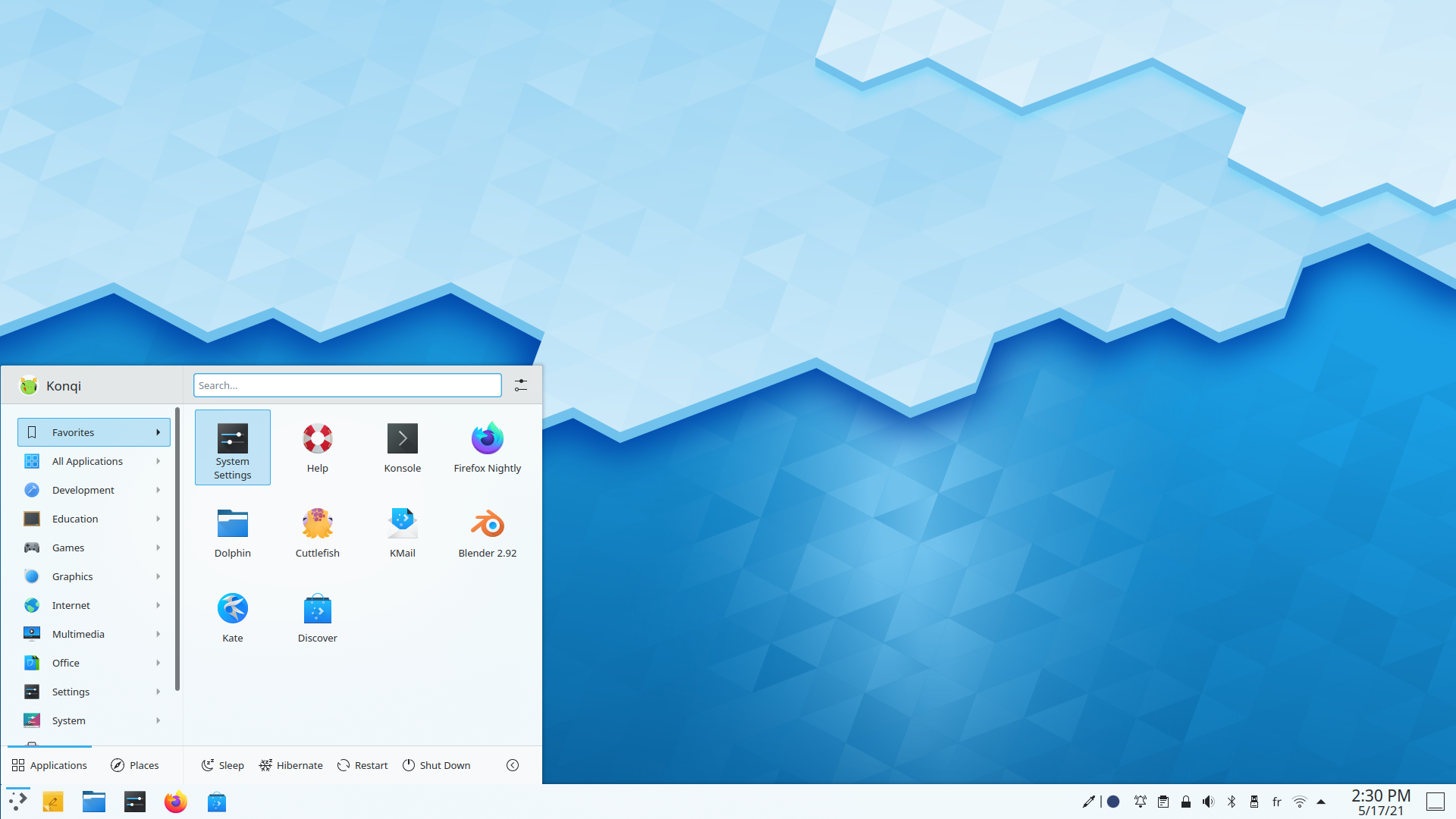
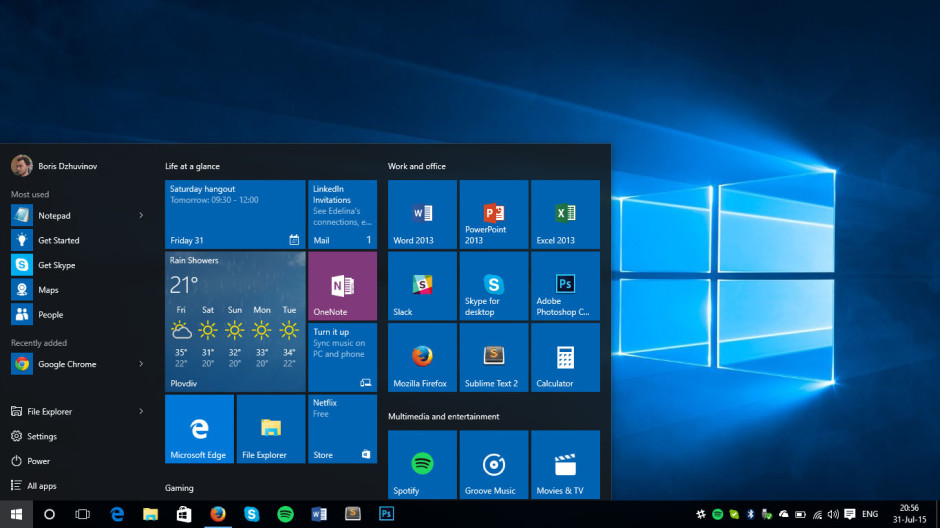


What really shocks me is how few of the big distros make KDE a default or "first class" DE choice. If I was a novice user coming from Windows, I'd much prefer KDE, which if you stick to the GUI is very navigable and similar in some ways.