"The decline soon after? That’s the Chomp search update followed by iOS 6 and the card app store layout. So sad."
Man, I do find that quite sad... the app store still has some major issues with regards to discoverability. It's funny because you'd think as the app store became more and more saturated, that they'd create more ways to deal with that, but many of the changes have actually made it worse lol :/
Users buy Apple phones (++aapl_profit), they browse or search the app store, they find something, and they spend a few more bucks on an app (++aapl_profit). Users remain blissfully unaware of the full situation or lost potential. No major user complaints and we can only speculate about lost potential Apple profits.
Sadly, I think Apple serves most users best by simply ensuring the "top" choices during an app store browse or search are good enough that users don't ever have to search deeper and really feel the pain of the App Store situation. And the top choices are often quite good.
My conclusion is Apple just doesn't feel enough pain to solve the discoverability problem that hurts developers (especially new developers).
Oh sure, and as long as devs aren't leaving (they aren't) apple is likely not doing anything "wrong".
They have unashamedly said their order of doing things is
1. Good for apple
2. Good for users
3. Good for devs (distant third too)
They have been nice lately though. I'm really excited about the App Store analytics and all that entails. It's really nice that they've finally added that for us.
Why should they be ashamed of that order? How would you reorganize it? I would say that ordering is pretty much required given the fact that they are a publicly listed consumer technology/software company.
I have no problems with it at all, and I think that is the order it should be. I know a lot of devs would prefer to be higher on the food chain though, or at least it seems that way sometimes.
There is a lot of hate for the app store by developers, and i've dished out some of it, but frankly with over a million apps it's not an easy problem to solve.
I actually think the store is in a pretty decent state right now overall. You can't possibly make everything very visible. It's a pretty good deal to be on the shelves, now you just have to work harder on your own promotion.
> ...but frankly with over a million apps it's not an easy problem to solve.
Maybe a perfect solution isn't easier, but it should be very easy to improve the mess that is the app store. Let's start with a very simple suggestion:
Searching for an app by name should return that app.
Yeah. It's much better than it used to be (today when I search for Tweetbot it pull up Tweetbot) but that hasn't always been the case. You still have the issue that they clearly have a CDN with a slow refresh so that when an app is first released you can find it via links online or features on the front of the app store but not by searching the name.
This was very disheartening to me when I was in the app store. Without a direct App Store link it was difficult to get someone to download. You had to swipe a random number of cards, sometimes quite a lot, to find the apps after entering the exact name. The results were usually quite relevant - in that they were competitors with similar but more popular apps.
It seems like an unjust reward for already successful apps - they're given the right to steal search results for a competitor's app name.
It's a balancing act. If you want to be found by searches for your title, you have to have a branded title (that if needed you could trademark). If you want to just use your top keyword as your name, it's going to be much harder to rank for it. I think the best path is to use a small subtitle - "Branded Name - Keyword Phrase"
That's a good way to be sure you can be found. If you type "Vima"[1] in the app store, I guarantee you find my apps :-)
[1] Vima is greek for "pace", which is how we came up with it. Full title is "Vima - GPS Run Tracker"
> There is a lot of hate for the app store by developers, and i've dished out some of it, but frankly with over a million apps it's not an easy problem to solve.
Sure it is. Stop trying to funnel the entire marketplace through a single vendor-controlled retailer.
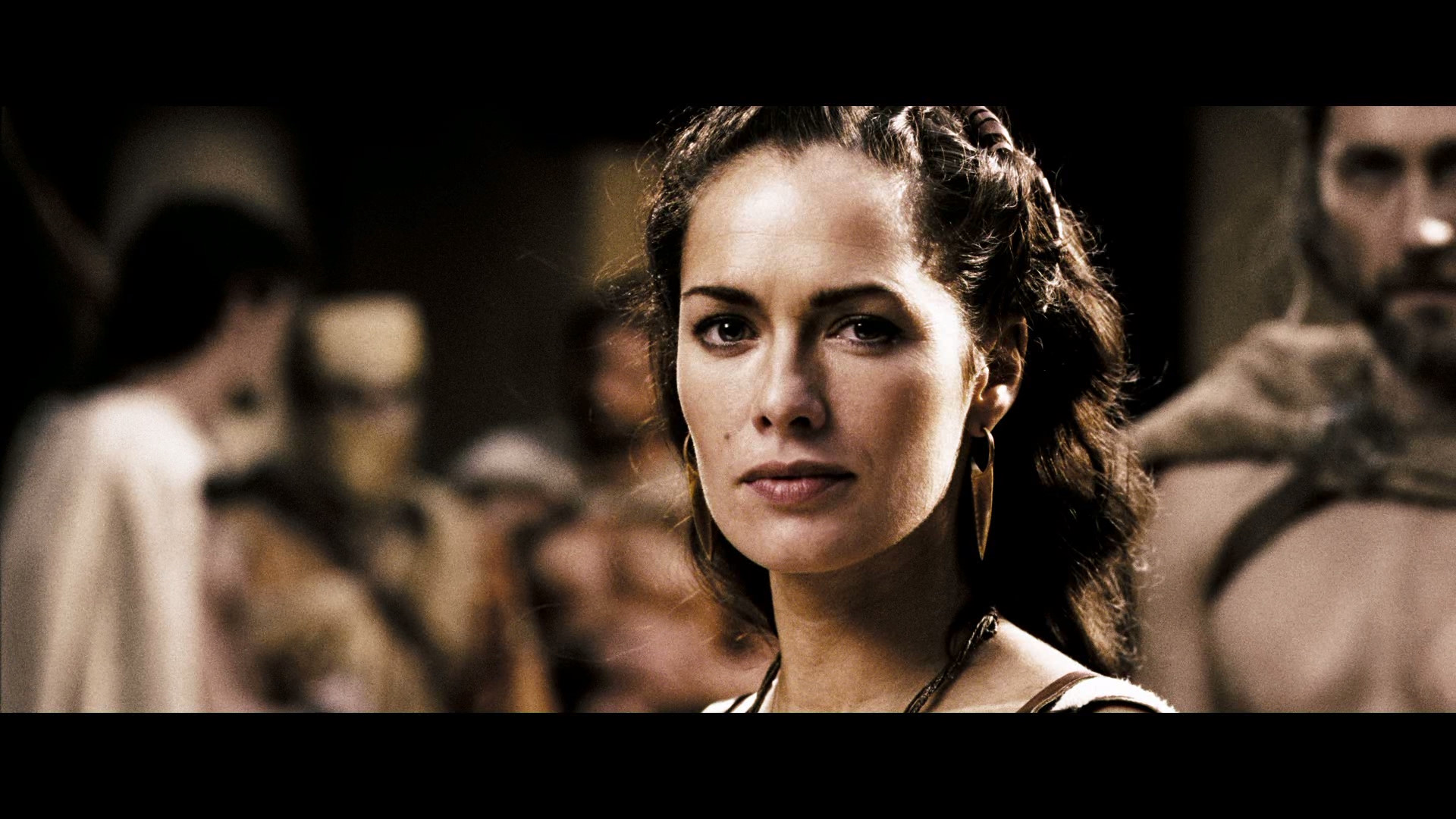
I find it's still really noticeable in the skin tones and highlights. You can find lots of comparisons online; once you see film beside digital, the difference can be pretty huge. Some people in Hollywood still really care about it... one recent example: http://motion.kodak.com/motion/Publications/InCamera/Creatin...
“It’s like we’ve forgotten how great film looks when you see it in comparison,” Alsobrook remarks. “We looked at each other, and it was a done deal. There was no question we were going to shoot film. It has a rich, creamy look to it that you just can’t get any other way.”
Although high-def video most often is used for blue screen shoots, director Zack Snyder and Fong shot on film. "We wanted the film grain to show," Fong said.
Aren't scenes shot on film digitised for editing and colour graded just like digital ones? I think a lot of the difference between movies is probably down to the processing rather than the camera. No matter how they shoot the movie they all seem to end up blue and orange.
Darn, looks like I can't edit my post anymore, and HN formatting screwed it up lol. First link is for 300, second one is for the sequel.
I guess it is quite subjective, but what makes the second one look better to you? For me the first one, whilst chalked with noise/grain, has a much better rendition of the skin-tone, along with detail in the highlights, and the depth of the reflection in her eyes. I guess it's hard to describe really, but that's kind of why I would side towards the first image.
The main thing is the noise on her skin - it makes it look very artificial. Like it's not an actual person. On her cheek it almost looks like she has beard stubble.
The background of the first one also looks like a pointillist painting instead of the real world. (Although I might not notice it in motion.)
I'm not a fan of the skin color either since real people don't look like that. To me it looks cold and artificial, like I'm looking at a painted robot instead of a person.
I do wonder how much of this is film vs digital, as opposed to post processing. Film might not be able to stop grain, but I don't think it needs to look like that for the color. It suspect it was over sharpened and over contrasted in post.
I think the truth is that if you're making a free game, you have to put an incredible amount of consideration into replay value and how to keep people playing for long periods (and then how to extract money from them :/ ).
Otherwise you make a paid game and hope an Apple-featuring makes you enough.
I wonder what would happen if app games were run like desktop MMORPGs, where there is a monthly fee. That fee could even be paid via a site, also freeing the app of Apple's cut.
How man SaaS companies have monthly fees with free apps? Then, after you login, the features that you have paid for are available. I can think of plenty.
Last spring I went through a lot of different techniques including the one you mention about subdivision. Was working on tower defense path-finding so basically the challenge was to compute every waypoint-set's path at game-start and whenever a tower is built/sold.
I think I basically tried almost every A* trick available (rectangular symmetry reduction, HPA*, points of visibility, jump point search, etc) but ultimately I couldn't make it run fast enough on iOS for our max level size which was about 100x100. It also couldn't be multi-threaded because it needed to work with online code (synchronous tick engine)...
What ended up happening was I found a full C implementation of Jump Point Search, and it was incredibly fast! I had already moved several parts of my code to C in order to speed it up, but I guess using a higher level language like Objective-C is just way too slow to have instantaneous path-finding on a 100x100 grid. I think this was the code I found https://github.com/Bio2hazard/cJumpPointSearch
You definitely had a bug. I shipped a single-threaded A* for 3GS and up with maps created from maps of approximately 500x500 locations.
It started out completely broken, storing waypoints in Core Data and was taking upwards of four minutes to calculate a path. Switching to prefetching Core Data paths brought it down to about 90 seconds, but that's as far as it could go with so many Core Data faults firing.
What made it really fly was the change the underlying data to direct bitmap access on maps prepared from the source maps (shopping centre levels actually) and applying simple filters to generate monochrome maps where one color was walkable and another not. Then source and destination locations were obtained through the original Core Data coordinates and a quick search algorithm found the closest walkable point to both. The A* calculation took perhaps a second or two.
Not content with that we went further and drew more complicated maps with what amounted to train tracks, a network of walkable paths one pixel wide connecting every store to every store to narrow down the solution space. The result was instant A* pathfinding and it was a very neat feature in the app.
You can definitely do A* in Objective C - just get to know Instruments inside out and keep tuning. On a 5S I expect you could get away with a lot of inefficiency.
With iOS development I've typically had the interviews that you are seeking. I show them my apps over coffee and then I do a few hours (or a feature) of contract work (paid) for them and it usually works out and I continue onwards :)
I am not sure that this works for all situations though; maybe I've been lucky too... I tend to work for smaller startups.
Imho, this approach could work most of the time (sometimes a candidate could have other commitments and not be able to do contract work on the side).
As an employer i think there is nothing better than to be able to verify beforehand if a candidate will be able to do what you actually plan to pay him for. I would just change that "few hours" with few weeks and favor interaction with other employees (that will then be able to assess the candidate).
"In Angband, any monster that drops stuff can drop pretty much anything. Monsters have a level, and if they drop loot, it just randomly picks any item near the monsters level."
-> (RPG related) I felt like this was an issue with Diablo 3 compared to Diablo 2. You basically just had to mash around in D3 grinding the top-level monsters and hoping... whereas in Diablo 2 you could make conscious choices over where to farm if your goal was to find a certain item (albeit the drop chances were extremely low, so most people just did Meph runs or Baal runs and traded their way up). Here though the author is doing drops way more realistic than either of those games heh, so that's quite an awesome feat.
Itemization seems really tricky; analyzing Diablo 2 vs Diablo 3 can actually provide some interesting insight into how item systems affect gameplay etc... maybe those devs even tried doing it realistically at some point but found it didn't pan out gameplay-wise?
Having played both games extensively, I feel the most interesting thing to analyze about in which parts of the game are randomized, and how that randomization impacts gameplay. Let me pick 2 examples.
In Diablo 2, areas were randomized internally but externally consistent: the individual makeup of areas would be different every game, but the connections between different areas would remain the same.[1] This means that repeatedly exploring the same area remains entertaining for a relatively long time in Diablo 2. This is important, because as you say, items have a higher chance of dropping from certain monsters than from others. If you "have to" keep farming the same area over and over, it helps prevent boredom if that map is different every time.
In Diablo 3, the internal layout for each outdoor area is always the same, and even indoor areas are relatively static, compared to Diablo 2's. After a while, you know the best way to maximize efficiency, which encourages people to repeatedly farm one area, but this is a double edged sword: once you know what the most profitable way of playing the game is, playing any other is much less attractive. This actually reduces the range of (rational) possible actions in the game, inducing boredom more quickly. In addition, some of the best areas to farm in Diablo 3 are the dungeons. These are (smaller and optional) sub-levels within areas. Each area had fixed dungeons in Diablo 2. In Diablo 3 areas can often spawn 5 or 6 different special events, while it has only 2 or 3 (fixed, just like the areas themselves) spots for such events. This adds another layer of randomization: you need to be lucky twice: once to find the dungeon and once again to find the item in the dungeon.[2]
Something else that changed between Diablo 2 and 3 is the way item affixes are randomized. In both games, magical items can spawn with certain properties, and those properties have stat ranges. You might find a Short Sword with the Red prefix, giving +1 or +2 damage. In Diablo 2, the best items (Uniques, Sets and Runewords) had fixed affixes with random stat ranges: you might find a Tyrael's Might with anything between +20 Str and +30 Str (in addition to have a dozen other affixes), but that it would get a significant +Str roll was guaranteed. Even the worst Tyrael's Might was a great find. Relatively casual players would be happy with any stat rolls, while true Diablo 2 addicts would make do with nothing less than a +30 roll. Such a perfect roll could (and still can) increase the value of an item by a factor of 10 to 1000+,[3] even if the objective difference between a random roll and a perfect roll is fairly small in the grand scheme of things.
In Diablo 3, this was thrown out the window. Legendary and Set items get some fixed affixes, but even if you got the best item in the game and perfect rolls on the fixed affixes, you still need 1-3 other affixes to get a genuinely good item. In addition, the stat ranges were much wider. Immortal King's Tribal Binding could get +30 or +200 Str, and with the right random affix, all the way to +300 Str.[4] This makes the relation between gear cost and power fairly linear. You might have to find half a dozen Tribal Bindings before you got one worth using. In addition to finding the dungeon, and then the item, you also need to get good affixes on the item, then get good rolls on your affixes. Finally, in some slots, the best items in the game were not Legendaries, with their half-random setup, but Rares, with fully random affixes, which instead of 1-3 good affixes, need 5 or 6. It is no wonder then that players were unable to find their own items, and were forced to turn to an auction house, where they were primarily supplied by bots and gold farmers (unknowingly, but still).
Blizzard tried to address some of these issues in the Reaper of Souls expansion. Here's a few examples relating to the above points:
* Enchanting was added: allows you to replace one of each item's affixes with a different one (only one affix per item, but you can repeatedly change the same affix until you get one you like), reducing the impact of random affixes.
* Rifts were introduced: random dungeons with random monsters and a random boss at the end, which are generally slightly more efficient than just farming normal areas.
* The auction house was removed, reducing the impact of bots and farmers, allowing an increase in the drop rate. Trading in general was removed as well, making it impossible to turn to third-party trading sites (as was common in Diablo 2).
* The stat ranges on affixes were reduced, lessening the dependence on highly random items. Many Legendary items got unique Legendary-only affixes that (when combined in clever ways) make them far better than fully random Rare items.
Overall, this has significantly improved the game, but having played Diablo 2, Diablo 3 and Diablo 3 after the Reaper of Souls expansion, I can't help but feel like these are in the end just patches on a fundamentally flawed design, and that some of those patches actively prevent it from becoming better. Diablo 2, on release, was a bad implementation of a great design. This allowed it to be improved over the course of almost a decade (sporadically by modern standards, but impressive at the time). Diablo 3, on release, was a mediocre implementation of a bad design. Blizzard improved the implementation (at significant cost, to the point of forcing them to postpone the expansion), and details of the design, but it is still only a good implementation of a mediocre design, and improving it much further strikes me as uneconomical, to put it mildly.
[2] It's worth pointing out the two different types of randomization in games. One is the type the player can influence, like which area to farm and whether to play solo or in groups. The other is forced upon players, like what affixes your drops have or whether a dungeon spawns in a given area. Players tolerate the latter to much higher degree than the former.
Play Path of Exile. It's a much better game than Diablo 3.
Whether or not Rares or Uniques are best in slot items is a matter of designers taste when it comes to Action RPGs. You can tune the item drop tables however you want. I would argue its nicer to have rares be BiS items, as its more fun when you see item diversity in the top builds. Seeing everyone walk around with the same Uniques is boring.
Diablo 3 fails because it does not provide enough ways to customize a character's build. There are a handful of stats that are important, and they mostly scale linearly. The skills are all unlocked, and you can change them at will.
If you do not have enough ways to customize your character, the item drop tables are moot. You can't drop items that are interesting if there are no interesting stats.
Path of Exile is the true successor to Diablo 2. The options for customization are endless, so every item that drops has the potential to be interesting. You should check that out if you are interested in ARPGs, especially something like Diablo 2. And if you are really interested in game analysis, their systems are really unmatched in today's game marketplace.
Diablo 3 is not a game in the Diablo genre. D3 is closer to something like Baldur's Gate: Dark Alliance, or the X-Men Legends games.
Edit: I focused on the itemization part of your post, but I totally missed the map part of your post.
I'm not sure map randomness was relevant at all in Diablo 2. That game was pretty much all Meph runs, and then Baal runs. The maps didn't really matter, you just teleported to the boss and hoped for good drops.
I've played Path of Exile a little, but while I'm don't usually care much about graphics in game, the style in PoE was an incredible turnoff for me. It's a real shame, because the game design indeed has some very interesting ideas, and I would've loved to explore them in more depth.
I agree with your point on maps. Diablo 2's focus on bosses over general farming was one of its weak points. The map structure would've been more important if Blizzard had made boss runs and general farming rewarding in distinct ways.
There are other things that I feel Diablo 3 did wrong, but my comment was getting dangerously long as it was: lack of build permanence (you touched on this), non-existent social features (slightly improved in the expansion), uninspired items (less so since the expansion) and badly tuned reward structure (I appear to be alone in feeling the expansion has not improved this aspect).
There's something strangly satisfying about analysing how many things were wrong with Diablo 3 compared to Diablo 2. I probably put 200-300 hours into Diablo 2 and loved it, but I think I played Diablo 3 for about 8 hours before quitting.
Give the expansion a try. I am thoroughly enjoying it now, where I only played 2 characters to 60 and then stopped with the core game. Most of the things that put me off playing are now fixed.
"From the old world of unprocessed rolls of C-41 sitting in a fridge 20 years ago"
Hey I still do that! :(
I wonder if my (or anyone's) film photos on Flickr are completely useless metadata-wise. Because they are all scanned so they just say "NORITSU KOKI EZ Controller". There seems to be a large portion of people (on Flickr) shooting film still but I wonder if it's only a small percentage overall.
I go through that quite a bit lol because I've made the conscious decision not to drink ever (I don't care to spend the money on it nor do I care for the taste). But my vice is drinking soda heh... darn sugar!
An iPad could be a good stepping stone. For me it was Nintendo as a kid that then got me into computer games, which then got me into making my own stuff, which then made me into a programmer today heh.
I find that I've gotten to a point too where my mind subconsciously blocks out ads, even the ones at the top of Google searches. I also don't believe I've ever clicked on a banner or display ad (purposely) since I've been on the internet. They just always feel scammy or not targeted well enough in my opinion. But that's also just the nature of the internet...



Man, I do find that quite sad... the app store still has some major issues with regards to discoverability. It's funny because you'd think as the app store became more and more saturated, that they'd create more ways to deal with that, but many of the changes have actually made it worse lol :/